
What upkeep can still restore
The first test is practical: after a thorough cleaning, does the appliance do its job? A refrigerator that holds 40°F and 0°F once its coil is clean and its gasket seals, a dryer that finishes a load in one cycle once its exhaust run is clear, a dishwasher that leaves glasses clean once its filter and spray arms are free: each of these still has useful years in it, whatever the serial number says.
When a visit clears the buildup and performance does not come back, that tells you something too. The problem is wear inside a part rather than dirt around it, and the question moves from maintenance to repair or replacement.
Signs upkeep is no longer enough
These are the patterns that make us suggest weighing a replacement during a maintenance visit, rather than just booking the next one.
- Performance does not recover after a full cleaning
- The same wear part fails again within a short span
- Rust through a cabinet floor, tub or frame, not just surface marks
- Parts for the model are no longer made, or the control board is a one-off
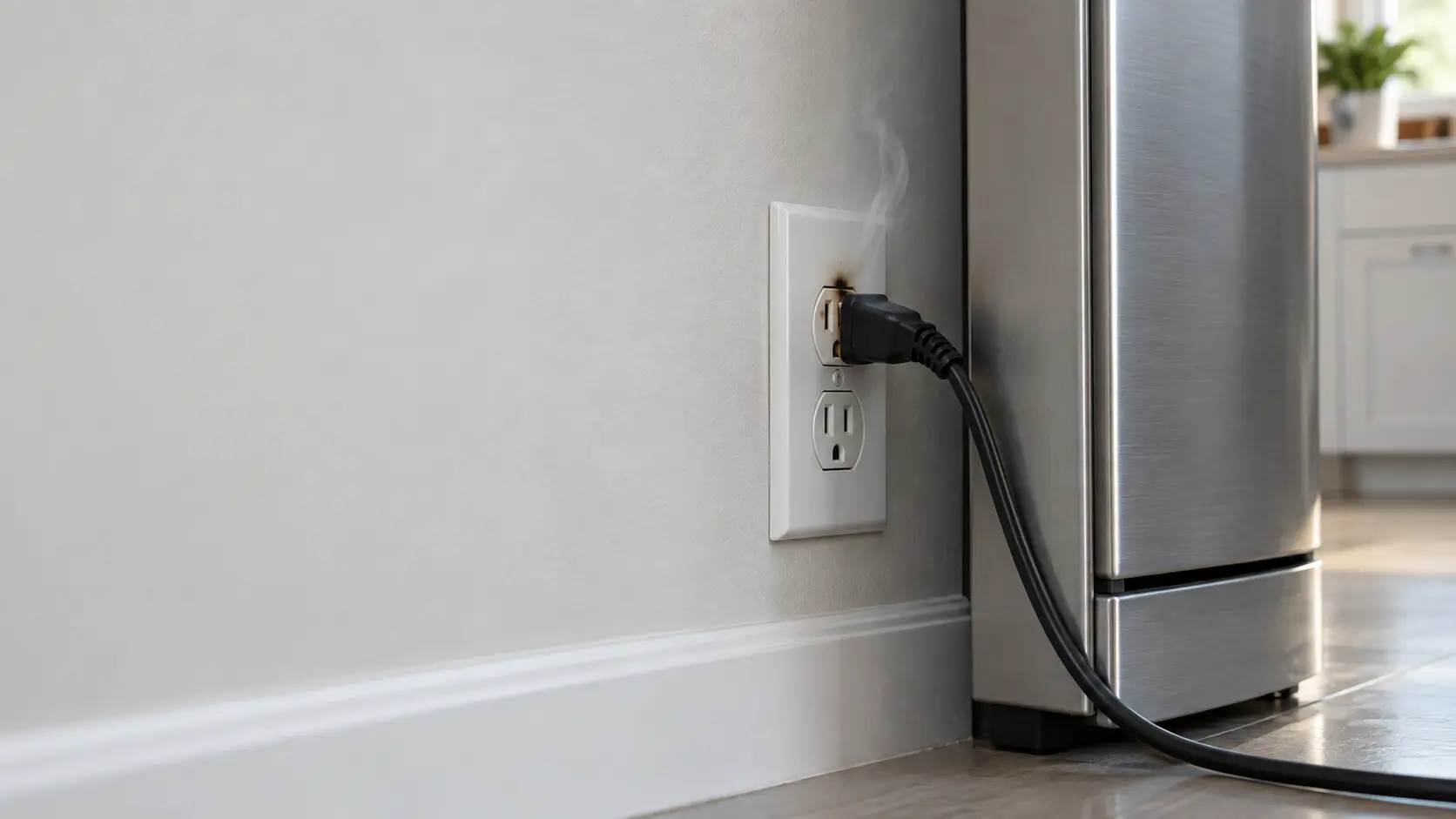
- A power cord or plug that is cracked, damaged or loose
The design gap no cleaning closes
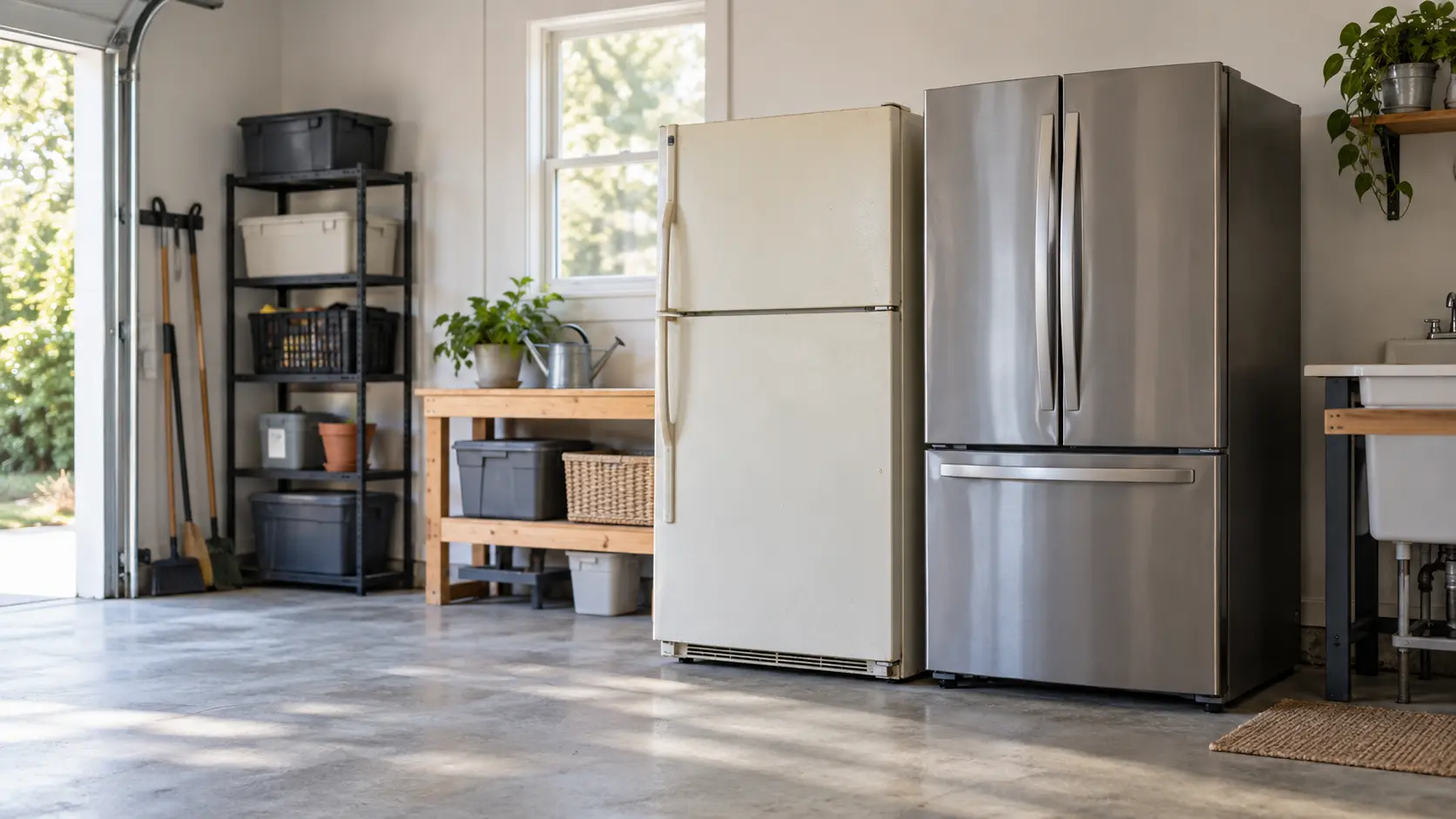
A clean appliance runs as well as its design allows, and the design stopped improving the year it was built. By ENERGY STAR's reckoning, a certified refrigerator beats the federal minimum by roughly 9%, an older one draws around a fifth more power than a labeled model, and anything past its fifteenth year deserves a look at replacement. It also suggests recycling an old second refrigerator rather than keeping it running in a garage.
Laundry has a similar step change. Heat pump dryers with the ENERGY STAR label cut energy use by roughly 70% against conventional models, and because they do not exhaust air outside, they need no vent at all. For a home whose exhaust run is long, awkward or hard to clean, that is a maintenance argument as well as an energy one.
Source: ENERGY STAR — Refrigerators — Old refrigerators use about 20% more energy than certified models; certified models are about 9% better than the federal minimum; refrigerators over 15 years old are worth replacing; recycle an old second refrigerator; savings estimated over a 12-year lifetime; links a finder for refrigerator and freezer recycling programs; ENERGY STAR — Clothes dryers — Heat pump dryers use around 70% less energy than conventional dryers and need no dryer vent

Age, parts and the value of a well-kept older unit
Age is easy to find and easy to misread. GE's serials carry the build month and year in their leading letters, and the manual's print date tells you which twelve-year cycle a letter belongs to. Knowing the age tells you where the appliance sits against its expected span, not whether it is done.
A built-in refrigerator or a professional-style cooking appliance is designed around the cabinetry and is usually meant to be serviced for a long life, so steady upkeep is worth more there. A freestanding appliance that slides out of an opening and has a close equivalent on sale is easier to replace, which tilts the math the other way once repairs start.
Habits that shorten life on their own
Some wear comes from use rather than neglect. GE says most owners self-clean their ovens two or three times a year and that very frequent self-cleaning, perhaps more than once a month, could shorten the oven's life. Knowing which habits wear a particular appliance is part of keeping it longer.
Source: GE Appliances — How to determine the age of an appliance — The first two serial letters give the month and year; the year letter repeats about every 12 years; the manual's print date helps confirm
What replacing involves beyond the purchase
The price tag on a new unit is only one part of the change. A built-in opening may not fit a current model's dimensions; a new dryer may need its exhaust run redone; a new gas appliance needs its connection checked by someone qualified. None of this argues against replacing, but it belongs in the comparison.
The old unit has to go somewhere, too. EPA rules under the Clean Air Act require the refrigerant in household refrigerators and freezers to be recovered before final disposal, and make the final person in the disposal chain, such as a scrap recycler, responsible for it. Ask whoever hauls the old appliance away how that is handled.
- Fit: the new model's dimensions against the opening and the door swing
- Connections: electrical rating, gas connection, water supply and drain
- Airflow: clearances for the new unit, or a new exhaust run for a dryer
- Disposal: refrigerant recovery for cold storage, recycling for the rest
Timing the change instead of waiting for it
The worst time to choose an appliance is the evening the old one stops, with food warming or a load of wet towels waiting. When a maintenance visit flags an appliance as near the end, that is the moment to measure the opening, check the connections and shop without pressure. Keep maintaining it in the meantime; a clean coil or a clear exhaust run protects the home as long as the old unit stays in service.
Source: EPA — Stationary refrigeration safe disposal requirements — Household refrigerators and freezers enter the waste stream with refrigerant intact; the final person in the disposal chain must ensure the refrigerant is recovered or keep a signed statement
A simple way to decide
We suggest three questions, in this order. Does the appliance work well after a full maintenance visit? Are its wear parts still available? Is the running-cost or safety gap to a current model large enough to matter in your home? Two yeses to the first questions usually mean keep maintaining it. A no to either of the first two usually means start planning the replacement, even if the appliance still limps along.
Whatever you decide, keep the service record. It helps price the old appliance if it goes with the house, and it becomes the first page for the new one.