


Laundry Maintenance
Upkeep for washers, dryers and the exhaust run behind them: lint paths cleared, drain filters and door boots cleaned, supply hoses inspected before they give way.
Mon–Sat, 8am–8pm
- 4 things that fail on it
- 14 makes build it
- 7 problems it shows
Book a visit
Three short steps, about a minute.
or call (844) 879-5178
Loading appointment form…
The appointment form couldn’t load. Please try again.
Is yours
a laundry machine?
The laundry pair is the group where skipped upkeep turns into the most serious trouble. On the dryer side, the lint screen catches most of the fluff, but not all of it: the rest travels through the blower, into the transition duct behind the machine, through the wall and out to a hood with a flap outside. Every year of use leaves a layer along that path. Airflow falls, loads take a second cycle, the cabinet runs hot and the thermostats and heater work harder; in the worst case the lint itself catches. A gas dryer adds a burner with its own clean-air needs, and a condenser or heat pump dryer swaps the duct for a lint trap and a condenser that must be rinsed. On the washer side, the door boot of a front-loader holds water, lint and detergent residue in its folds, the drain pump filter behind a small door at the bottom front collects coins, hair ties and sludge, and a top-loader's tub gathers scum under the agitator where nobody looks. Behind both machines, the two rubber fill hoses on the washer carry full house water pressure around the clock. A maintenance visit on this group cleans the lint path from the screen housing to the outdoor hood, clears the drain filter, cleans the boot and the dispenser, checks the hoses and valves, and levels the washer so it stops walking.
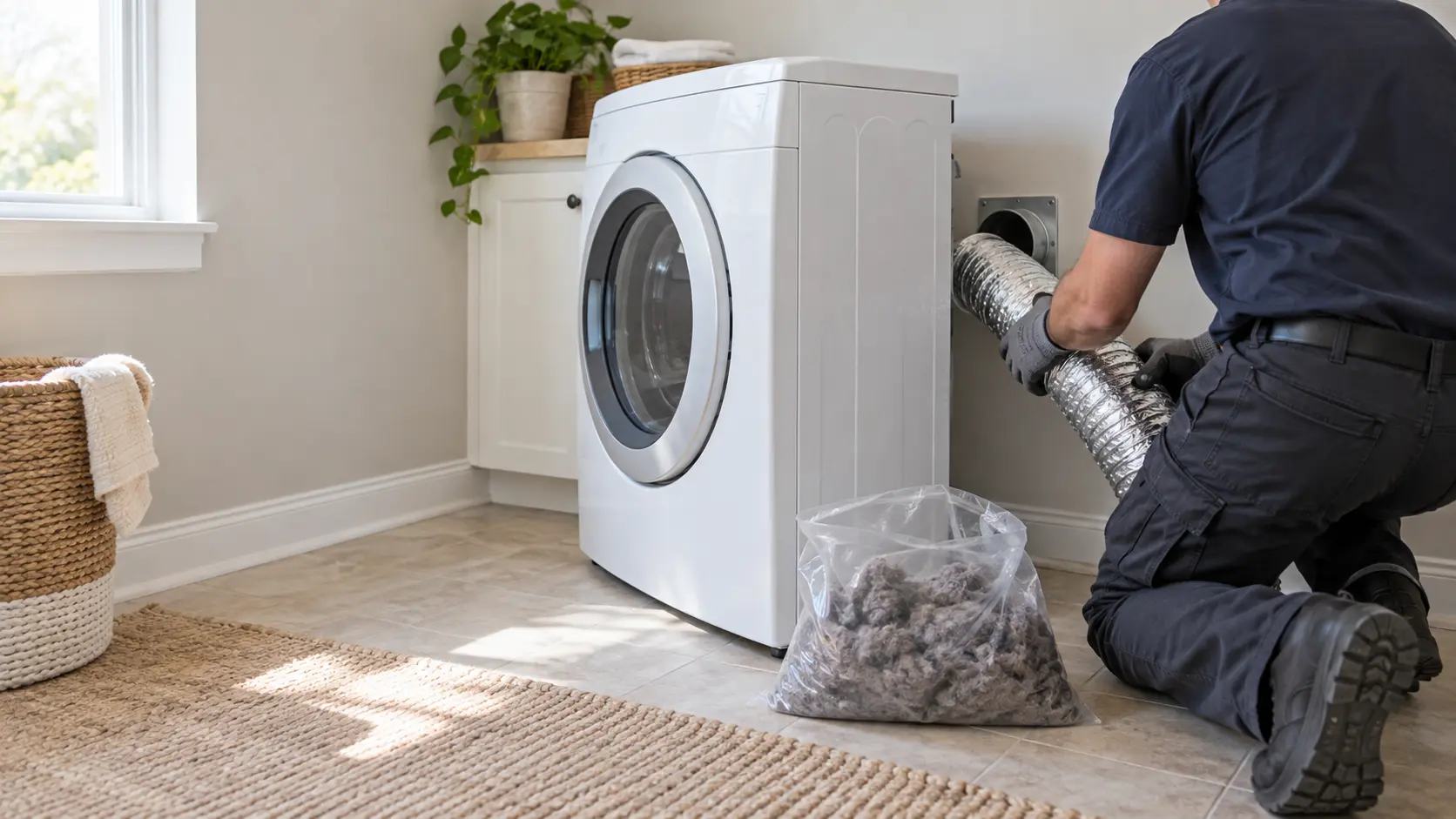 What fails on a laundry machine
How to tell
It belongs to this group if it washes or dries clothing, towels or bedding, stacked or side by side, vented outdoors or ventless.
A dryer has a lint screen in the door opening or on the top panel, and either a round exhaust collar on the back or a condenser drawer and filter up front.
A front-loading washer has a rubber boot around the door opening and a small access door at the bottom front for the drain filter.
Behind the washer, two hoses run from the hot and cold valves in the wall to the back of the machine.
Not yours?Cold storageCooking appliancesDish care
What fails
on this design.
On a laundry machine: lint packed along the exhaust, door boot residue and a musty tub, drain filters holding debris, fill hoses aging behind the machine.
The problems it showsLint packed along the exhaust
What slips past the screen settles in the blower housing, the foil or flexible duct behind the machine and the wall run to the outside hood. Each layer steals airflow, so the dryer heats longer, the cabinet gets hotter and clothes still come out damp.
Door boot residue and a musty tub
The folds of a front-loader's rubber boot trap water, lint and softener. With the door shut between loads, that film grows mildew that shows as black spots and a smell that comes out in the clean laundry.
Drain filters holding debris
The small filter ahead of the drain pump collects coins, hair and pocket debris. When it fills, water drains slowly, the spin cannot finish, and loads come out wetter than they should.
Fill hoses aging behind the machine
Rubber supply hoses harden and swell near their fittings over the years, under full water pressure at all times. A hose that bulges or weeps at the crimp is a flood waiting for the day nobody is home.
Getting at it,
and whether to.
Clear the floor in front of the washer and dryer and anything stored on top, so both can be pulled out and the hoses and duct reached.
What services costOn the visit
- Tell us whether the dryer runs on gas or electricity, and how the exhaust leaves the house: wall, roof, crawl space or a long run through a closet.
- Mention a stacked pair, a closet install or a second-floor laundry room, which changes what has to move and how.
- Have towels and a shallow pan handy for the washer's drain filter, which always lets out some water when it is opened.
Repair or replace
Laundry upkeep is the cheapest insurance in the house: a clear exhaust run shortens every drying cycle, eases the heater and cuts the risk of a lint fire, and a pair of fresh hoses costs a fraction of one flooded floor. A washer or dryer that is kept clean and level usually lasts well past a decade. If the visit finds a heater that has failed, bearings that roar or a pump that has seized, that is a repair, and our sister washer or dryer repair site picks it up.
Book a visit for a laundry machineThe problems
it shows.
On a laundry machine, most often hot or burning lint smell in the laundry room: stop the cycle.
All problems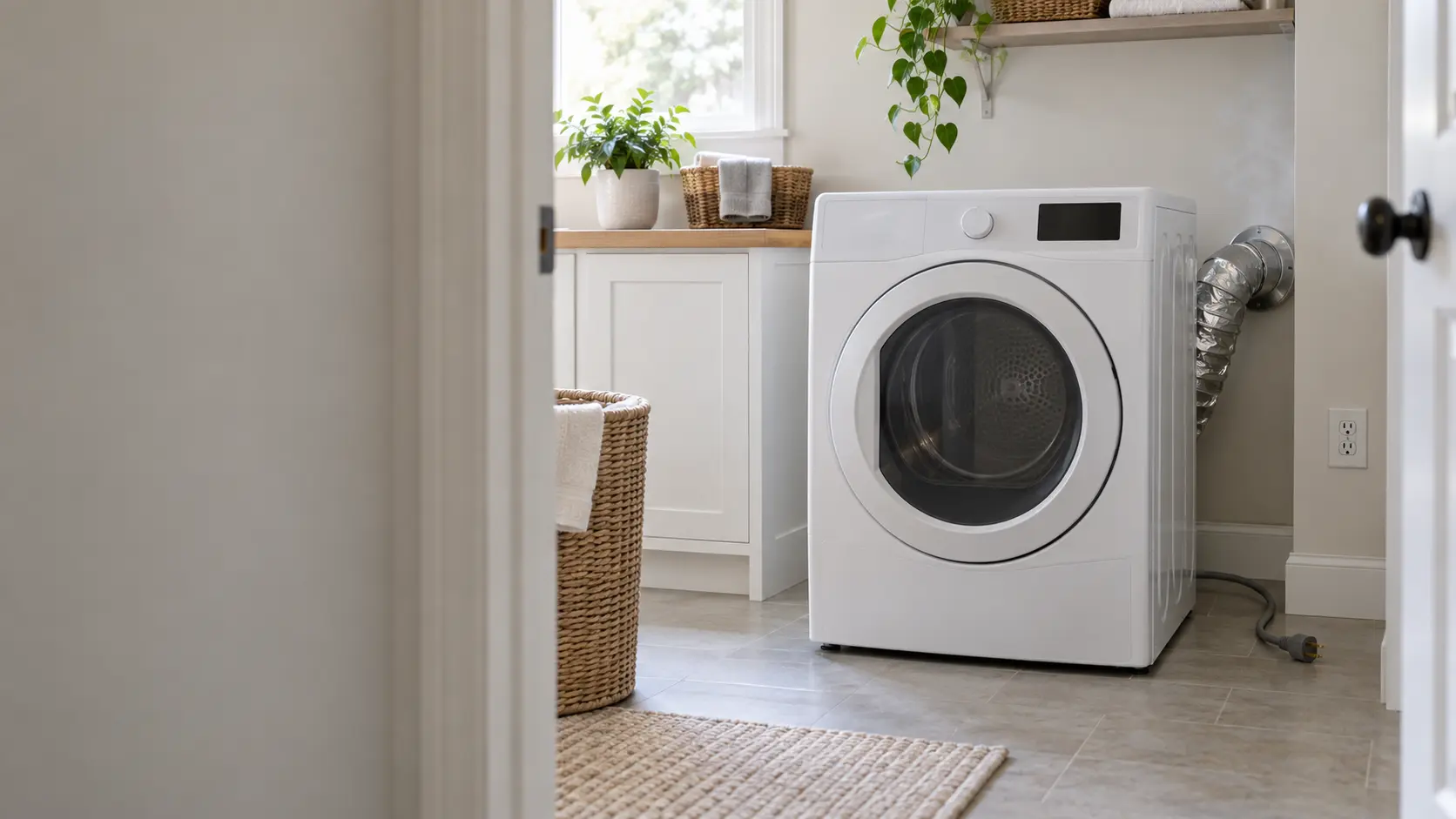
Hot or Burning Lint Smell in the Laundry Room: Stop the Cycle
6 causes, cheapest first
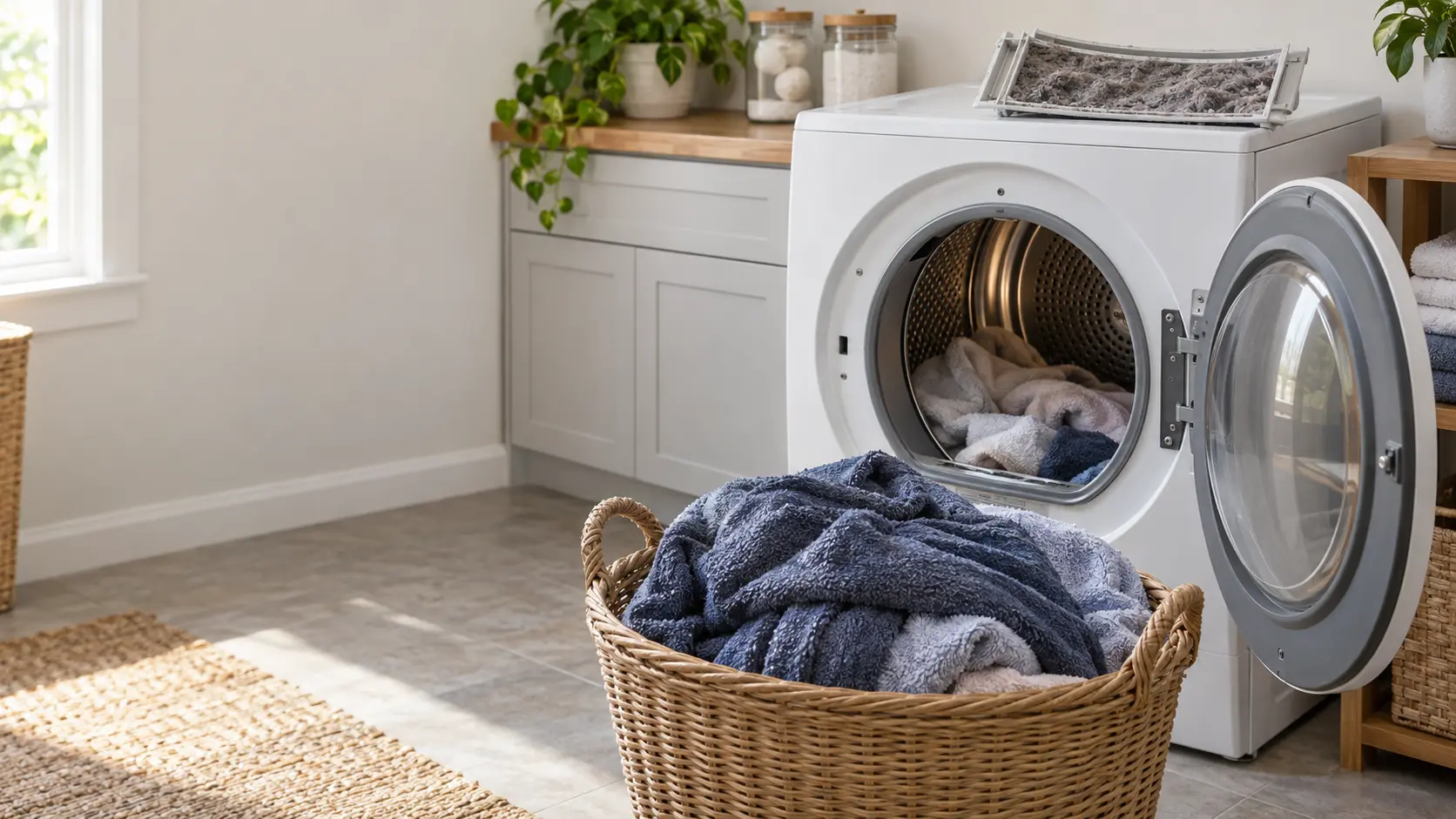
Laundry Taking Two Cycles to Dry: The Lint Path Is Usually Why
6 causes, cheapest first
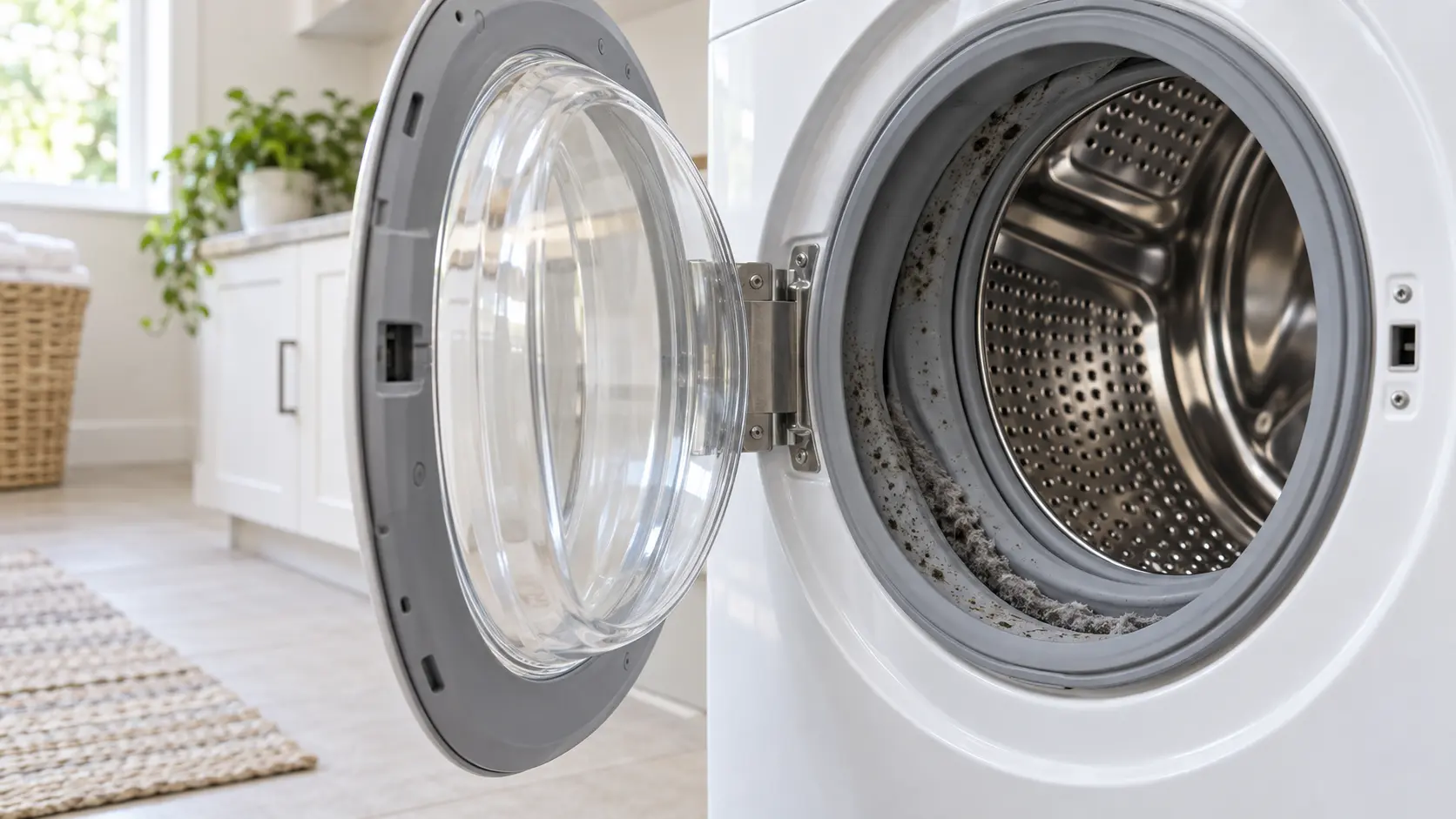
Laundry Drum Smelling Musty: Door Boot, Drain Filter and Detergent
6 causes, cheapest first

Supply Hose Leaking or Bulging Behind an Appliance: Shut the Water Off
6 causes, cheapest first
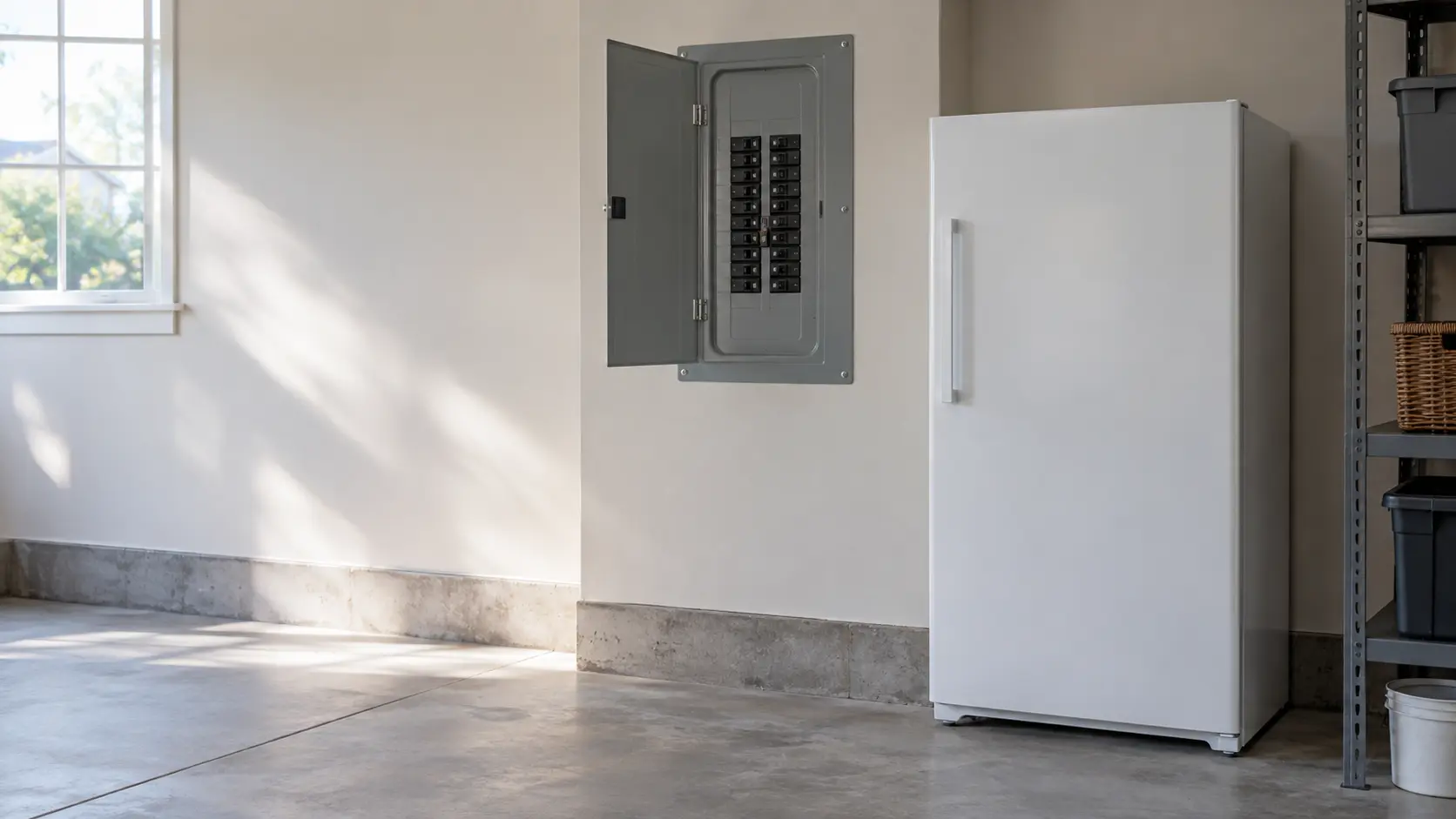
Appliance Tripping the Breaker Every Time It Runs
5 causes, cheapest first

Appliance Energy Use Creeping Up With Nothing Else Changed
6 causes, cheapest first

Appliance Maintenance Code or Reminder Light: Filter, Descale, Vent Check
8 causes, cheapest first
Who builds
a laundry machine.
14 of the makes on this site build a laundry machine. Each mark opens that make's own page.
All 35 brandsLaundry maintenance,
where we come out.
9 metros, each with its own page.
All service areasTampa BayFL · 31 areas
Miami / South FloridaFL · 47 areas
New York MetroNY · 75 areas
HoustonTX · 36 areas
ChicagoIL · 50 areas
Los AngelesCA · 95 areas
San DiegoCA · 31 areas

Questions about
laundry machines.
How often should the exhaust run behind the laundry be cleaned?
Is foil or plastic ducting behind the machine a problem?
When should the rubber fill hoses on the laundry be replaced?
Back to your everyday
Is it a laundry machine?
Say so when you book — it changes what the technician brings and how the visit is planned.