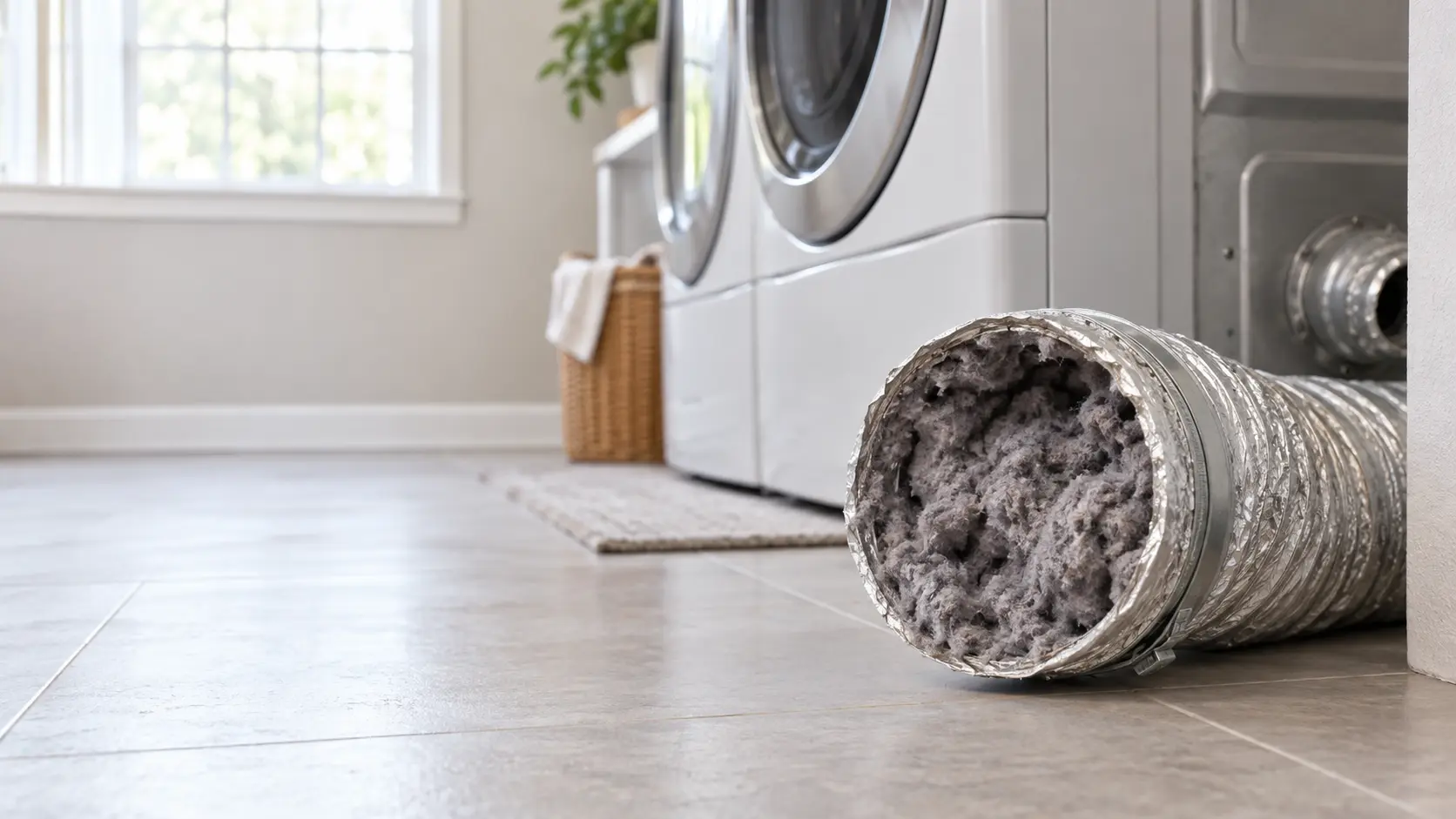
Thick gray lint packed inside a disconnected dryer exhaust duct lying on a laundry room floor.

Start with the symptom

Appliance
problems,
symptom first.

Every symptom we are called out for, traced to the causes that actually explain it — cheapest first. Start from what you are seeing rather than from what you think is broken.

(844) 879-5178

Mon–Sat, 8am–8pm

  • 17 symptoms
  • 5 need a visit now
  • Causes in cost order

Book a visit

Three short steps, about a minute.

or call (844) 879-5178

Needs a visit now

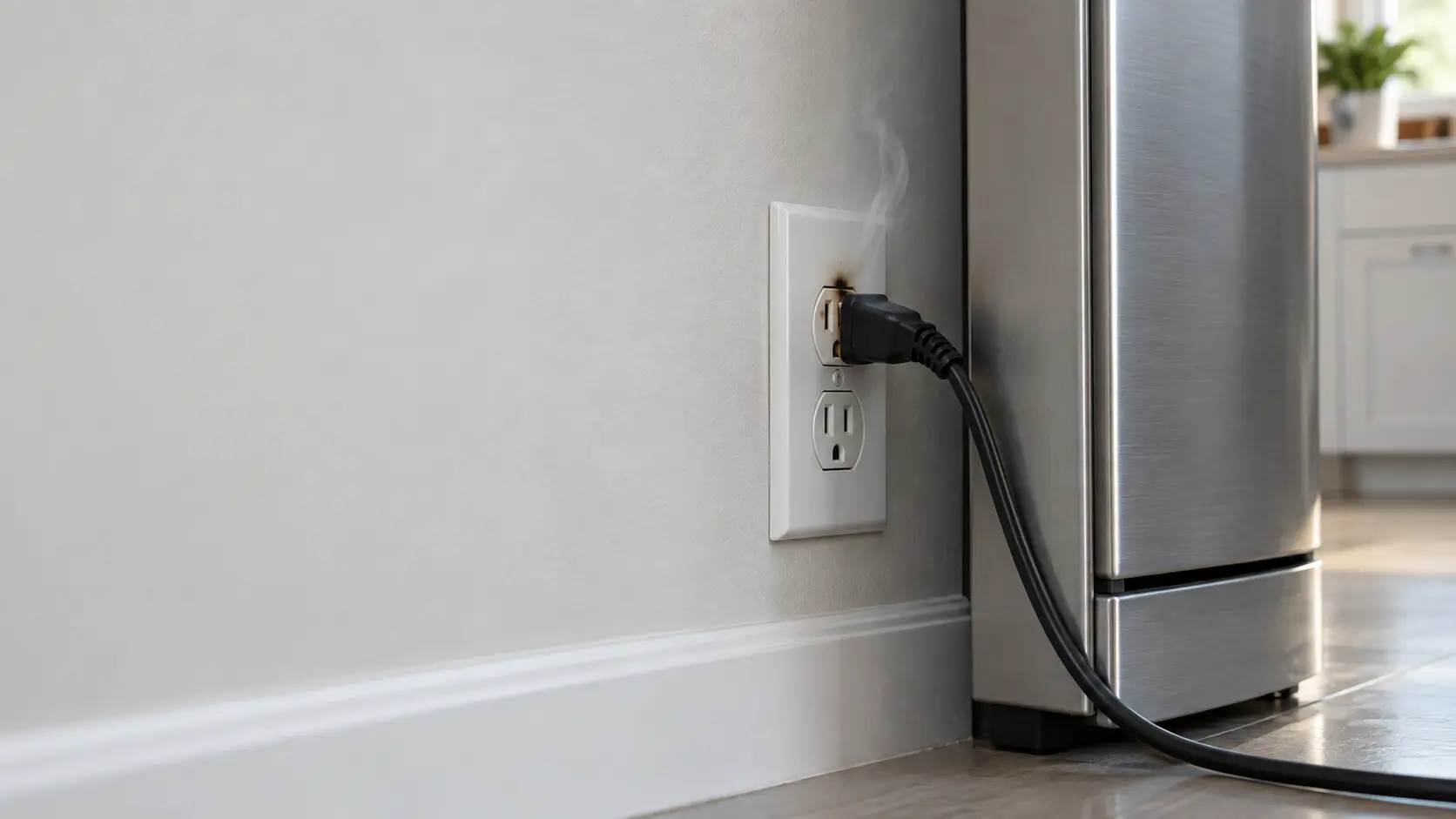
Five signs on this list are no longer about upkeep. A hot or burning-lint smell from the laundry, or a cabinet too hot to hold a hand on, means the exhaust run is packed: stop the cycle, pull the plug, and leave it off until the run has been cleared. A gas smell near an oven or burners means burners off, no match, no light switch, windows open, everyone outside, and a call to the gas utility or 911 from the yard. A supply hose that drips or has a bulge in it means the valve behind the appliance closed, nobody near the outlets, and the breaker switched off from a dry panel. A scorched-wire smell, or a breaker that drops each time the appliance starts, means switching that circuit off and leaving it off instead of flipping it back over and over. In all five, the gas fittings, refrigerant lines and wiring wait for a technician, and what follows is a repair rather than a routine visit.

Fire, gas, water or wiring risk

Hot or Burning Lint Smell in the Laundry Room: Stop the Cycle

A burning lint smell is the scorched, dusty odor of fluff overheating somewhere along the laundry's exhaust path, often with a cabinet or a door too hot to rest a hand on.

Causes, cheapest first

  1. Lint screen left full for several loadsno service
  2. Transition duct crushed behind the machinelow
  3. Outdoor hood jammed with lint or a nestlow to moderate
All 6 causes and what to check
Fire, gas, water or wiring risk

Gas Smell Near the Oven or Burners: Get Out, Then Call

A gas smell near the oven or burners is the sulfur odor added to natural gas and propane, noticed at a cooktop, a range, a wall oven or behind a gas appliance in the kitchen.

Causes, cheapest first

  1. A knob left partly on without a flameno service
  2. Boil-over that put out a burnerno service
  3. Connector loosened when the appliance was movedlow to moderate
All 6 causes and what to check
Fire, gas, water or wiring risk

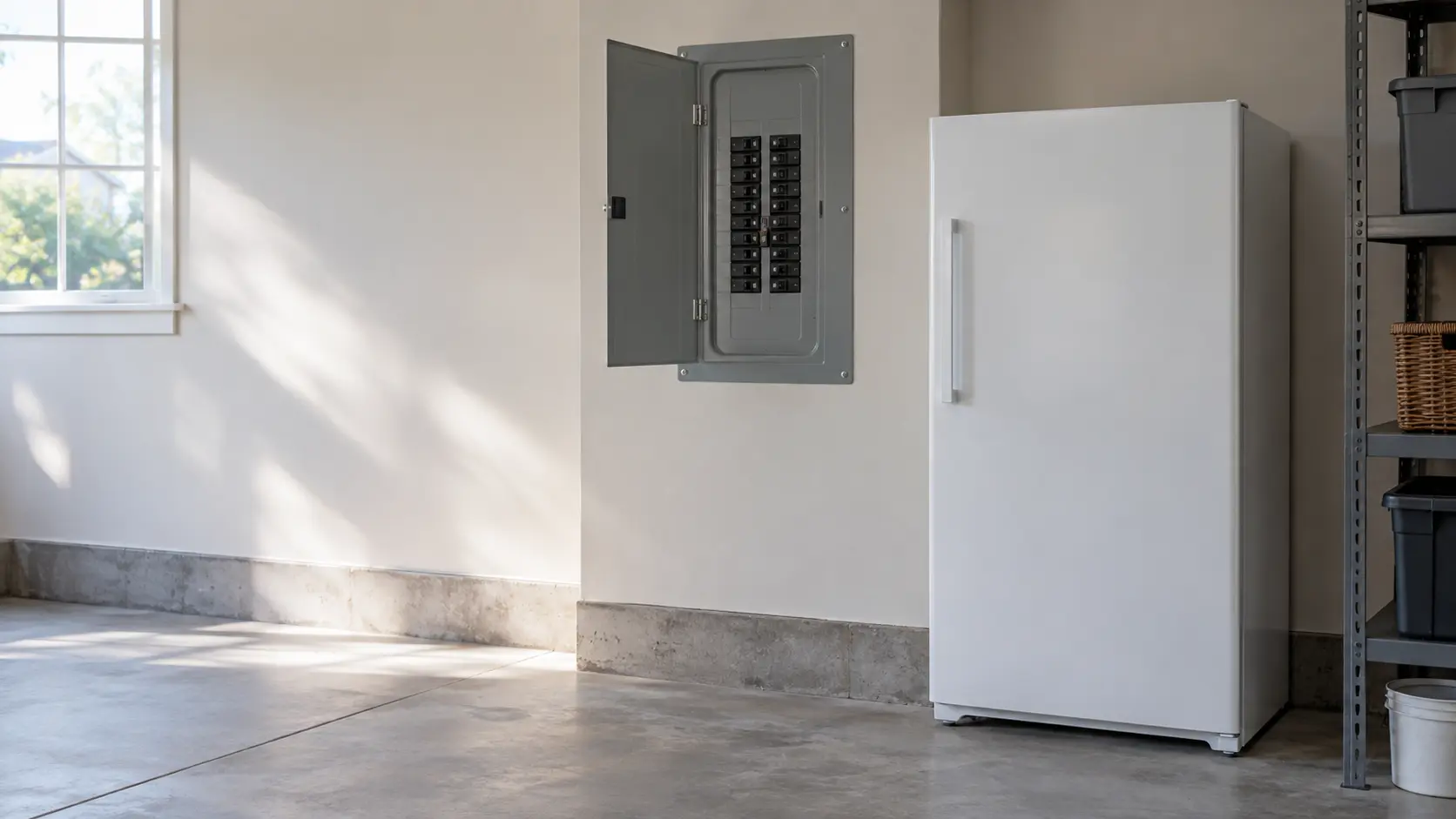
Appliance Tripping the Breaker Every Time It Runs

An appliance tripping the breaker cuts its own power, or a whole kitchen or laundry circuit, the moment it starts, heats or spins, and the breaker or GFCI outlet trips again after a reset.

Causes, cheapest first

  1. Two heavy loads sharing one circuitno service
  2. Compressor straining against a dirty coillow
  3. Damp at a GFCI outletlow
All 5 causes and what to check

Everything else we are called out for

Everything else here is the slow side of ownership, and it can wait for a booked visit. A freezer grows a little frost, the ice starts to taste flat, glasses come out with grit, towels need a second cycle, a burner flame shows yellow tips, the hood fan hums louder than it used to, or the power bill creeps up a few dollars a month. Each page lists what a homeowner can look at with the appliance unplugged and the gas closed before booking, and which task on a maintenance visit usually settles it.

Cold Storage Running Nonstop: Coil Dust, Clearance and Door Seals

Cold storage running nonstop is a refrigerator, freezer, wine or beverage unit that hums without the usual quiet breaks, often with warm cabinet sides and a higher power bill.
6 causes

Frost Building Up in the Freezer Between Defrosts

Frost building up in the freezer is a layer of white crystals growing on the walls, the ceiling, the ice maker or the packages inside, faster than the unit's defrost can clear it.
6 causes

Door Seal Not Holding: Gaps, Tears and Doors That Drift Open

A door seal not holding is a gasket that lets air, heat or water past it: a cold storage door that drifts open, an oven door leaking heat, or a dish care or front-loader door that drips.
6 causes

Water or Ice Tasting Stale: Filter Age, Scale and Idle Lines

Water or ice tasting stale is dispenser water, cubes or nugget ice with a flat, musty, chemical or freezer-food taste, often cloudy, slow to come or smaller than it used to be.
6 causes

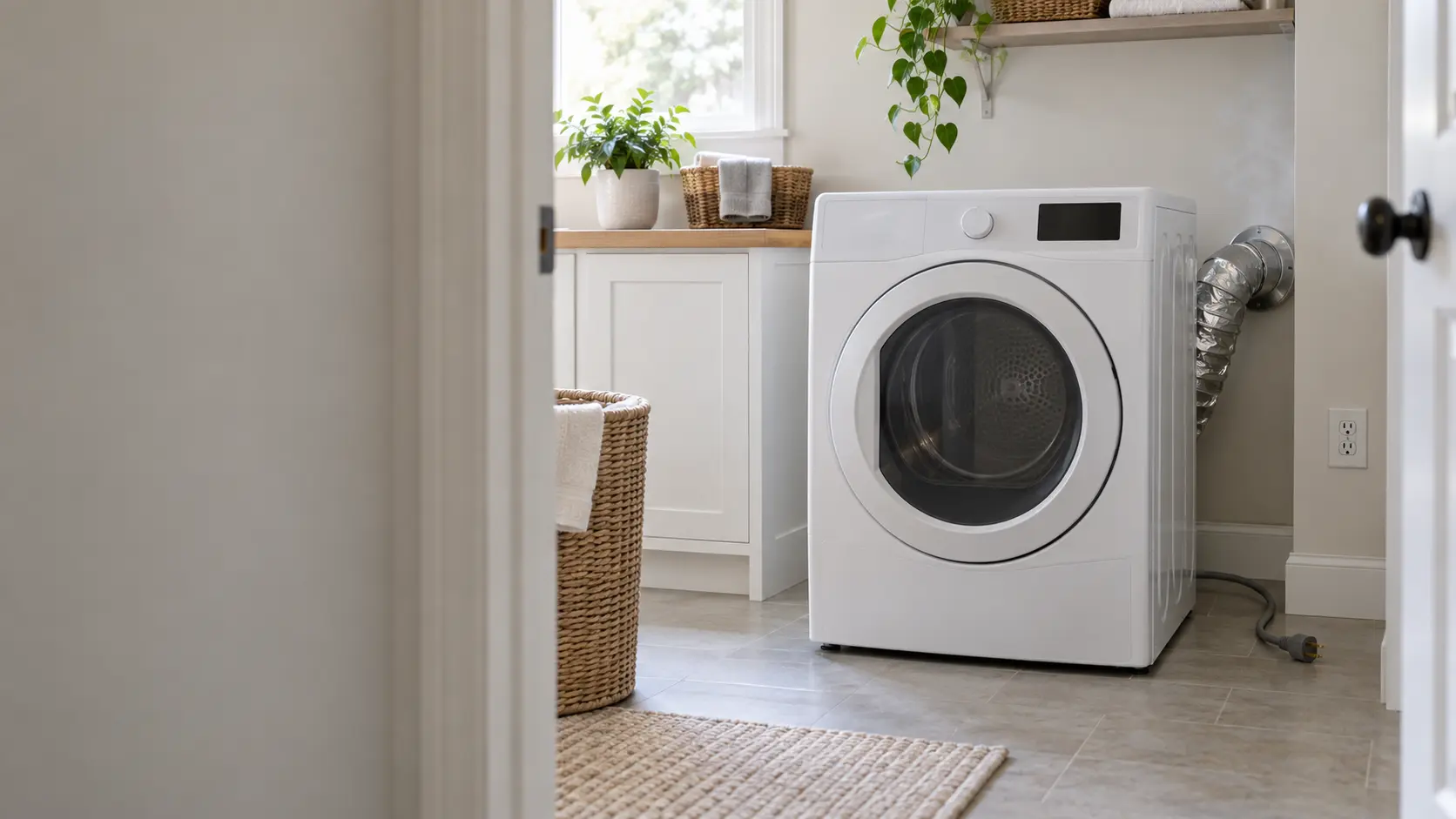
Laundry Taking Two Cycles to Dry: The Lint Path Is Usually Why

Laundry taking two cycles to dry is a load that comes out damp at the end of a normal cycle and needs another run, often with a hotter cabinet and a muggier laundry room.
6 causes

Laundry Drum Smelling Musty: Door Boot, Drain Filter and Detergent

A laundry drum smelling musty gives off a damp, sour or mildew odor when the door opens, and passes it on to clean clothes, towels and the laundry room itself.
6 causes

Dishes Coming Out Gritty or Spotted: Filter, Spray Arms and Rinse Aid

Dishes coming out gritty are plates and glasses with sandy specks, dried food, a white film or spots after a full cycle, often worse on the upper rack or in one corner.
6 causes

Burner Flame Yellow or Uneven: Ports, Caps and the Air Mix

A burner flame that is yellow or uneven burns orange in patches, lifts off the burner head, misses some ports or leaves soot on the bottom of pans on a gas cooktop, range or oven.
6 causes

Hood Fan Weak or Noisy: Grease Filters, Blower Wheel and Duct

A hood fan that is weak or noisy pulls little smoke or steam off the cooktop, roars, rattles or whistles, often after months of cooking without the filters being cleaned.
6 causes

White Scale on Appliance Water Parts: Steam Ovens, Ice Makers, Dish Care

White scale on appliance water parts is a chalky white or tan crust on a steam oven tray, an ice mold or plate, a dispenser outlet or the inside of a dishwasher, left by hard water.
6 causes

Appliance Energy Use Creeping Up With Nothing Else Changed

Appliance energy use creeping up is a power or gas bill that rises month after month with no new appliance and no change in how the house is used.
6 causes

Appliance Maintenance Code or Reminder Light: Filter, Descale, Vent Check

An appliance maintenance code is a reminder, icon or short code on a display asking for a filter change, descaling, a tub clean, rinse aid or an exhaust check rather than reporting a broken part.
8 causes

Not every home appliance
breaks the same way.

Cold storage covers every appliance in the house that keeps things cold, from the kitchen refrigerator and the garage freezer to wine and beverage units and ice makers; cooking appliances are the ovens, ranges, cooktops, hoods, microwaves and steam ovens; dish care means the dishwasher and the disposer under the sink; and laundry is the washer, the dryer and the exhaust run that carries lint out of the house. Which group are you planning a visit for?

All home appliance types

Familiar brands. Expert care.

For the brands
in your home.

Independent repair service. Not affiliated with, authorized or endorsed by any manufacturer. Brand names and model numbers are the property of their respective owners and are used here for identification only, to describe the appliances we service.

The services behind the symptoms

Most people arrive knowing what they are seeing, not what is wrong. These are the jobs a visit usually turns out to be.

diagnostic

Whole-home maintenance visit

One unhurried pass through every appliance in the house, with a written log of what each one needs next.

lowest

Condenser coil cleaning

Dust and pet hair brushed and vacuumed off the coil and fan of every cold storage unit in the house.

low

Water filter and descaling service

Fresh filters in dispensers and ice makers, and scale cleared from steam ovens, ice makers and dish care machines.

low to moderate

Door seal check and replacement

Gaskets on cold storage, oven and dish care doors tested edge to edge, cleaned or refitted, and the doors realigned.

low to moderate

Lint path and exhaust vent cleaning

Lint cleared from the screen housing, the duct behind the laundry and the whole run to the outside hood.

low

Drum seal and drain filter cleaning

The door boot, drain filter, detergent drawer and fill hoses on the washer cleaned and checked, and the machine leveled.

lowest

Dish care filter and spray arm cleaning

Filters, spray arm nozzles, door seals and the drain loop cleaned and checked so dishes come out clean again.

low to moderate

Burner, igniter and gas connection check

Burner ports and caps cleaned, igniters cleared, every flame read, and the gas connector and shutoff leak-tested.

low

Grease filter and hood fan service

Hood and microwave grease filters degreased or replaced, charcoal pads renewed, and the fan and duct checked for airflow.

lowest

Annual maintenance plan

Scheduled upkeep visits for every appliance in the home, spread across the year, with one running service log.

A family sharing breakfast in a bright, well-kept home kitchen.
For the heart of your home.

Questions about
the problems.

What I noticed is not on this list. Can I still book upkeep?
Yes. The list follows what homeowners mention most, and anything else is welcome. Describe what you saw, heard or smelled in the notes, and the technician will look at it during the visit.
The freezer is frosting and the power bill went up. Are those linked?
Quite often. A door gasket that no longer seals lets humid air in, which builds frost and keeps the compressor running longer, and a dusty condenser coil adds to the same bill. Open the page for whichever you noticed first; each one links the related signs at the bottom.
Which of these signs mean I should stop using the appliance?
Five: a hot or scorched-lint smell from the laundry, a gas smell at a cooking appliance, a supply hose that leaks or bulges, a burning electrical smell, and a breaker that trips when the appliance runs. Each of those pages opens with a warning panel. Gritty glasses or stale ice can wait for the booked day.
When does a sign on this list stop being maintenance?
When the part behind it has already failed. If the appliance has stopped cooling, heating, draining or spinning altogether, that is a repair, and the page points you to our sister repair site for that appliance. Upkeep is for the stage before that.

Back to your everyday

Let’s get your home appliance working again.

Three short steps online, or one call. Tell us what you are seeing and pick a window that works.

(844) 879-5178 Schedule maintenance