
Cold storage: coils, gaskets, temperatures and water
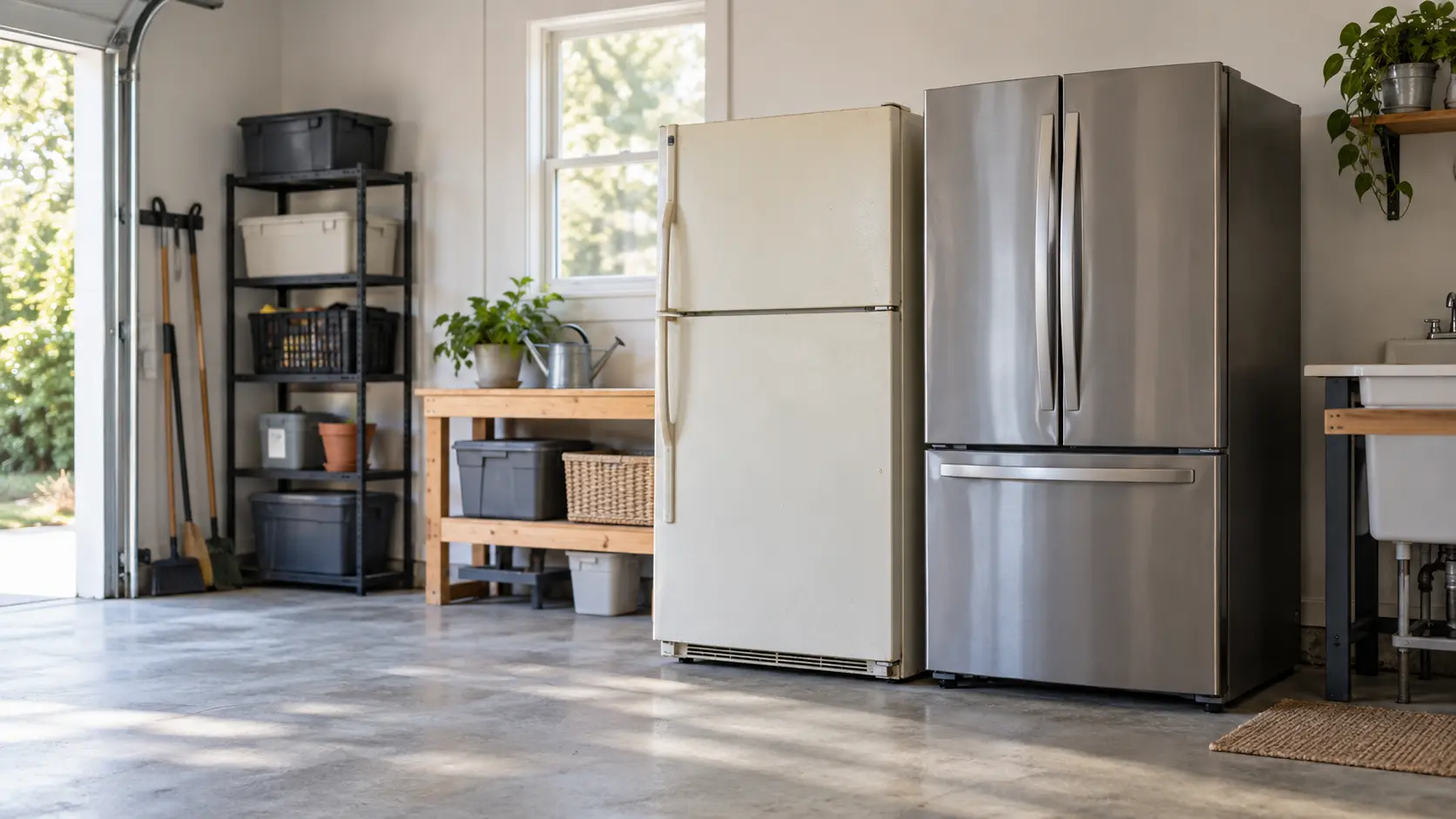
We start where the heat leaves. The condenser coil on a freestanding unit sits low at the back or behind the toe grille; on a built-in it sits behind a kick plate or top grille. On Viking's built-in columns the manual sets a six-month coil interval, and the visit does that work with the power off: vacuum, brush, check the condenser fan turns freely, refit the grille.
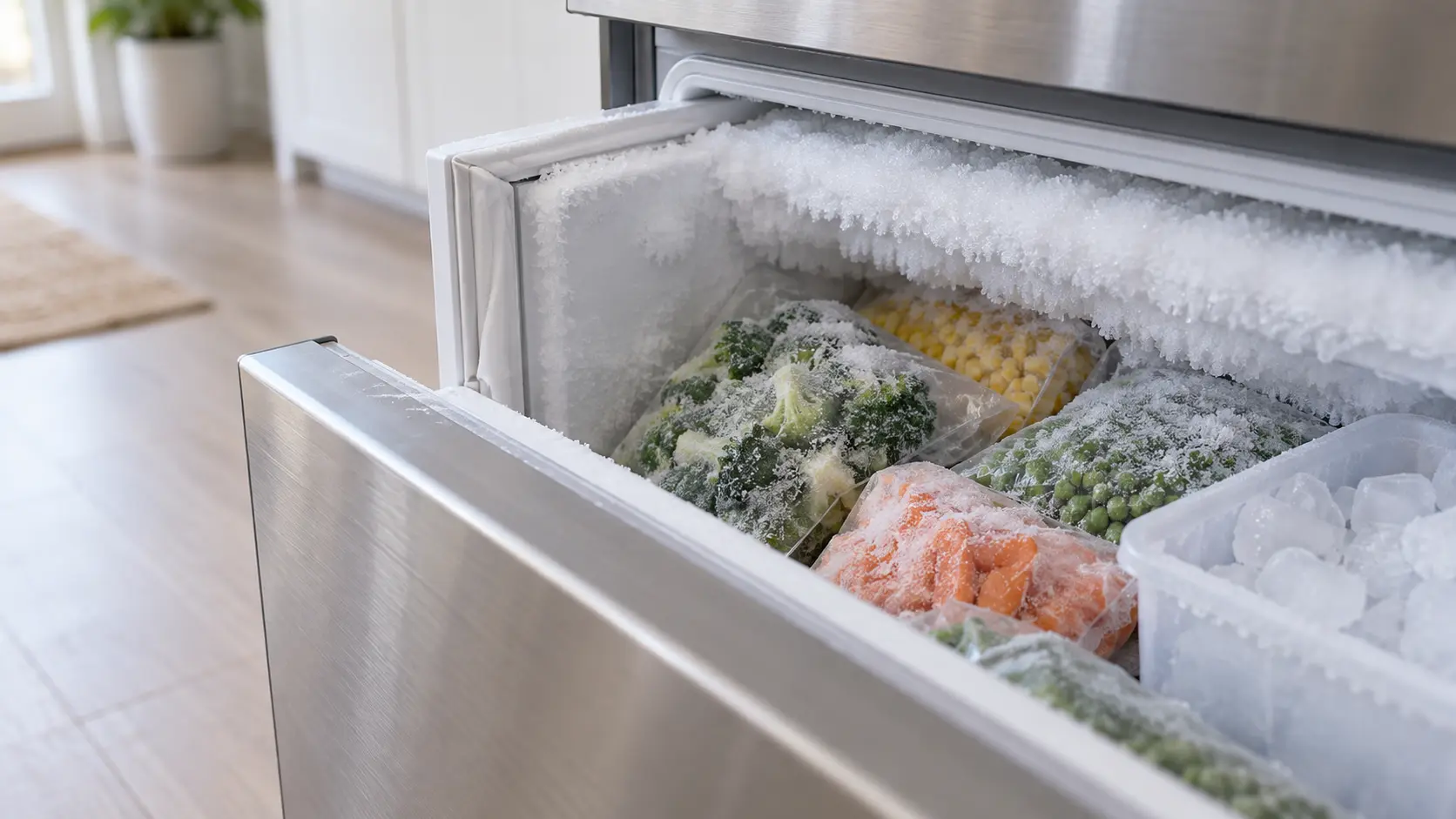
Then the doors. Each gasket is cleaned and checked for tears, flattening and full contact around the frame, and the cabinet is leveled if a door no longer swings closed. Thermometers go on a shelf and among the frozen food, since FDA asks for 40°F or below and 0°F. The water filter is changed if it has reached six months or its indicator, as Whirlpool advises, and the defrost drain and drain pan are checked for standing water.
Wine, beverage and ice units
Undercounter wine and beverage units, freezers and ice makers get the same coil, gasket and temperature work, plus the maker's own cleaning cycle for an ice maker if the manual calls for one. Because their grilles sit at floor level in a toe kick, they tend to be the dustiest coils in the house.
Source: Viking — FBI7360W built-in refrigeration use and care manual — Clean the condenser once every 6 months, with the main power switched off; FDA — Are you storing food safely? — Refrigerator at or below 40°F, freezer at 0°F, checked with appliance thermometers; Whirlpool Product Help — When to change the water filter — Replace the water filter every 6 months or when the indicator comes on
Cooking appliances: flames, igniters, the connection and the hood
On gas cooktops, rangetops and ranges, each burner is lit and its flame checked, burner heads and caps are cleaned and seated, and the igniters are checked for a steady spark. The accessible gas connection is checked for leaks with a detector solution; if anything is found, the gas is shut off at the appliance valve and the visit becomes a repair call. On ovens, the door gasket, hinges and the light are checked, and the owner's self-clean habits are noted against the maker's advice.
The hood gets its grease filters out and washed, its fan checked for noise and pull, and its lights and filter reminder reset. Wolf ties frequent cleaning of ventilation products to a lower risk of grease fire, and its V Series hood prompts the owner after 100 hours of fan use.
- Burner flame, heads and caps on every gas burner
- Igniter spark and the time it takes to light
- Leak check at the accessible gas connection
- Oven door gasket and hinges
- Hood grease filters washed, fan and reminder checked
Source: Wolf — V Series hood filter light on — Clean ventilation products frequently to reduce the risk of grease fire; the filter icon lights after 100 hours of operation; GE Appliances — Self clean oven frequency of use — Very frequent self-cleaning, perhaps more than once a month, could shorten the oven's life

Dish care: filter, spray arms, hoses and the air gap
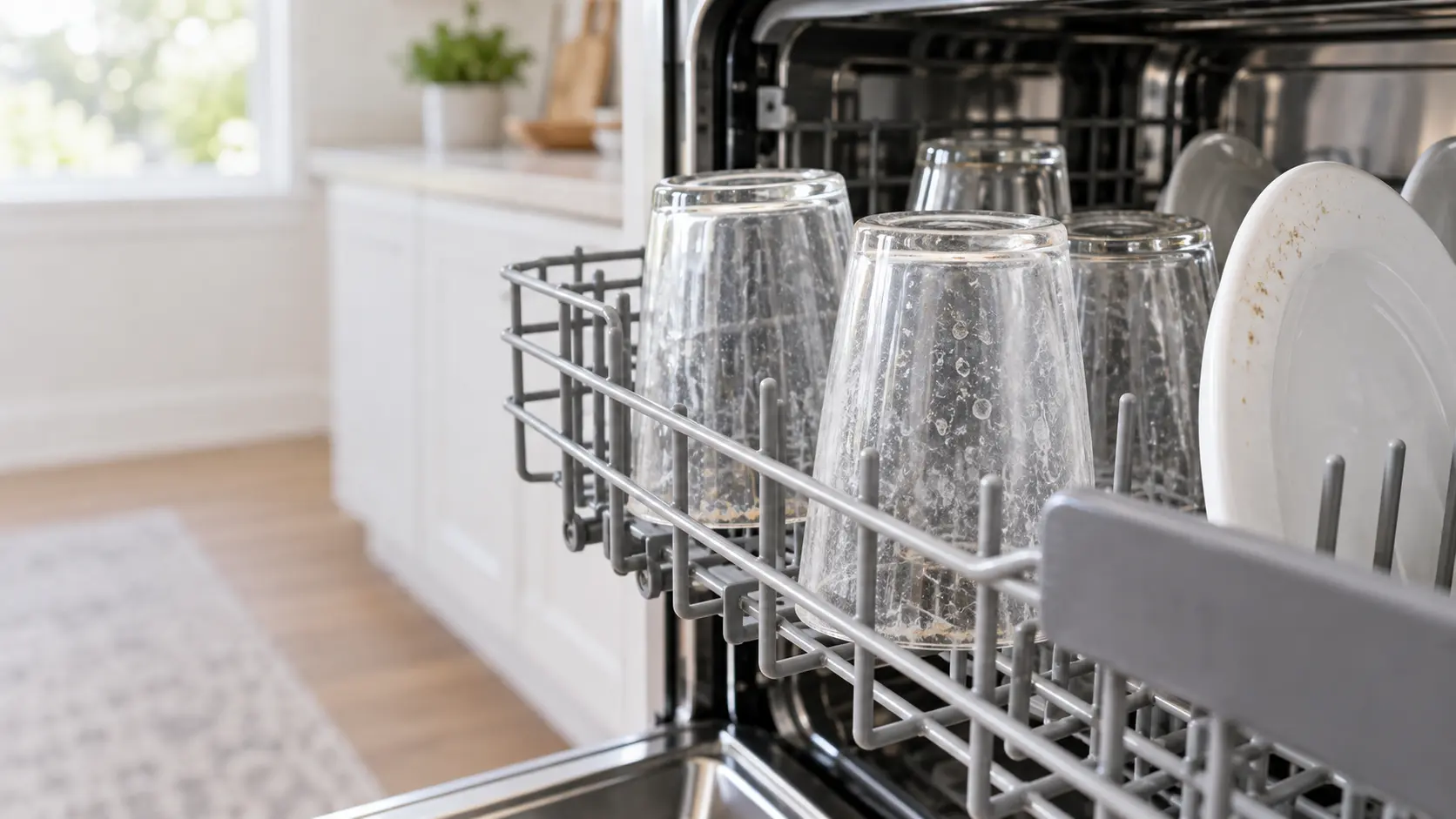
The filter assembly comes out and is rinsed, the sump is cleared of glass and pits, and each spray arm is taken off where the design allows, its nozzles cleared and its bearing checked for free rotation. Because Whirlpool expects owners to rinse those filters every month, the technician also shows whoever is home how to do it.
Under the sink, the supply line and drain hose are checked for drips and kinks, the air gap or high loop is confirmed, and the door gasket and the door's balance are looked at. If hard-water film is heavy, the rinse aid setting and the maker's cleaning cycle go on the list.
Source: Whirlpool Product Help — Water remains in filter area — Clean the upper and lower filters and rinse them under running water at least once a month
Laundry: lint path, exhaust run, drain filter and fill hoses
The dryer's lint screen and its housing are cleaned, the transition duct behind the machine is checked for crushing, and the exhaust run is cleaned to the outside flap. Whirlpool puts that run on a one-to-two-year cleaning cycle, and NFPA asks for a gas dryer's line and connection to be inspected by a qualified professional to confirm it is intact and free of leaks.
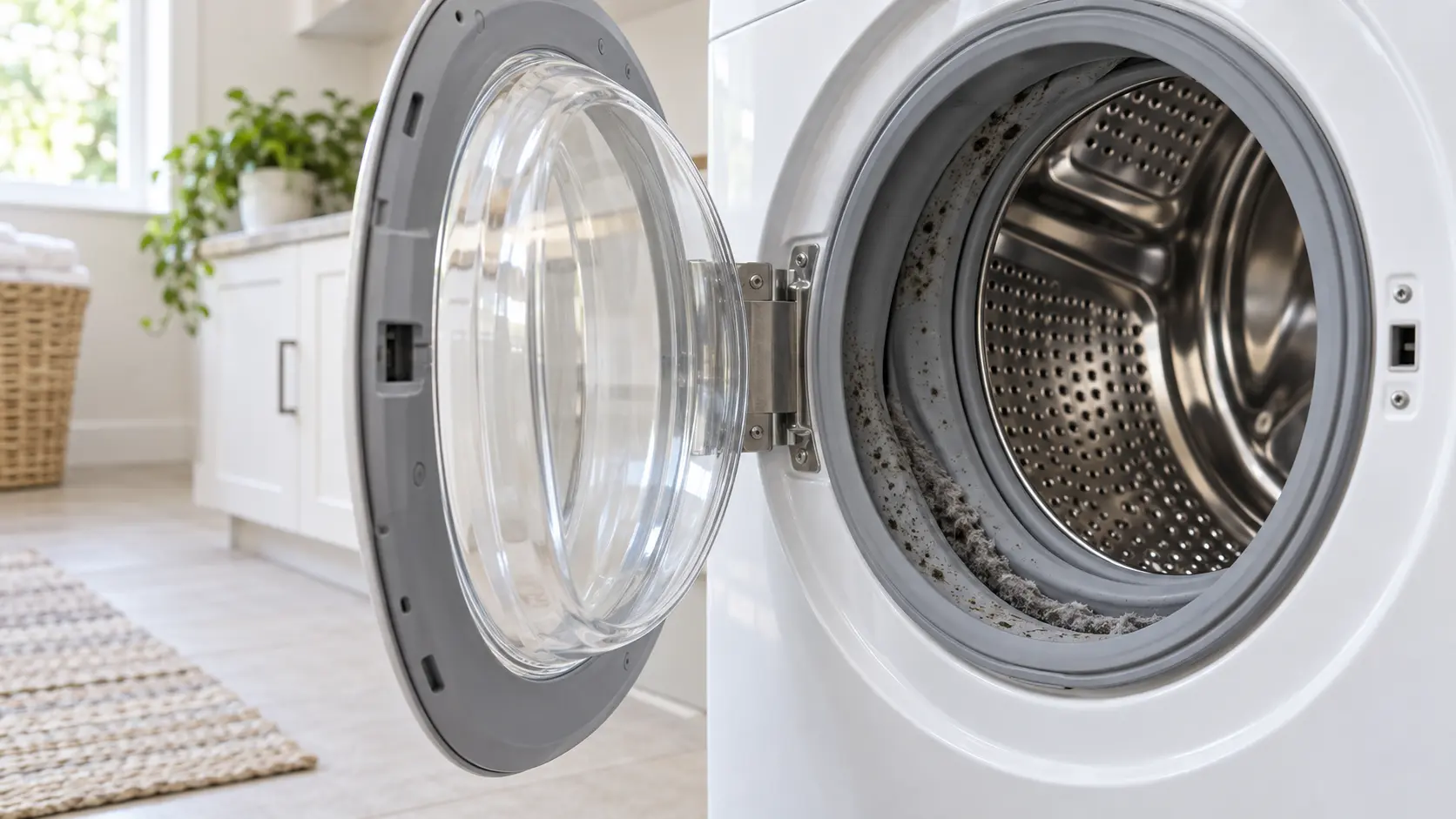
On the washer, the pump filter on a front-load machine is emptied and cleaned, which Samsung asks for monthly or about every 40 washes, the door boot is cleaned and inspected, the inlet screens are checked and the machine is leveled. Fill hoses are dated; GE and Whirlpool both say to replace them every five years.
The flap on the outside wall
USFA's dryer checklist ends outdoors: the vent covering should open when the dryer runs. We run the dryer and watch it, clear any nest or lint mat, and note a damaged hood for replacement.
Source: Whirlpool Product Help — Long dry times — Venting to the outside must be cleaned every one to two years; NFPA — Clothes dryer safety tip sheet — Gas dryers should be inspected by a qualified professional to make sure the gas line and connection are intact and free of leaks; Samsung — How to clean your Samsung washer — Clean the front-load pump filter at least monthly or about every 40 washes; GE Appliances — Washer inlet fill hoses — Replace fill hoses every 5 years
What the visit deliberately leaves out
A maintenance visit does not open a sealed refrigerant system. EPA rules under Section 608 of the Clean Air Act require technicians who maintain, service, repair or dispose of equipment that could release ozone-depleting refrigerants to be certified, and that work sits with a repair visit. Nor does it replace failed motors, pumps, boards or compressors on the spot; those are repairs, handed to the repair site for that appliance with our notes attached.
It also does not move gas piping beyond the appliance connection, rewire circuits or relocate a dryer exhaust through a wall. Those are jobs for the gas utility, an electrician or an installer.
What you receive at the end
Every visit ends with a written log for each appliance: model and serial, what was cleaned, adjusted or replaced, readings taken, parts dated, and anything to watch or plan for. That record is the part of the visit that lasts longest.
- Appliance, model and serial number
- Tasks done and parts replaced, with part numbers
- Temperatures, flame and airflow observations
- Items to watch, and when the next visit is due
Source: EPA — Section 608 technician certification — Technicians who maintain, service, repair or dispose of equipment that could release ozone-depleting refrigerants must be certified