

Why the model and serial matter more than the brand
Two appliances with the same badge and the same look can take different filters, gaskets, igniters and drain pumps. The model number decides which parts fit; the serial number narrows it further to a production run and, with many makers, gives the build date. Whirlpool's own help pages put scheduling maintenance and ordering replacement parts first among the reasons to know both.
For a maintenance visit, having the numbers ahead of time means the technician arrives with the right water filter, the right hose length and the right gasket profile instead of a van full of guesses. It also means the manual can be pulled up in advance, so the visit follows the maker's intervals rather than a generic list.
Source: Whirlpool Product Help — Where is my model and serial number located? — Model and serial numbers are needed to schedule maintenance and order parts; labels are on the sides, back or inside
Finding the rating tag in each appliance group
Tags live where they survive the life of the appliance, which usually means just inside a door or on a frame edge. Whirlpool's general advice is to check the sides, the back and the inside of the appliance for a label or sticker. The list below gives the spots we check first, with the maker's own wording where we have it; your model's manual has the exact location.
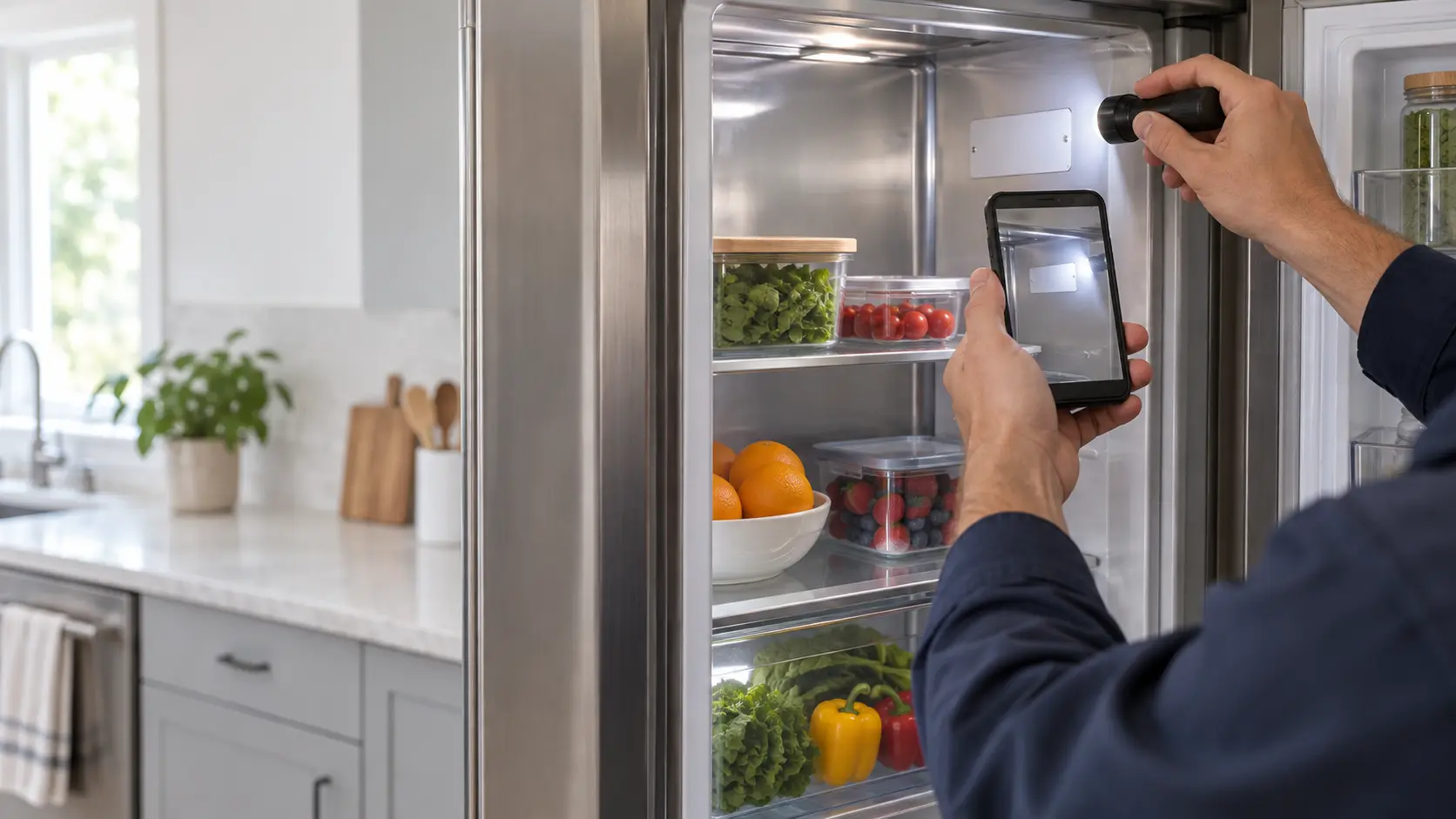
Take a photo of each tag straight on with the flash off, then a second with the flash on. One of the two is usually readable even when the print has faded, and the photo date becomes a first entry in the record.
- Cold storage: an upper side wall or ceiling of the fresh-food compartment; Viking's built-in columns put it on the upper wall behind the lighting, and one GE top-mount guide on the left side of the fresh-food compartment
- Dryers: GE places the label on the front of the dryer behind the door, on the inside face of the compartment
- Dishwashers: usually on the edge of the inner door or the side of the tub opening, seen with the door open
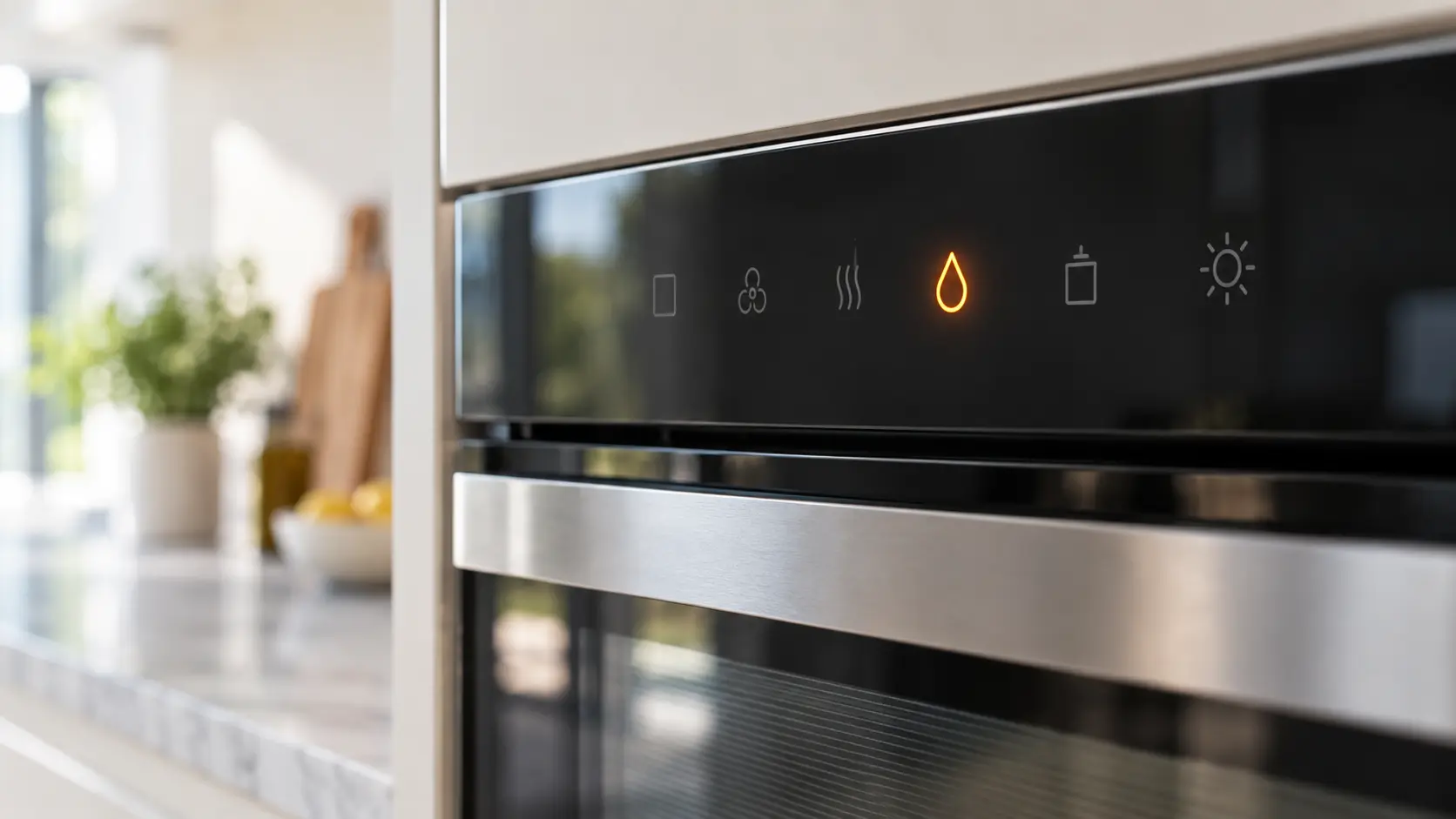
- Cooking appliances: behind an oven door on the frame, under a cooktop, or behind a storage or warming drawer
- Hoods: on the inner wall behind the grease filters, visible once a filter is out
Newer tags with a QR code
GE notes that some newer model and serial tags carry a QR code that opens that exact product's information when scanned. It is worth scanning once and saving the link in the record, since it leads straight to the right manual.
Source: Whirlpool Product Help — Where is my model and serial number located? — Model and serial numbers are needed to schedule maintenance and order parts; labels are on the sides, back or inside; Viking — FBI7360W built-in refrigeration use and care manual — Model and serial numbers are on the upper wall behind the lighting; have model, serial, purchase date and dealer ready for service; GE Appliances — top-mount refrigerator use and care guide (49-6797) — Label at the left side of the fresh-food compartment; the numbers also appear on the ownership registration card; GE Appliances — Dryer owner's manual and installation instructions (49-3000386) — Model and serial numbers are on the label on the front of the dryer behind the door; GE Appliances — Model and serial number locator, dryers — Tag on the inside front face of the dryer compartment, door open; some newer tags have QR codes that open product information

Reading age and ratings off the tag
GE explains that its serial numbers start with two letters for the month and year of manufacture. The year letter comes around again roughly every twelve years, so GE suggests checking the date printed near the publication number on the owner's manual to decide which cycle applies. Other makers encode dates differently, and some print the date outright.
Sub-Zero lists what its serial tag shows: model number, serial number, manufacture date, the refrigerant charge on Sub-Zero units, and total amps. The electrical rating matters when an appliance shares a circuit or moves, and the refrigerant line tells a technician what is sealed inside before anyone thinks about disposal.
The registration card is a second copy
Older GE manuals point out that the model and serial numbers also appear on the ownership registration card packed with the appliance. If a tag has worn away, that card, the original receipt or the delivery paperwork may be the only other place the numbers survive.
Source: GE Appliances — How to determine the age of an appliance — The first two serial letters give month and year; the year letter repeats about every 12 years; the manual's print date helps; Sub-Zero — Serial tag locations — The serial tag shows model number, serial number, manufacture date, refrigerant charge on Sub-Zero units, and total amps
Building the record, one page per appliance
Viking tells owners to have four things ready for service: model, serial, purchase date and the dealer it came from. We start every page with those and add what a maintenance history needs. A shared note on a phone works, and so does a sheet in a folder with the manuals; what matters is that everyone in the house knows where it is.
The FTC advises anyone buying a service contract to check whether coverage can be denied for not following routine maintenance instructions. A dated log of cleanings and part changes is the practical answer to that question, whether or not you ever buy such a contract.
- Brand, model, serial and a photo of the tag
- Build date and purchase date, seller or builder
- Part numbers for the water filter, hood filters, fill hoses and any bulb
- Dated lines: filter changed, coil cleaned, exhaust cleaned, hoses replaced, gasket fitted
- Anything a technician noted to watch at the next visit
Recall searches take seconds with the numbers
CPSC keeps a searchable database of consumer product recalls by brand and product. Recall notices usually name model numbers and sometimes serial ranges, so an exact number from the tag is the difference between a quick check and an evening of squinting at photos.
Source: Viking — FBI7360W built-in refrigeration use and care manual — Model and serial numbers are on the upper wall behind the lighting; have model, serial, purchase date and dealer ready for service; FTC — Extended warranties and service contracts — Check whether coverage can be denied if routine maintenance instructions are not followed