

Cold storage: temperature, water and the door
Start with numbers rather than impressions. FDA's targets are 40°F or colder for the fresh-food side and 0°F for the freezer, and it names an appliance thermometer as the reliable way to confirm them. Leave one on a middle shelf and one among the frozen food, and read them before the doors have been opened much in the morning.
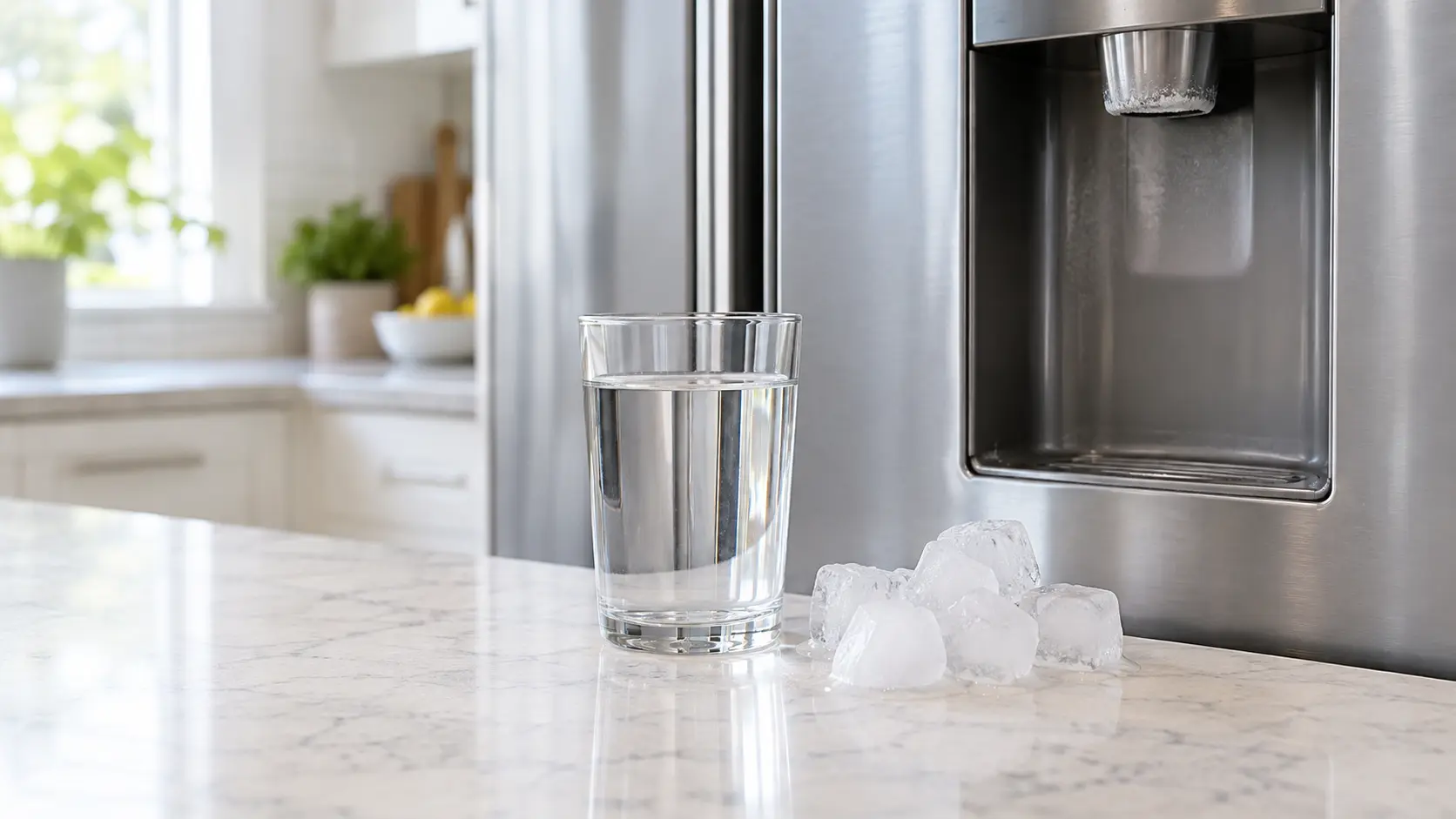
Then run a glass of water from the dispenser and watch the ice bin. Whirlpool ties slow dispensing, small cubes and reduced ice production to a clogged water filter, and asks for a new filter every six months or when the indicator lights. A date written on the filter housing in marker saves guessing.
Gaskets and the grille
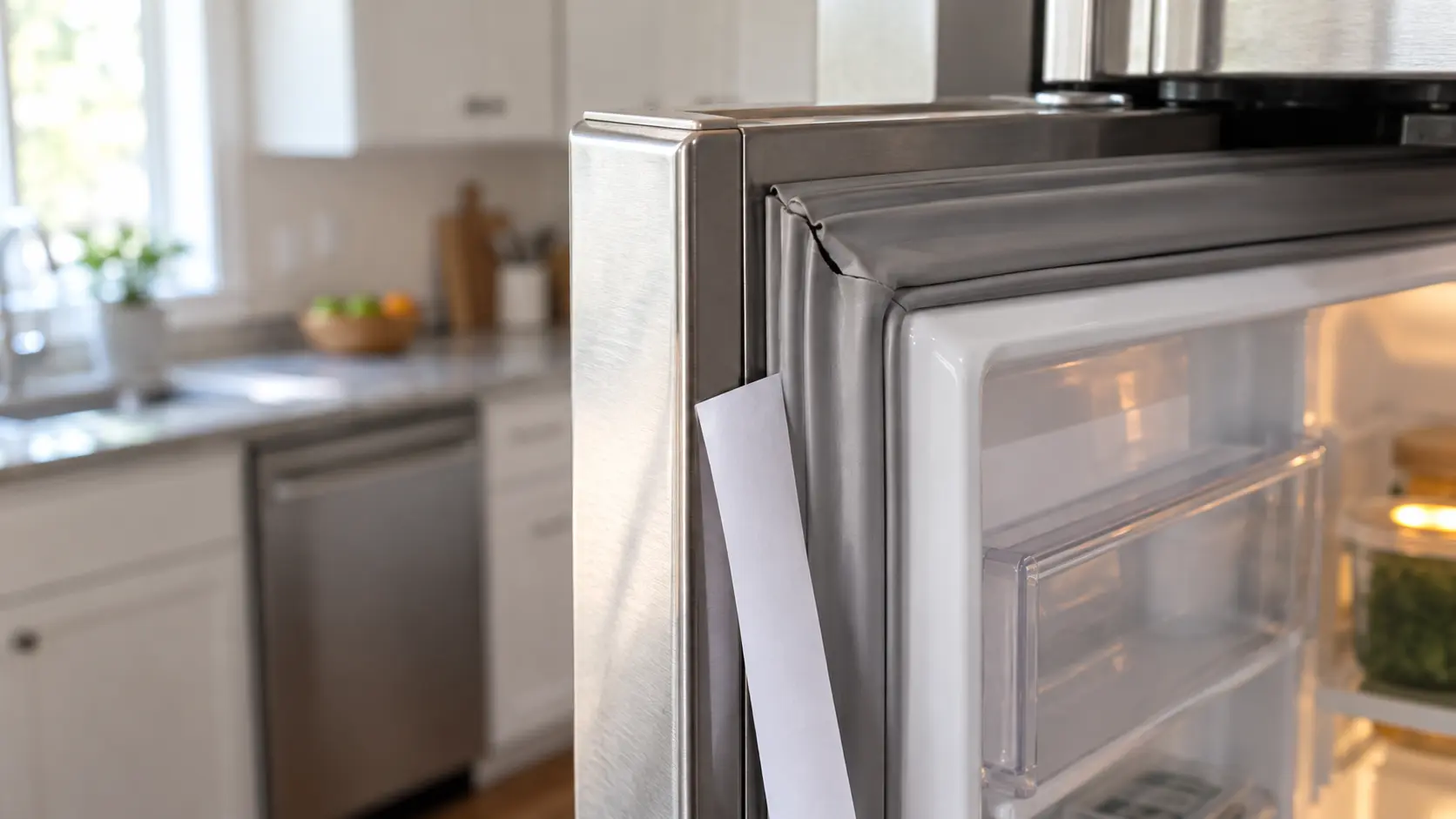
Wipe each door gasket with warm soapy water and dry it, looking for tears, flattened sections or a corner that no longer touches the cabinet. On a built-in or undercounter unit, look at the kick plate or top grille for a gray film of dust; ENERGY STAR asks owners of older models to keep the coils clean and leave a few inches between the cabinet and the wall on units that breathe from the back.
Source: FDA — Are you storing food safely? — Keep the refrigerator at or below 40°F and the freezer at 0°F; appliance thermometers are the best way to know; Whirlpool Product Help — When to change the water filter — Replace every 6 months or when the indicator comes on; a clogged filter causes small cubes, reduced ice production and longer dispensing
Cooking appliances: flame, hood filter and cords
Light each burner on a gas cooktop or rangetop in turn and look at the flame. On the gas burners we service, a healthy flame is crisp and mostly blue; a yellow, lazy or lifting flame, or a burner that takes several clicks to light, goes on the list for the visit. Wipe spills from around the burner ports once the grates are cool, and do not poke into the ports with anything that could break off.
Look at the underside of the hood. If the metal filter has a sticky, amber sheen, it is due for a wash. On a Wolf V Series hood the filter icon counts fan hours and comes on at 100; once the filters are washed, a five-second press on that icon clears it.
Plugs and cords you can see
USFA's advice is short: major appliances plug straight into a wall outlet, never through an extension cord, and a cracked, damaged or loose cord is a reason to stop using the appliance. Check the cords you can see on the counter and behind a freestanding unit without pulling anything built in out of its opening.
Source: Wolf — V Series hood filter light on — The filter icon lights after 100 hours of operation; press and hold it for 5 seconds to reset after cleaning
Dish care: filter, spray arms and the rinse aid gauge
Lift out the filter assembly at the bottom of the tub. Whirlpool's monthly routine is to hold both the upper and lower filter under the tap, using a soft brush on mineral deposits; a wire brush or scouring pad can damage the mesh. Before refitting it, pick out any glass, pits or labels from the sump by hand.
Spin each spray arm with a finger; it should turn freely. Hold it up to the light and look for nozzles blocked with seeds or scale. Last, look at the rinse aid gauge. Whirlpool says a full dispenser lasts about a month, so a gauge that empties in a week or two is worth mentioning at the visit.
Reading what the sump collects
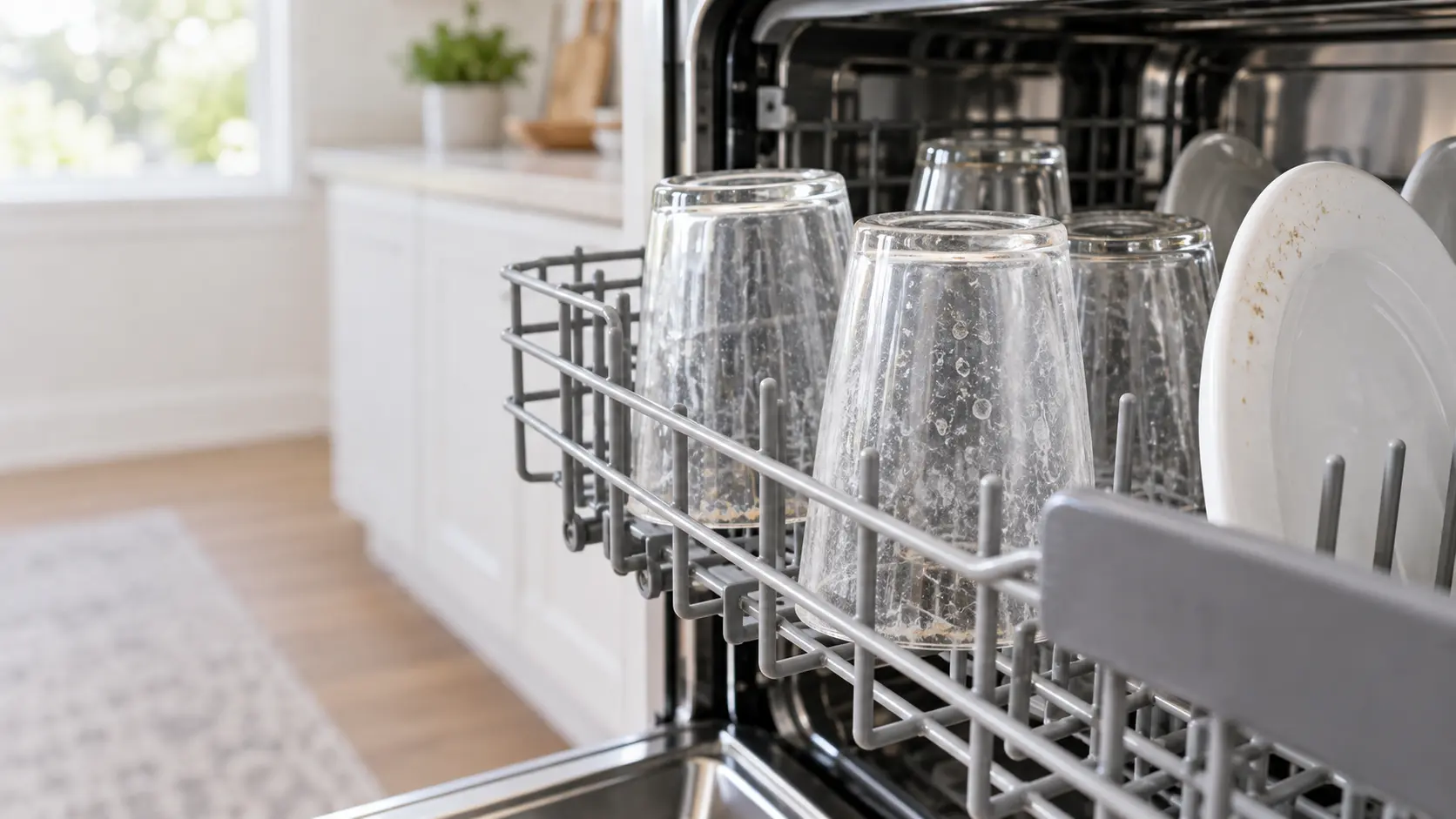
What sits in the filter tells you something. Seeds and paper labels are a loading habit; a gritty sand-like residue suggests a spray arm is starved of water; a chalky white crust on the filter mesh is hard water at work. Note which one you found, because the fix for each is different and only the last one points to descaling.
Source: Whirlpool Product Help — Water remains in filter area — Clean the upper and lower filters and rinse them under running water at least once a month; Whirlpool Product Help — Cleaning the removable filtration system — Remove larger objects by hand first; no wire brush or scouring pad; a soft brush for calcium deposits; Whirlpool Product Help — Filling and adjusting the rinse aid dispenser — A full rinse aid dispenser should last about a month
Laundry: lint path, outside flap and hoses
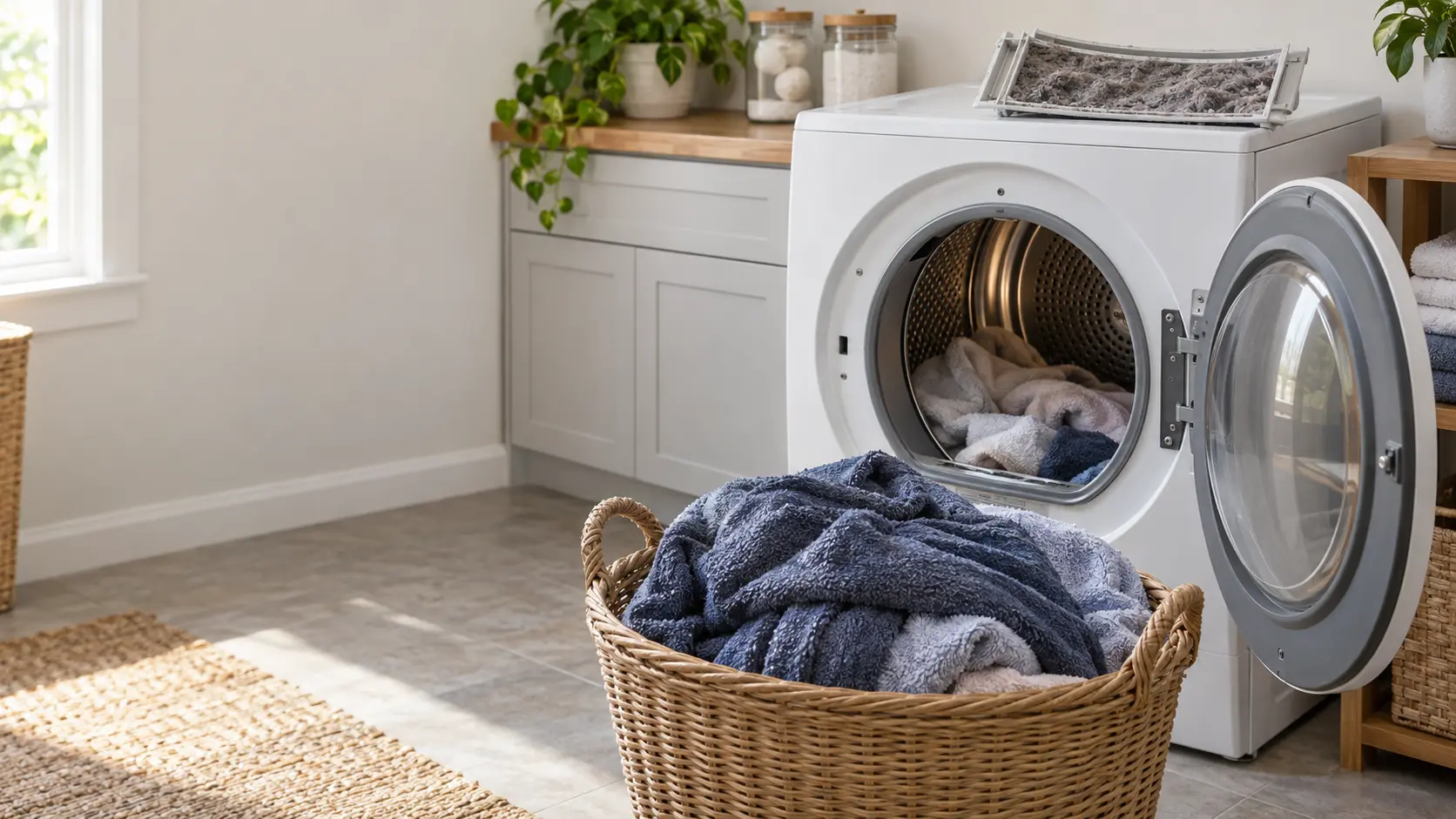
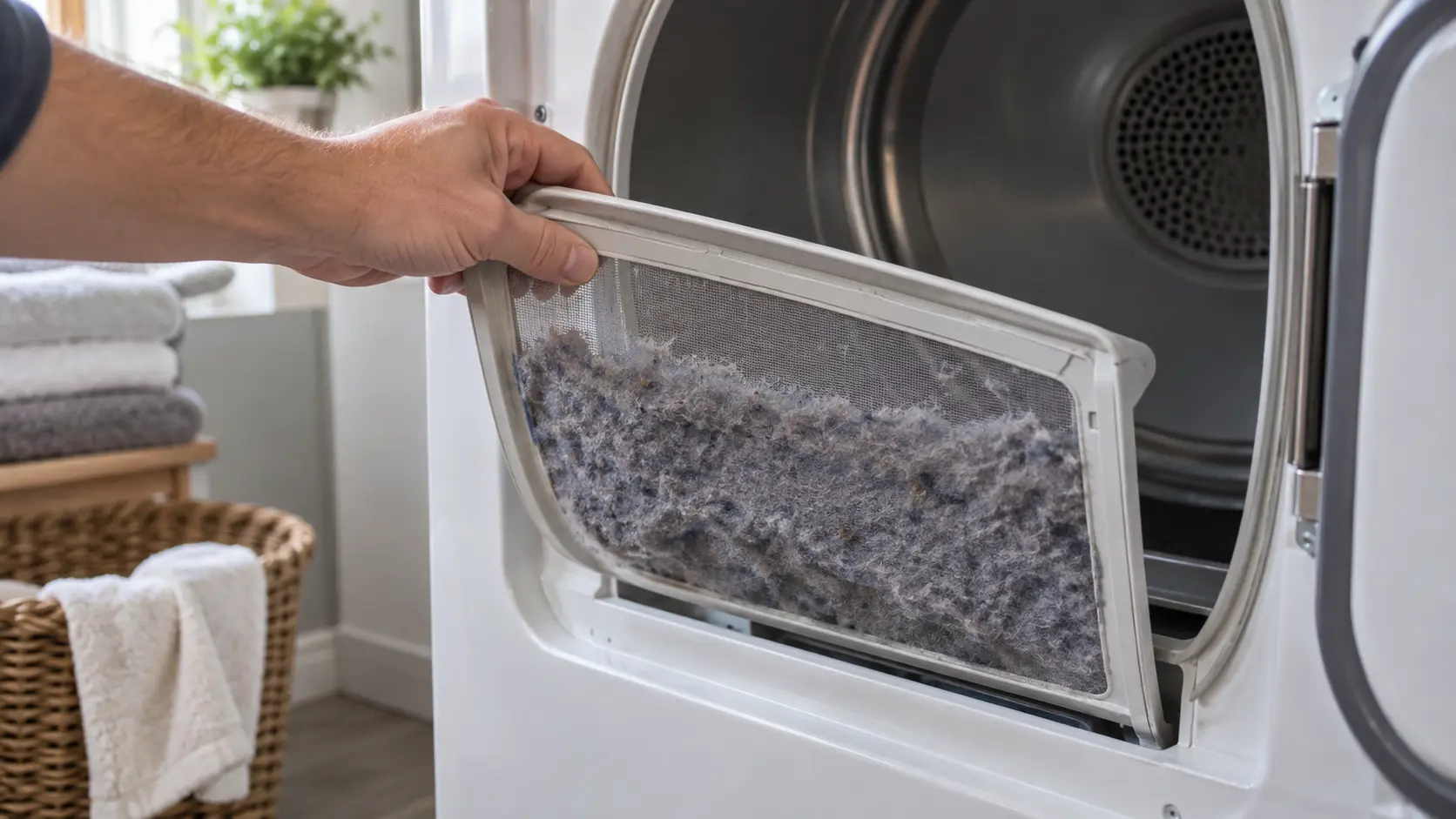
Pull the lint screen and clean it; ENERGY STAR advises doing so after every load, and scrubbing it with a toothbrush once a month if you use dryer sheets. Then go outside while the dryer runs. USFA's dryer checklist asks owners to make sure the outdoor vent covering opens when the dryer is operating and that the venting behind the machine is not crushed or restricted.
On the washer side, run a hand along each fill hose where you can reach it and feel for dampness at the fittings. On a front-load washer, Samsung asks for the pump filter to be cleaned at least monthly or about every 40 washes. Wipe the door boot dry and leave the door ajar after the last load of the day.
- Lint screen out and cleaned, housing slot checked for loose lint
- Outside flap opens and air flows while the dryer runs
- Fill hose fittings dry to the touch, no bulge along the hose
- Door boot wiped and left open to air
Source: ENERGY STAR — Clothes dryers — Clean the lint filter after every load; scrub it with a toothbrush monthly if you use dryer sheets; USFA — Clothes dryer fire safety flyer — Check the venting behind the dryer is not damaged, crushed or restricted; make sure the outdoor vent covering opens while the dryer operates; Samsung — How to clean your Samsung washer — Clean the front-load pump filter at least monthly or about every 40 washes
What to write down for the next maintenance visit
The round is only half useful if nothing is recorded. Two lines per appliance group are enough, kept in the same notebook or file as the model and serial numbers, and handed to the technician when they arrive.
- Thermometer readings for each cold compartment, with the date
- Filter change dates: water filter, hood filter wash, dish filter rinse
- Anything that took longer than usual: a drying cycle, a dish cycle, ice refill
- Any smell, sound, flame color or damp spot you noticed, and where