

Cycles that quietly take longer than they used to
Time is the most honest signal a home appliance gives. A refrigerator whose compressor used to cycle off regularly and now hums for most of the evening, a load of towels that needs a second drying round, a dish cycle that runs past its usual finish time: each one points to heat or water that is no longer moving the way the design expects. Owners rarely notice the change because it creeps in over months, a few minutes at a time.
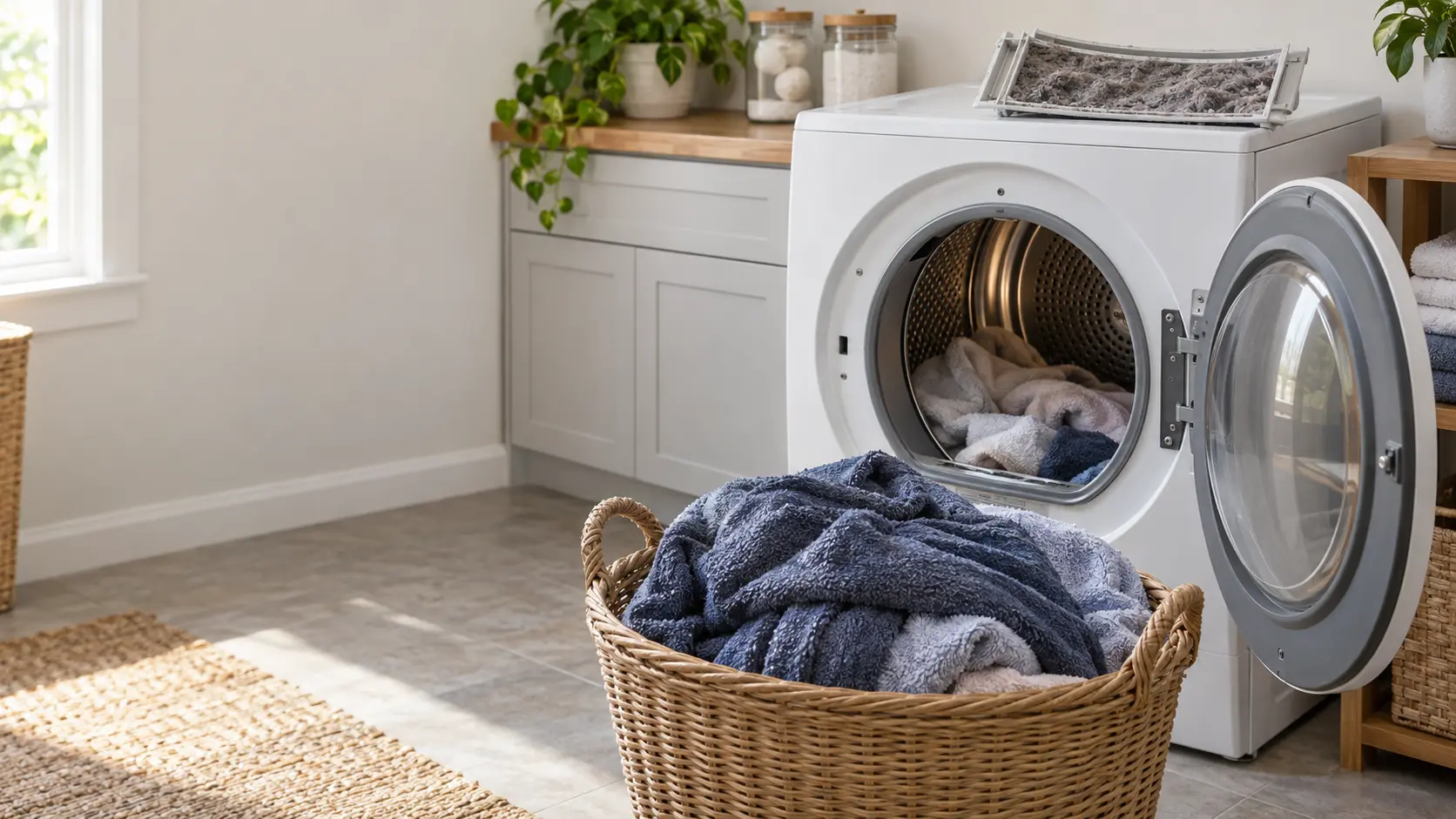
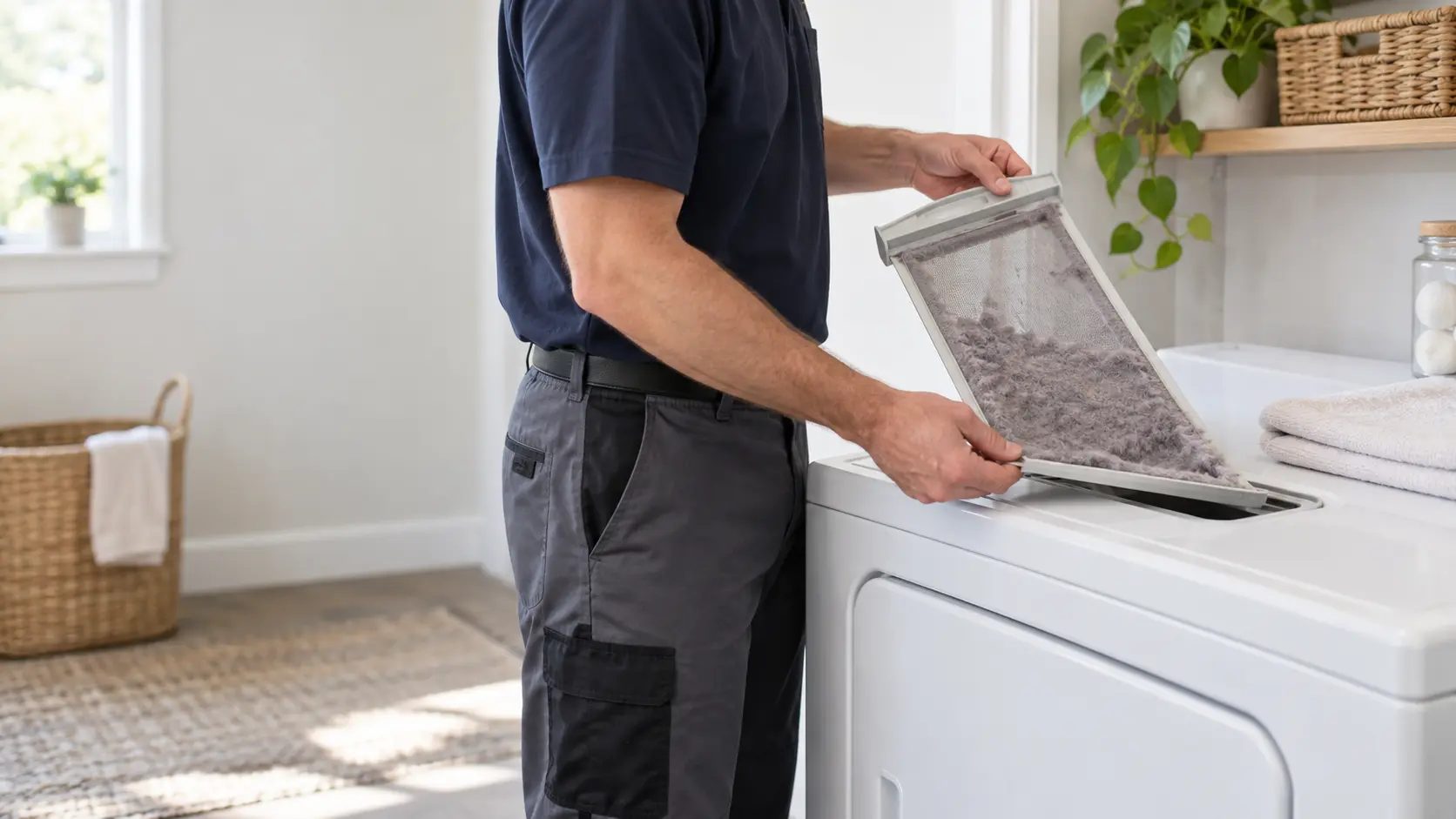
CPSC puts it plainly for laundry. If clothing is still damp at the end of a typical cycle, or drying takes longer than normal, the lint screen or the exhaust duct may be blocked. The same logic runs through cold storage, where dust on a condenser coil makes the compressor work longer for the same temperature, and through a range hood whose saturated filter pulls less smoke per minute of fan time.
A baseline worth writing down once
A slower cycle only means something if you know what normal was. On a day when everything works, note a few numbers on the inside of a cabinet door or in a phone note, and compare them every few months.
- Minutes for a full load of towels on the automatic dry setting
- The finish time of your usual dish cycle with a full rack
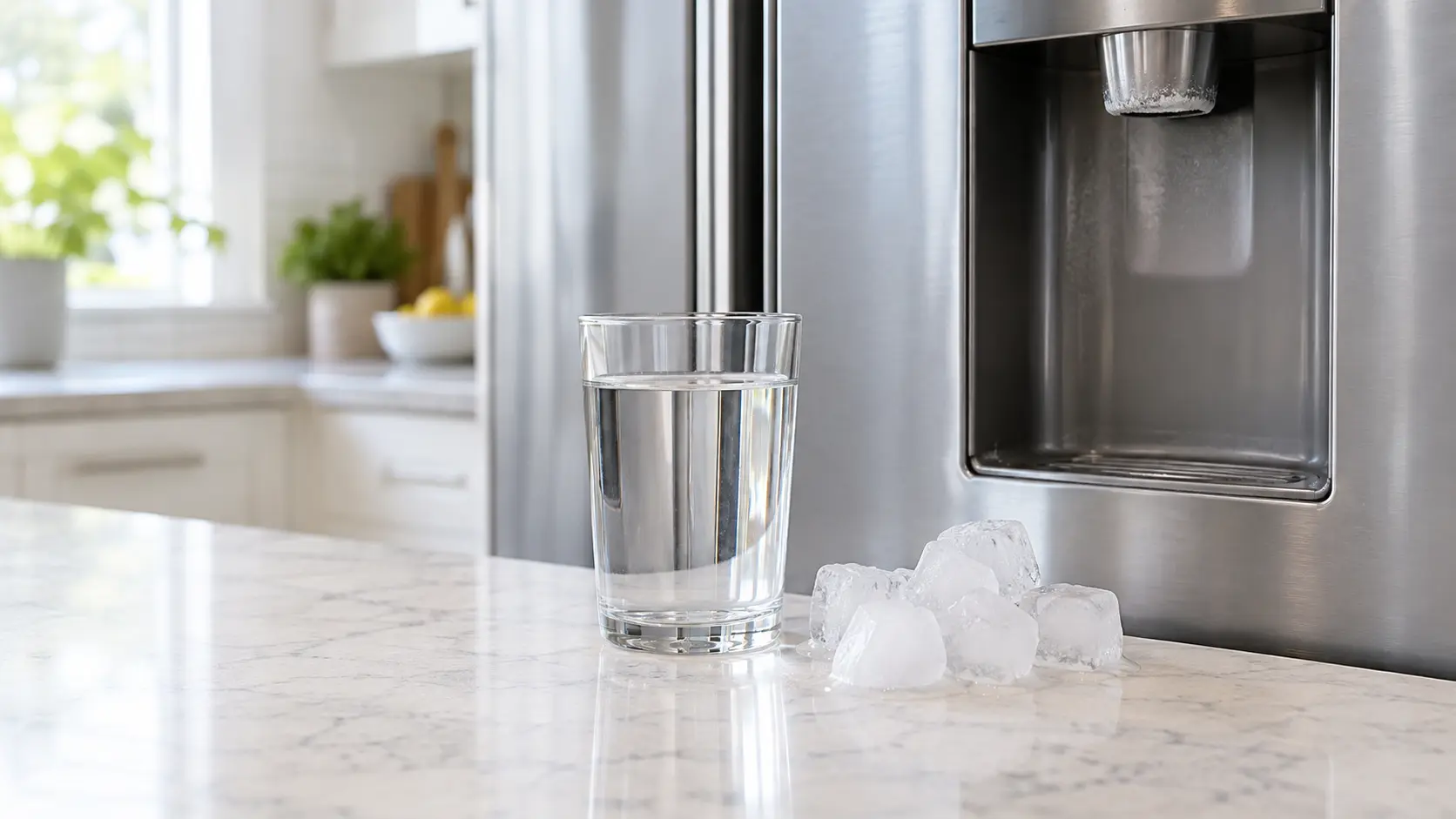
- How long the dispenser takes to fill a standard glass of water
- Whether the refrigerator compressor pauses during a quiet hour in the evening
Source: CPSC — Overheated clothes dryers can cause fires (publication 5022) — Damp clothing after a typical cycle, or longer drying than normal, may mean the lint screen or exhaust duct is blocked
New sounds, smells and warmth around the cabinet
The second group of signs is sensory. A musty smell from the laundry drum or the door boot, a sour note when the dish door opens, a hood fan that sounds strained on its low setting, a rattle behind the kick plate of a built-in: these tend to mean residue or dust has collected somewhere a cleaning routine does not reach. They are the reason a maintenance visit opens panels rather than only wiping fronts.
Warmth is worth attention too. The top of a laundry cabinet that is warmer than usual after a cycle, or a side wall of a refrigerator that feels hot to the palm, suggests that heat is not leaving where it should. That is still an upkeep problem while it is mild, and a safety problem once it is not.
When a sign means stop rather than schedule
A few signs skip the maintenance queue entirely. A hot or burning-lint smell, a gas odor near a burner, a supply hose that is weeping or has a bulge, a burning electrical smell or a breaker that trips when one appliance starts: switch that appliance off, keep clear, and treat it as a repair, not a cleaning. The stop box at the end of this guide says what to do for each.
What the water parts show before anything else does
Water carries its own warning signs, and they usually arrive before a machine stops. Whirlpool ties a clogged refrigerator water filter to three symptoms at once: smaller ice cubes, fewer of them, and longer dispensing times. Its guidance is to replace the filter every six months or when the indicator light comes on, and sooner if the flow drops early.
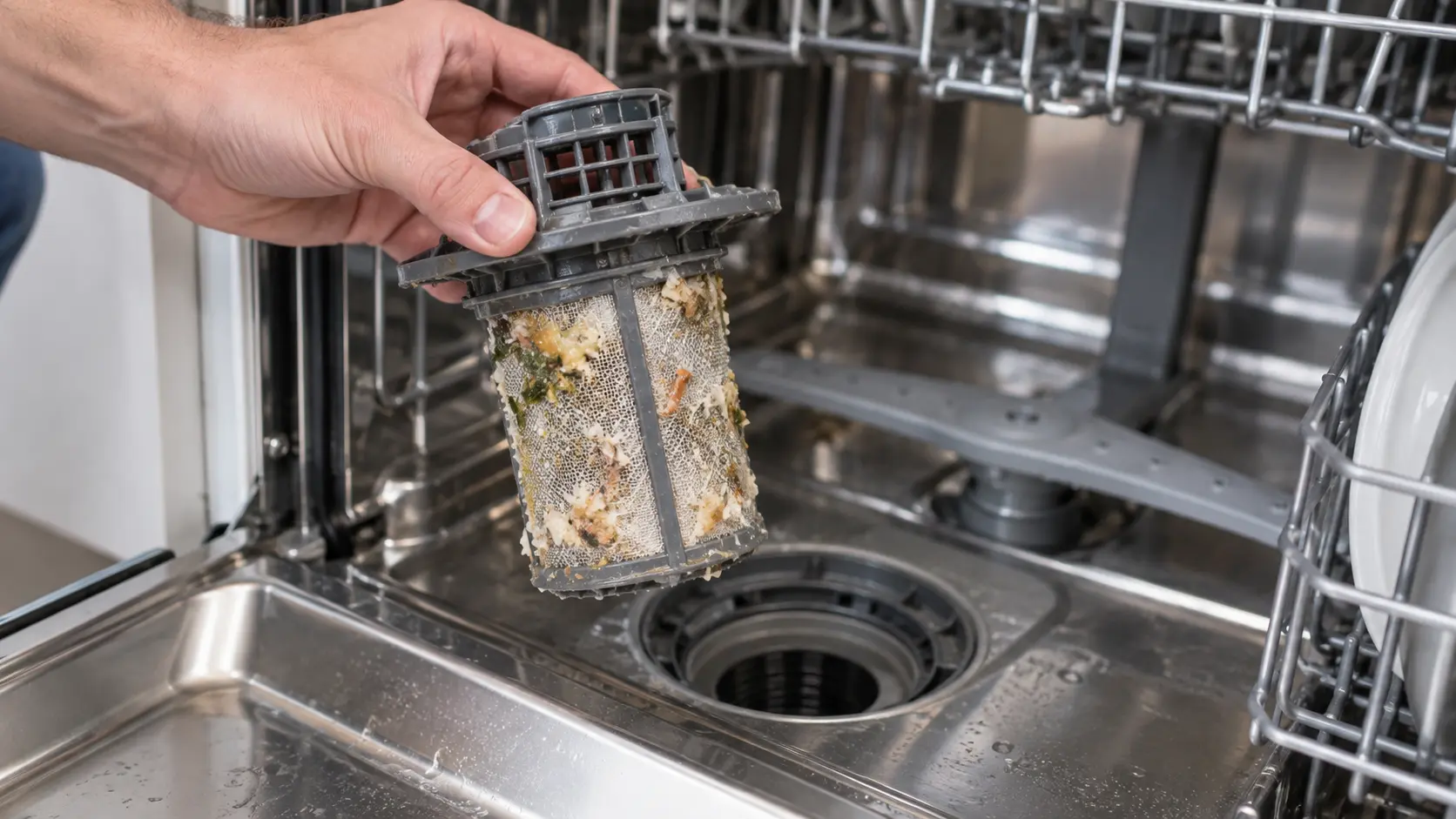
Hard water leaves a different trail. USGS describes the spots and film on glassware that come out of a dishwasher as hard-water residue, and notes that heating hard water deposits calcium carbonate scale that shortens equipment life and lowers efficiency. White crust around a steam oven's water tank, a spray arm with chalky nozzles or a coffee system asking to be descaled more often than it used to all belong in the same family.
- Ice cubes smaller than they were, or a dispenser that trickles
- Glasses coming out spotted or cloudy after a normal cycle
- White or tan crust on nozzles, tanks, inlet screens or a door gasket
- Water standing in the bottom of a dish tub after the cycle has drained
Source: Whirlpool Product Help — When to change the water filter — Replace every 6 months or when the indicator comes on; a clogged filter causes small cubes, reduced ice production and longer dispensing; USGS — Hardness of water — Spots and film on dishwasher glassware are hard-water residue; heated hard water forms scale that reduces equipment life and efficiency
Dates that pass without any warning at all
Some intervals give no symptom until the day they fail. A washer's rubber fill hose looks fine from the front for years; GE and Whirlpool both say to replace fill hoses every five years regardless. Whirlpool's dryer guidance says the vent run to the outside must be cleaned every one to two years, or sooner when drying slows. Viking asks owners of its built-in refrigerators to clean the condenser once every six months.
The practical answer is a written record with a date beside each part, so the calendar raises the question instead of the appliance. If you do not know when a hose or filter was last changed, assume the interval has passed.
Reading the age off the serial number
When nobody remembers the install date, the serial number often knows. On GE appliances the opening pair of letters encodes the build month and year; because that year code comes back around roughly every twelve years, the date printed on the owner's manual breaks the tie.
Source: GE Appliances — Washer inlet fill hoses — Replace fill hoses every 5 years; Whirlpool Product Help — Checking the fill hoses — Fill hoses should be replaced every five years; Whirlpool Product Help — Long dry times — Venting to the outside must be cleaned every one to two years, or when drying performance drops; Viking — FBI7360W built-in refrigeration use and care manual — Clean the condenser once every 6 months
How overdue looks in each appliance group
The signs above show up differently depending on the appliance. This is the short version we use when a homeowner asks what to watch between visits.
- Cold storage: longer compressor runs, a warm side wall, frost on a freezer back wall, small cubes, a door that no longer swings shut on its own
- Cooking appliances: a yellow or lifting burner flame, a slow igniter click, a hood that leaves smoke hanging, grease on the hood filter face
- Dish care: grit or film on dishes, water left in the tub, a sour smell, rinse aid running out faster than before
- Laundry: two rounds to dry, a hot cabinet top, a flap on the outside wall that barely moves, a musty drum or slow draining