
Laundry Taking Two Cycles to Dry: The Lint Path Is Usually Why
Laundry taking two cycles to dry is a load that comes out damp at the end of a normal cycle and needs another run, often with a hotter cabinet and a muggier laundry room.
Mon–Sat, 8am–8pm
- 5 checks before you book
- 5 questions that narrow it
- 6 causes, cheapest first
Book a visit
Three short steps, about a minute.
or call (844) 879-5178
Loading appointment form…
The appointment form couldn’t load. Please try again.
What it
usually means.
A vented laundry machine dries by moving a lot of warm air through the drum and pushing the wet air out of the house. Heat alone does little; airflow does the work. When loads start needing a second cycle, the machine is almost always still heating but no longer moving air the way it should. The most common place for the air to stop is somewhere along the lint path: a screen coated with softener film, lint packed in the screen housing, a transition duct crushed behind the machine, a long wall or roof run lined with years of fluff, or an outdoor hood with its flap stuck. The other half of the story is the washer. A drain filter clogged with debris or a spin that cannot finish sends the load over wetter than it should be, and the dryer is blamed for it. Oversized loads, very heavy towels and a machine set to a low-heat or delicate setting also stretch the time. Upkeep fixes most of it: the lint path cleaned end to end, the duct replaced with metal where it is crushed, and the washer's drain filter and spin checked. If the airflow is good and the heater or burner still does not warm, a part has failed; that is a repair for the sister dryer repair site.
 The 6 causes, cheapest first
Answer these first
Is the load damp all through, or dry on the outside and damp in the seams?
Do loads come out of the washer wetter than they used to, dripping instead of just damp?
Does the cabinet top get hotter than usual, or the laundry room muggy while it runs?
Outside, does the hood flap open and push warm air when the machine runs?
When was the exhaust run last cleaned, and how long is it?
Check these
before you book.
Laundry taking two cycles to dry: 5 checks, and none of them costs anything.
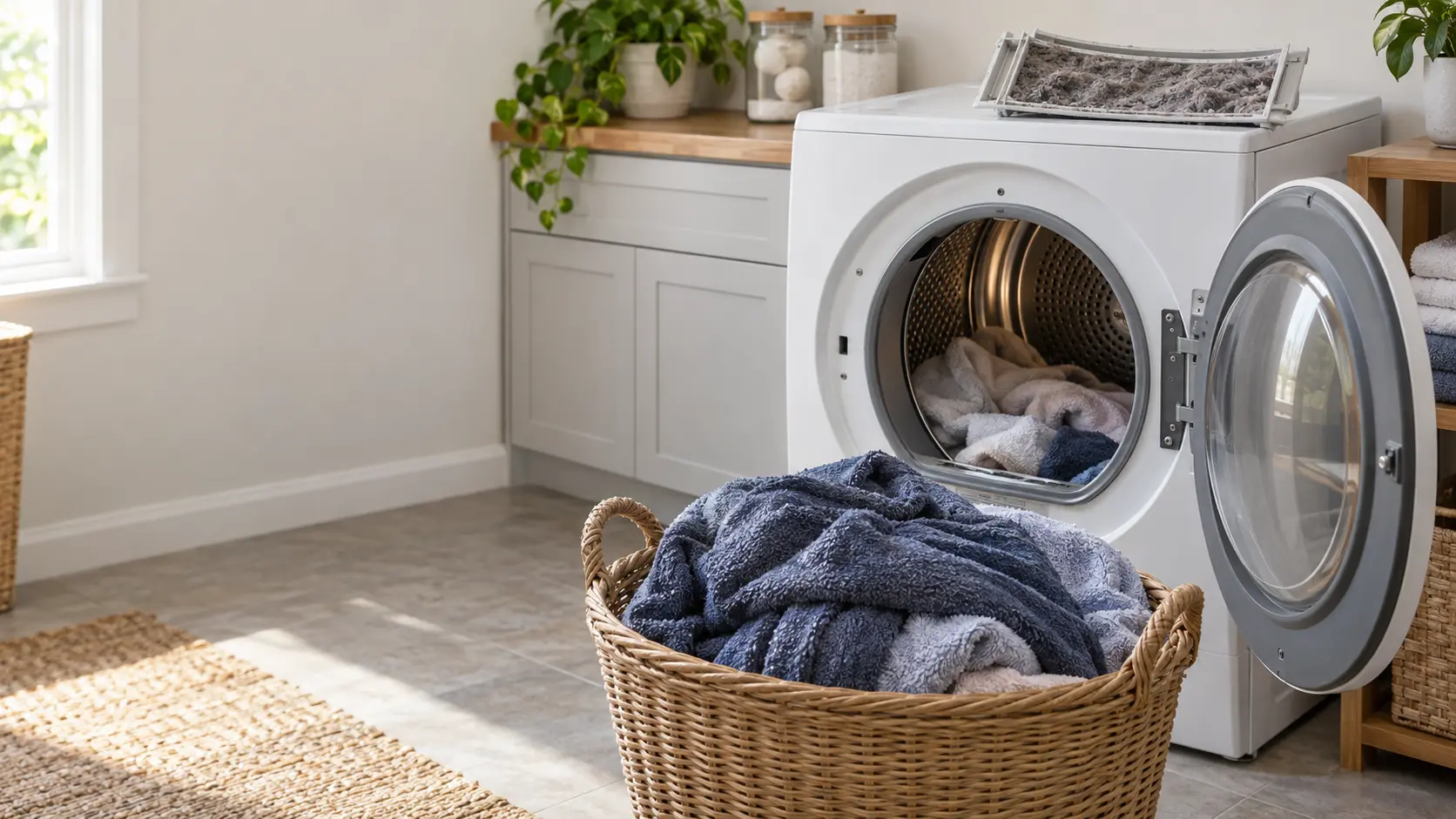
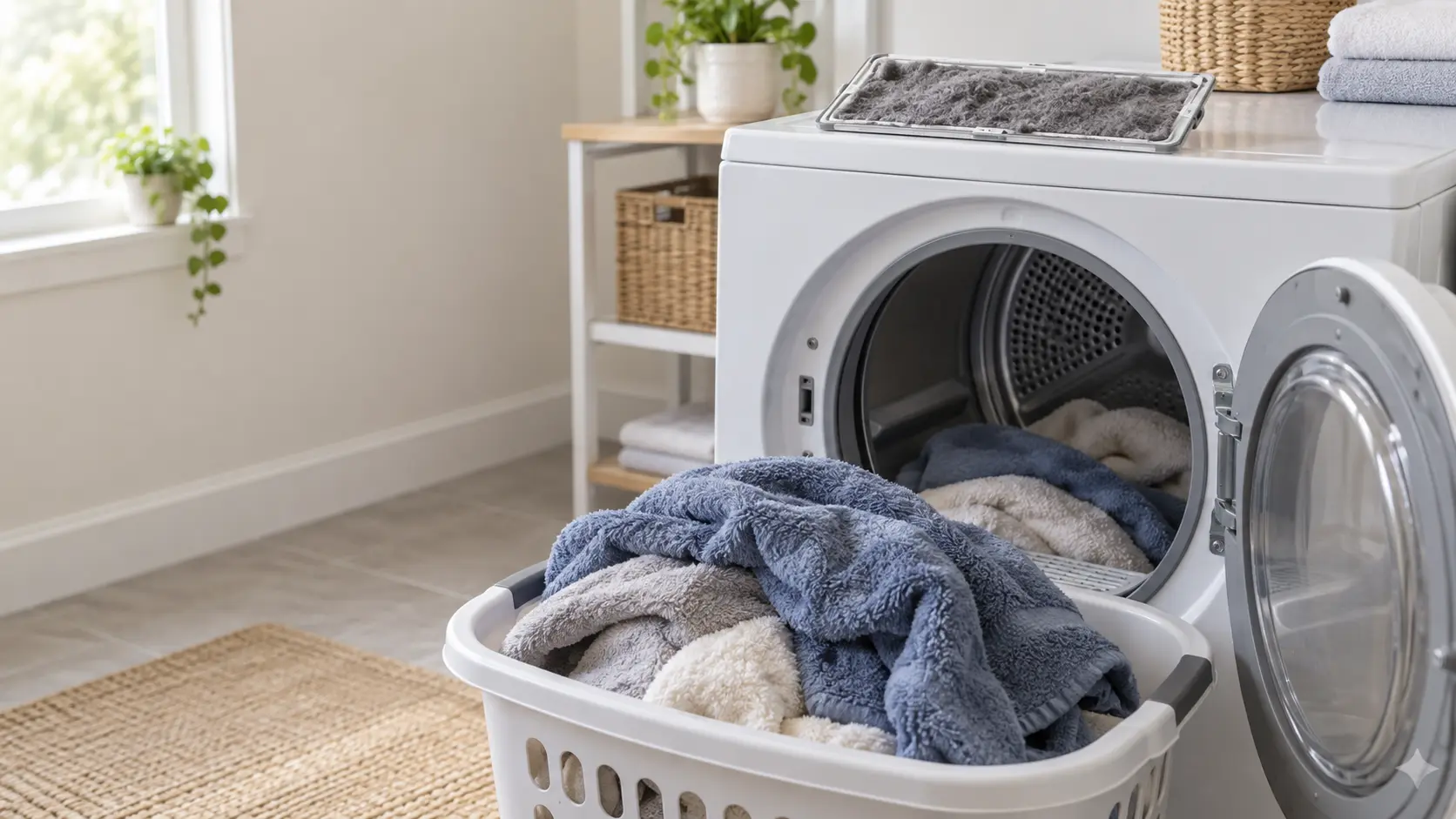
Wash the lint screen in warm soapy water and see whether water runs through it freely.
Go outside while the machine runs and feel for a strong, warm flow at the hood.
Look behind the machine for a crushed or disconnected duct, without moving a gas model off its connector.
Also worth checking
- Check whether loads leave the washer dripping; if so, open and clear its drain filter.
- Run a normal-size load on a normal setting and time it against what it used to take.
How soon does it need a visit?
Slow drying is not an emergency, but it is the early form of the same blockage that causes lint fires. Book a lint path cleaning within a week or two, and stop using the machine at once if there is a burning smell or the cabinet gets too hot to touch.
The causes,
cheapest first.
6 things laundry taking two cycles to dry: the lint path is usually why turns out to be, from overloaded drum or a low-heat setting to heater, burner or thermostat failed.
The cost guide-
01 no service
Overloaded drum or a low-heat setting
A packed drum stops the tumble, and a delicate or low-heat setting runs cooler by design. Try a normal load on a normal setting before anything else.
-
02 no service
Lint screen coated with film
Softener sheets can leave a clear film that blocks the mesh while it looks clean. Wash the screen in warm soapy water with a soft brush, dry it and refit it.
-
03 low
Drain filter clogged on the washing side
A washer that cannot drain fully cannot spin at full speed, so loads arrive dripping. The drain filter is cleared and the spin checked.
-
04 low
Transition duct crushed behind the machine
Foil or plastic duct folded against the wall chokes the airflow at the first step. It is replaced with a short run of metal duct.
-
05 low to moderate
Lint along the wall run and outdoor hood
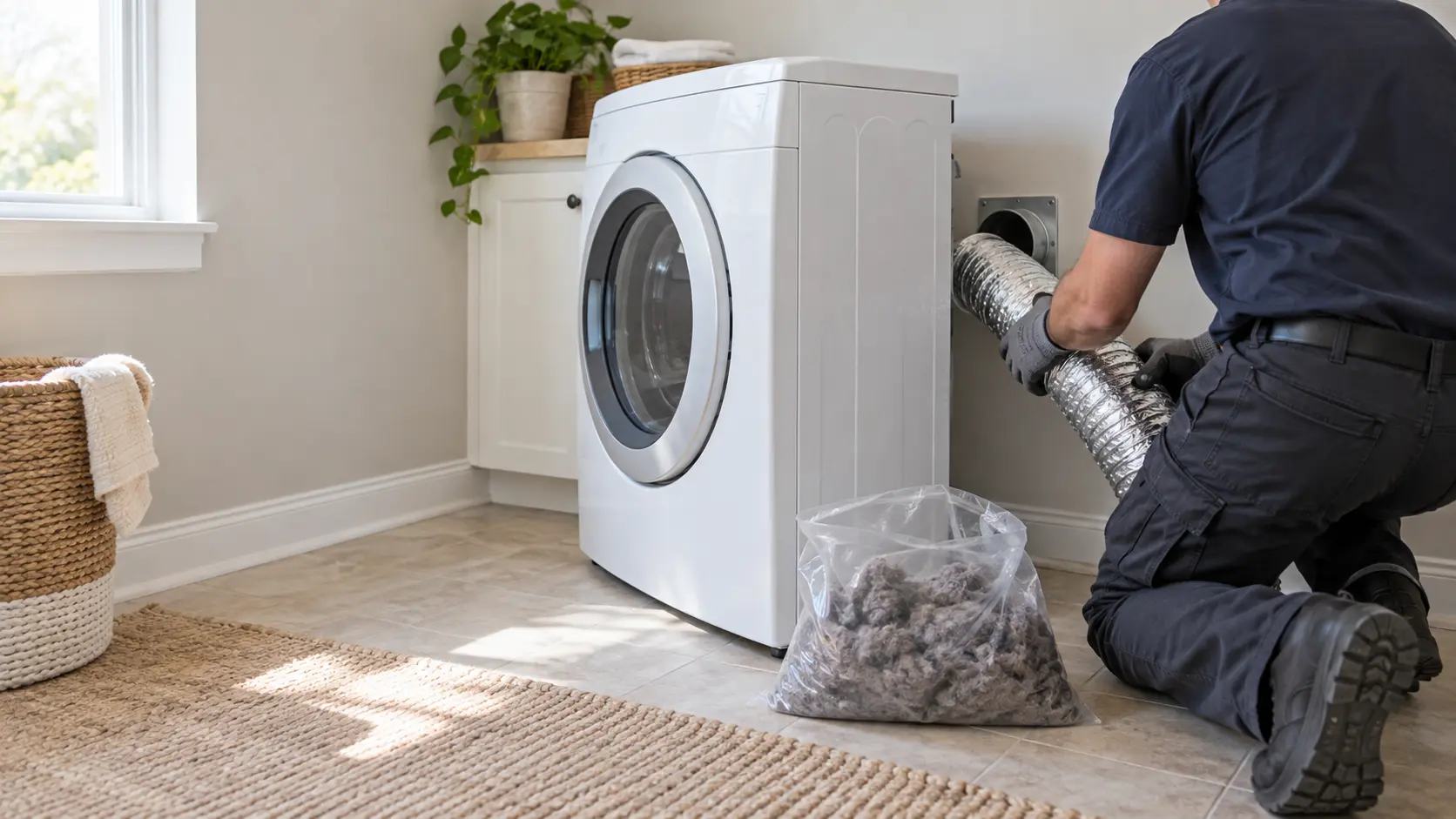
A run that has not been cleaned in years narrows until the machine cannot push air out. The whole run is cleaned from both ends and the hood flap freed.
-
06 moderate
Heater, burner or thermostat failed
If the exhaust is clear and strong but the air is cool, the heat source or its control has failed. That is a repair for the sister dryer repair site.
What else
it could be.
Most often confused with hot or burning lint smell in the laundry room: stop the cycle, then appliance energy use creeping up with nothing else changed.
All problemsCodes that come with it
EF1Electrolux · Vents and airflowLint Screen / Exhaust Vent CleaningElectrolux · Vents and airflowCLr FLtrFisher & Paykel · FiltersLint cLnFisher & Paykel · FilterscLn condFisher & Paykel · Vents and airflow18GE Profile · Water, fill and drain
Also related

The makes
it happens on.
35 makes on this site; laundry taking two cycles to dry: the lint path is usually why can show up on any of them. Each mark opens that make's own page.
All 35 brandsLaundry Taking Two Cycles to Dry: The Lint Path Is Usually Why,
where we come out.
9 metros, each with its own page.
All service areasTampa BayFL · 31 areas
Miami / South FloridaFL · 47 areas
New York MetroNY · 75 areas
HoustonTX · 36 areas
ChicagoIL · 50 areas
Los AngelesCA · 95 areas
San DiegoCA · 31 areas

Questions about
laundry taking two cycles to dry: the lint path is usually why.
Why is the laundry room humid when a load is drying?
Is a longer exhaust run always slower?
Does the spin speed on the washing side matter?
Can a condenser or heat pump model be slow for the same reasons?
Back to your everyday
Still seeing laundry taking two cycles to dry: the lint path is usually why?
Book with what you checked above — 5 answers save the technician the first part of the visit.