Lint left in the exhaust run
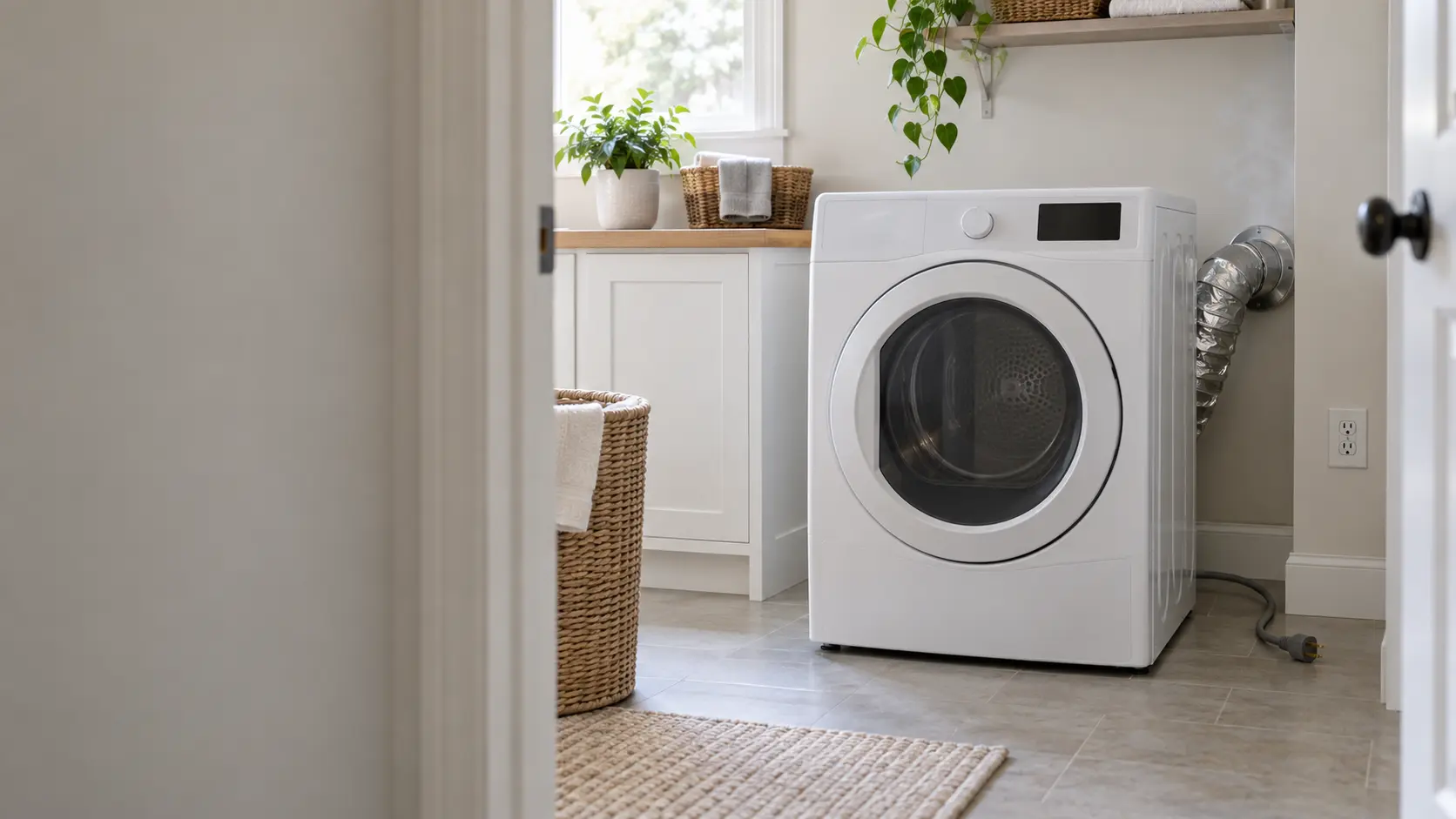
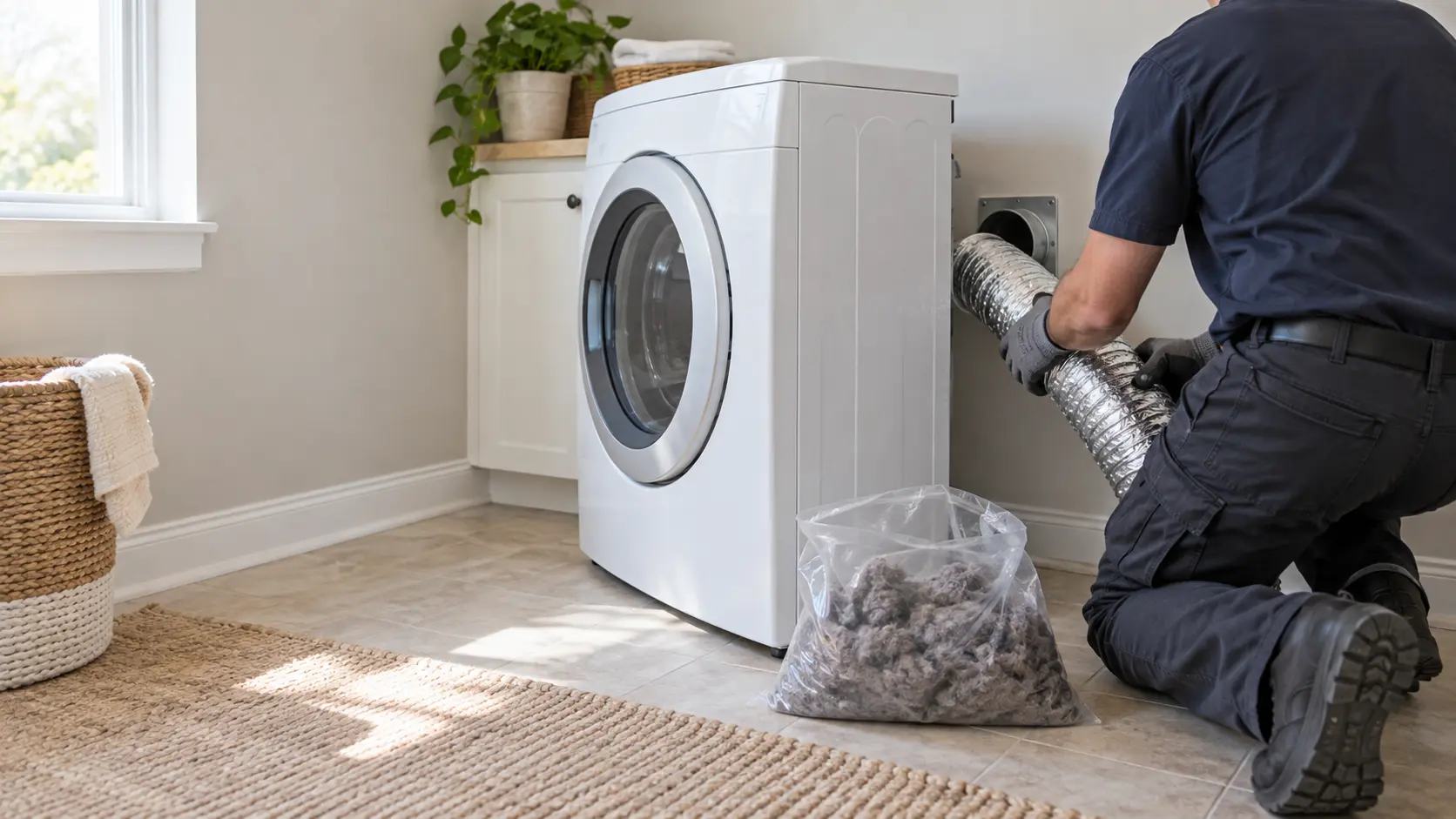
This is the most serious item on the list. NFPA's clothes dryer safety sheet states that the leading cause of home dryer fires is failure to clean them. CPSC describes the chain: lint builds up in the dryer or its exhaust duct, blocks the airflow, lets heat build up and in some dryers ends in a fire. The lint screen catches most of it, but not all, and what passes collects in the duct, at every elbow and behind the outside flap.
Skipping the exhaust cleaning rarely produces a single dramatic day. First drying takes longer, then the cabinet runs hot, then a thermal fuse or high-limit thermostat opens and the dryer stops heating. That repair is the lucky outcome, because the safety part did its job.
- Weeks: lint screen not cleaned, loads take longer
- Months: duct and outside flap loading up, cabinet warm to the touch
- A year or two: thermal fuse or high-limit opens, no heat
- At worst: lint ignites in the cabinet or the duct
Foil and plastic duct make it worse
CPSC's advice is to swap any accordion-style foil or plastic transition for metal, either rigid or the corrugated semi-rigid kind, which is what most dryer makers call for. The flexible kind traps lint more easily and crushes or kinks behind the machine, and a crushed section does the same damage as a clogged one.
Source: NFPA — Clothes dryer safety tip sheet — The leading cause of home clothes dryer fires is failure to clean them; CPSC — Overheated clothes dryers can cause fires (publication 5022) — Lint in the dryer or duct blocks airflow, builds heat and can cause a fire; replace plastic or foil accordion duct with rigid or semi-rigid metal duct, which most manufacturers specify
A condenser coil nobody brushed
In cold storage, the skipped job is almost always the coil. A coil blanketed in dust cannot shed heat, so the compressor runs for longer stretches and the condenser fan motor spins nearly all day. Food usually stays cold for a long time while this happens, which is why it gets ignored. What follows, over a season or several, is a failed fan motor, a start relay worn out by constant cycling, or a compressor that overheats and trips its overload.
Viking recommends a condenser cleaning every six months on its built-in refrigerators, and its manual adds a footnote owners seldom read: condenser cleaning is not covered under the warranty. The maker treats it as the owner's job.
Where the bill lands when upkeep was skipped
The FTC's advice on extended warranties and service contracts tells buyers to check whether the company can deny coverage when the owner has not followed its instructions for routine maintenance. A dated service record is the simplest defense against that argument, which is one reason every visit we make leaves a written log behind.
Source: Viking — FBI7360W built-in refrigeration use and care manual — Clean the condenser once every 6 months; condenser cleaning is not covered under the warranty

Supply hoses past their date
The rubber fill hose behind a washer stays pressurized around the clock, since the valve at the wall is normally left open between loads. GE recommends replacing washer fill hoses every five years, and Whirlpool says the same. Dishwasher supply lines and refrigerator water lines sit in the same place in the story: out of sight, pressurized, and aging from the inside.
Skipping the change does not raise running costs; it raises the stakes. A hose that lets go while the house is empty keeps running until someone closes the valve. The inlet screens at the valve end tell a quieter story when they clog with grit, and Whirlpool describes cleaning them with a brush in place without removing them.
- Washer fill hoses: dated when fitted, changed at five years
- Dishwasher supply line: checked at the valve under the sink for dampness and corrosion
- Refrigerator water line: checked behind the cabinet for kinks and drips at the fitting
- Shutoff valves: turned once a year so they still close when they are needed
Source: GE Appliances — Washer inlet fill hoses — Replace fill hoses every 5 years; Whirlpool Product Help — Checking the fill hoses — Fill hoses should be replaced every five years; clean clogged inlet screens with a brush without removing them
Filters left full in dish care, laundry and the hood
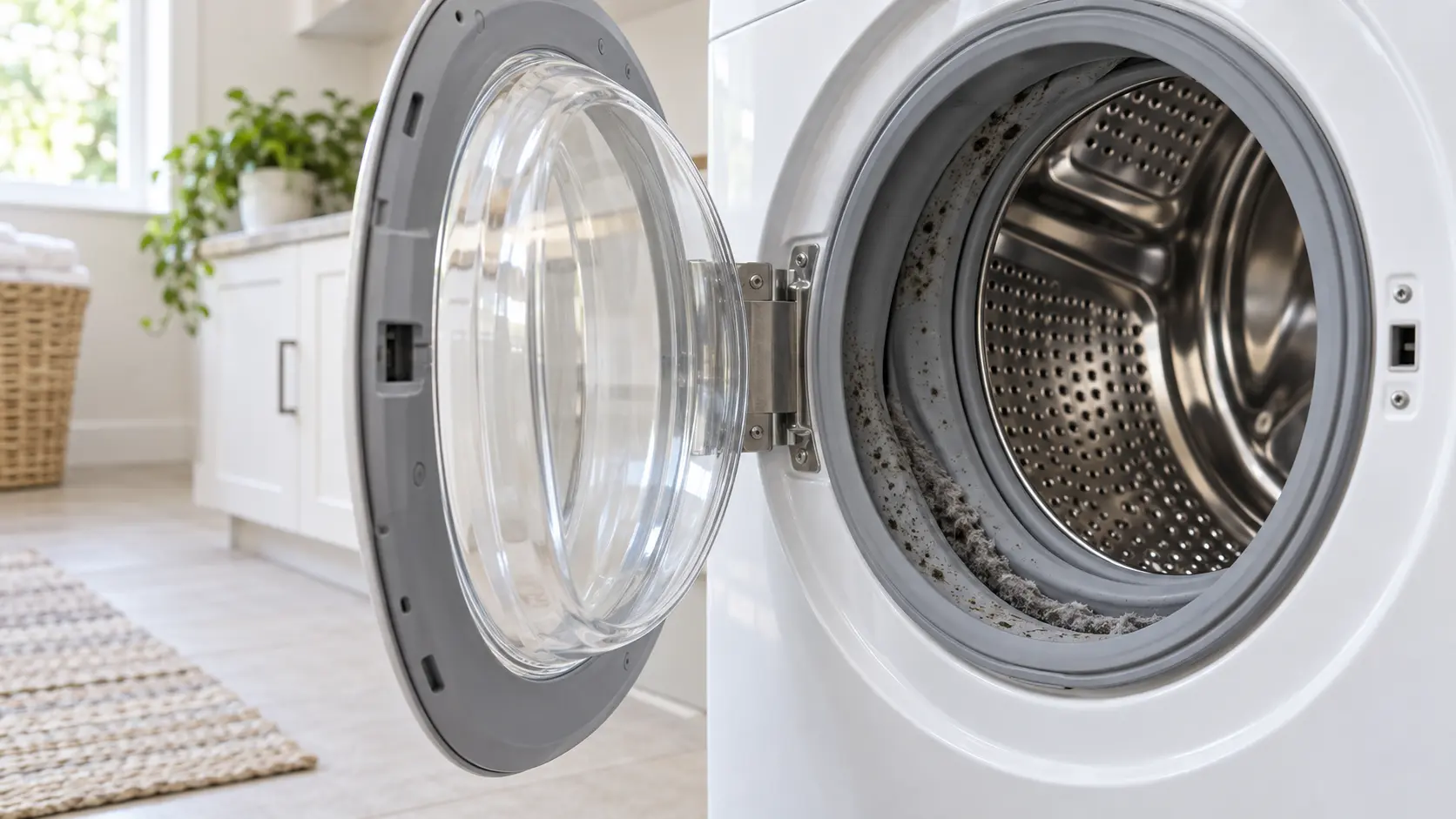
Filters are the parts owners forget most often because each one is small and each one is somewhere different. Whirlpool recommends cleaning both the upper and lower dishwasher filters and rinsing them under running water at least once a month, and notes that a clogged filter lets food particles recirculate onto the dishes. Samsung asks owners of its front-load washers to clean the pump filter at least monthly or about every 40 washes, to prevent odors, mold and mildew and keep the washer draining.
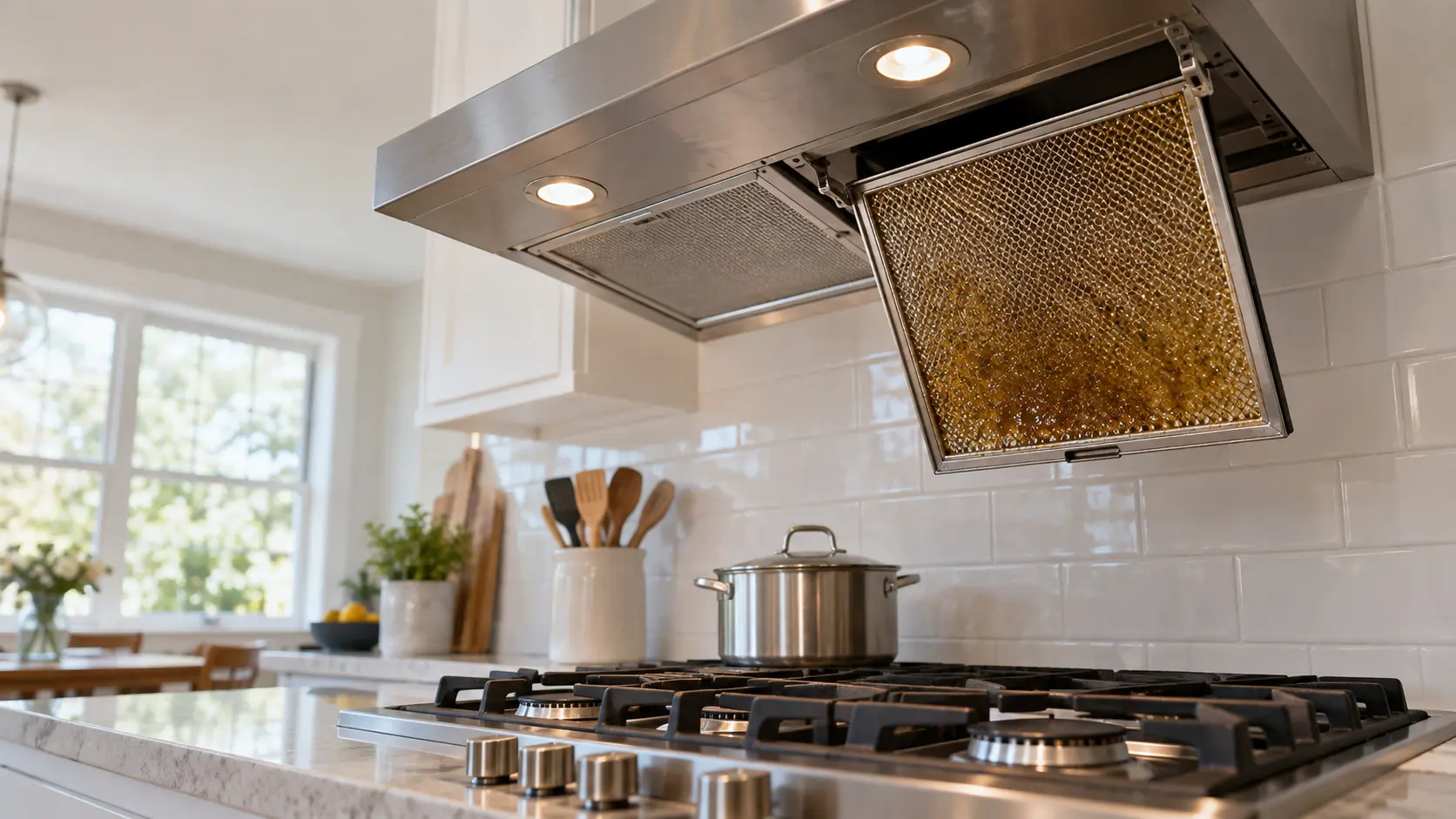
In the kitchen, the skipped filter is the one above the cooktop. Wolf reminds owners to clean ventilation products often to reduce the risk of a grease fire, and on its V Series hoods a filter icon appears once the fan has logged 100 hours.
A hood filter as a store of grease
Every meal leaves a film of grease on the metal mesh or baffles. Washed on schedule, the filter traps grease and gives it up in hot soapy water. Left for a year, it becomes a reservoir of fuel sitting directly over open burners, and the fan behind it moves less air through a smaller opening, which leaves more grease on the cabinets and ceiling too.
Source: Whirlpool Product Help — Water remains in filter area — Clean the upper and lower filters and rinse them under running water at least once a month; Whirlpool Product Help — Cleaning the removable filtration system — Regular filter cleaning keeps water flowing and prevents food particles from recirculating through the cycle; Samsung — How to clean your Samsung washer — Clean the front-load pump filter at least monthly or about every 40 washes to prevent odors, mold and mildew and ensure proper draining; Wolf — V Series hood filter light on — The filter icon lights after 100 hours of operation; clean ventilation products frequently to reduce the risk of grease fire
The cheapest point in each chain to step in
Each of these chains has an early, inexpensive step and a late, expensive one. A brush, a rinse under the tap or a pair of hoses sits at the start; a thermal fuse, a fan motor, a pump or a floor sits at the end. A maintenance visit is built to catch each chain at its cheapest point and to note which ones in your home are already further along than they should be.