
The lines that stay under pressure all day
A typical home has four or five appliance water supply hoses: a hot and a cold fill hose behind the laundry machine, one line under the sink to the dish care machine, and a small line to any refrigerator or ice maker that makes its own ice. Homes with a plumbed coffee system or steam oven add another. None of them are shut off between uses unless someone closes the valve, so each one holds the full pressure of the house supply the whole time.
That pressure is higher than many owners expect. Whirlpool's refrigerators, for example, are built to take between 30 and 120 psi at the connection. A hose rated for that range is fine when new; the question is what years of heat, flexing and pressure have done to it.
Why the laundry hoses usually go first
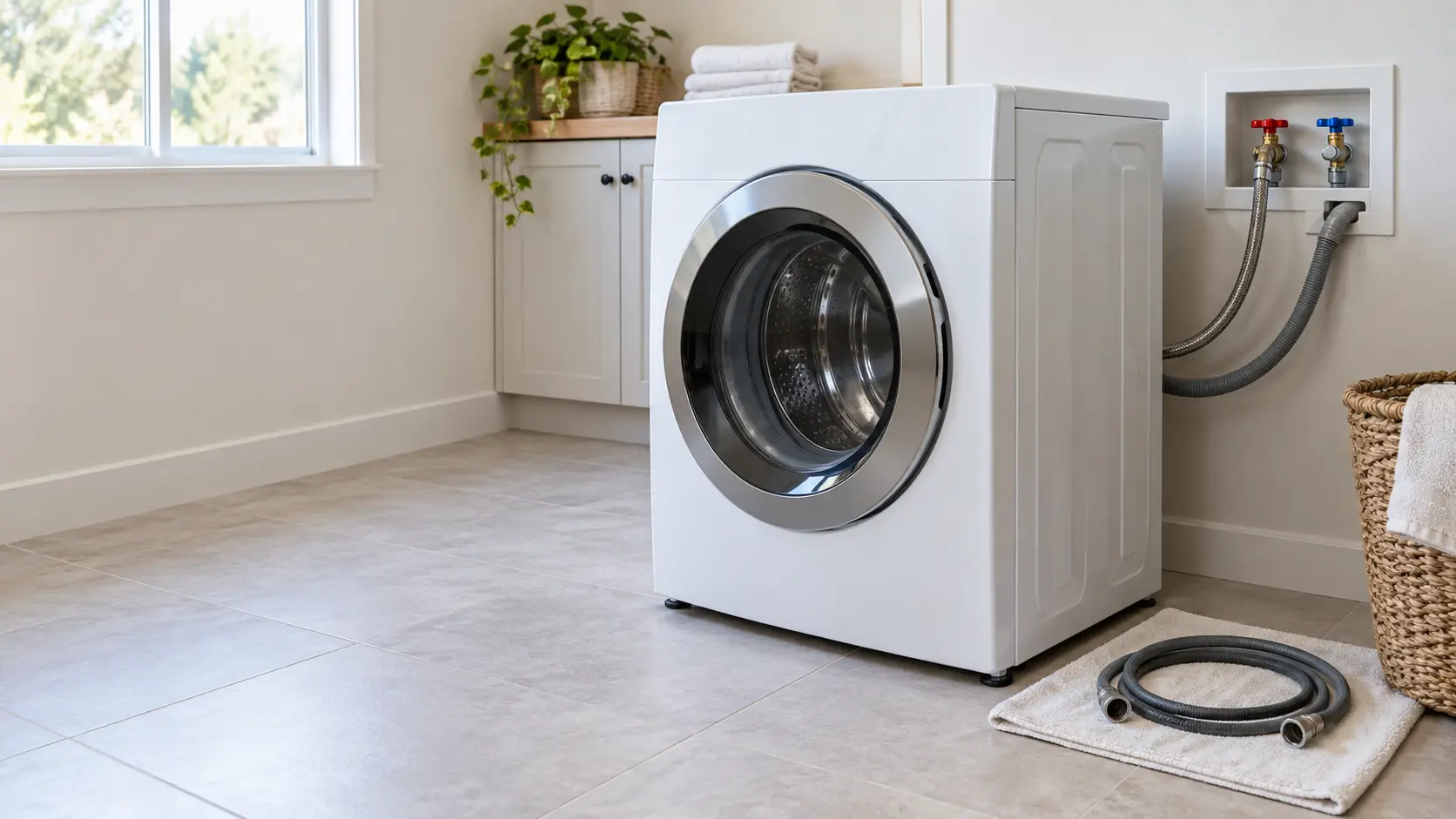
Speed Queen's maintenance section singles out its fill hoses for the temperature and constant high pressure they carry. The hot hose sees heat on top of pressure, and both hoses flex slightly every time the machine spins and walks. A dish care line is short and sits still in a cabinet, while a refrigerator line is small and carries cold water, so both tend to outlast the laundry pair.
Source: Whirlpool — Ensuring correct water pressure (refrigerators) — Refrigerators operate on 30–120 psi at the connection; check for kinks in the supply line after the refrigerator was moved
What the monthly look should find
Speed Queen puts a check of all hoses and the drain for leaks on its monthly list, and says any hose showing deterioration should be replaced at once. The look takes two minutes with a flashlight. Run a dry hand along each hose where it can be reached, and pay most attention to the ends, where the rubber meets the metal collar and bends hardest.
- Any swelling that makes one stretch of hose fatter than the rest
- Fine surface cracks in the rubber, worst where it enters the metal collar
- Rust or green corrosion on a coupling or valve
- A sharp bend left behind when the machine went back against the wall
- Dampness, a white mineral crust or a stain on the floor below a connection
Source: Alliance Laundry Systems (Speed Queen) — User's Guide for Frontload Washers, 808187 — Hoses face temperature and constant high pressure; check them monthly and replace any showing deterioration; replace every five years with the maker's hoses; flood-safe hoses not recommended; close valves at the end of each wash day; run hot faucets after two weeks unused because of hydrogen gas

Replacing laundry fill hoses on a five-year clock
GE and Speed Queen both recommend replacing fill hoses every five years, and GE lists that interval in the same article as its stainless steel hoses, so braiding does not exempt a hose. GE also notes that since August 2010 most of its laundry machines have shipped without fill hoses, which means the hoses in many homes are whatever the installer brought. If nobody knows their age, the safe assumption is that they are due.
LG's instructions say to use new hoses with every installation and never reuse old ones, which can leak or burst. Tighten each coupling by hand and then give it a further two-thirds of a turn with pliers, as LG directs; over-tightening or cross-threading damages the valve or the coupling and causes the very leak it was meant to prevent.
Hoses with automatic shutoffs
It seems sensible to buy a hose that closes itself if it bursts. LG says not to use flood-preventing hoses with automatic shutoff devices, because they can trip during a normal fill and stop the machine from filling. Speed Queen says the same kind of hose often causes slow or no fill and recommends only the maker's replacement hoses. GE likewise does not recommend check valves in the line.
Source: Alliance Laundry Systems (Speed Queen) — User's Guide for Frontload Washers, 808187 — Hoses face temperature and constant high pressure; check them monthly and replace any showing deterioration; replace every five years with the maker's hoses; flood-safe hoses not recommended; close valves at the end of each wash day; run hot faucets after two weeks unused because of hydrogen gas; GE Appliances — Washer inlet fill hoses — Replace hoses every 5 years, stainless models included; hoses not included with most GE washers since August 2010; check valves not recommended; LG Electronics — Washer owner's manual (WM4080) — Use new hoses, never reuse old ones; hand-tight then 2/3 turn with pliers; no flood-preventing hoses with auto shutoff; turn off faucets and unplug for vacations; do not touch a product in standing water
The dish care and cold storage lines
Whirlpool wants its dish care machines fed from a hot water line with its own shutoff valve, through copper tubing with a compression fitting or a flexible braided line, and says plastic tubing is not recommended. After connecting, the valve is opened and the joints watched for leaks. The same rule of firm but not forced applies: a wrench makes the joint secure, and too much force cracks the fitting.
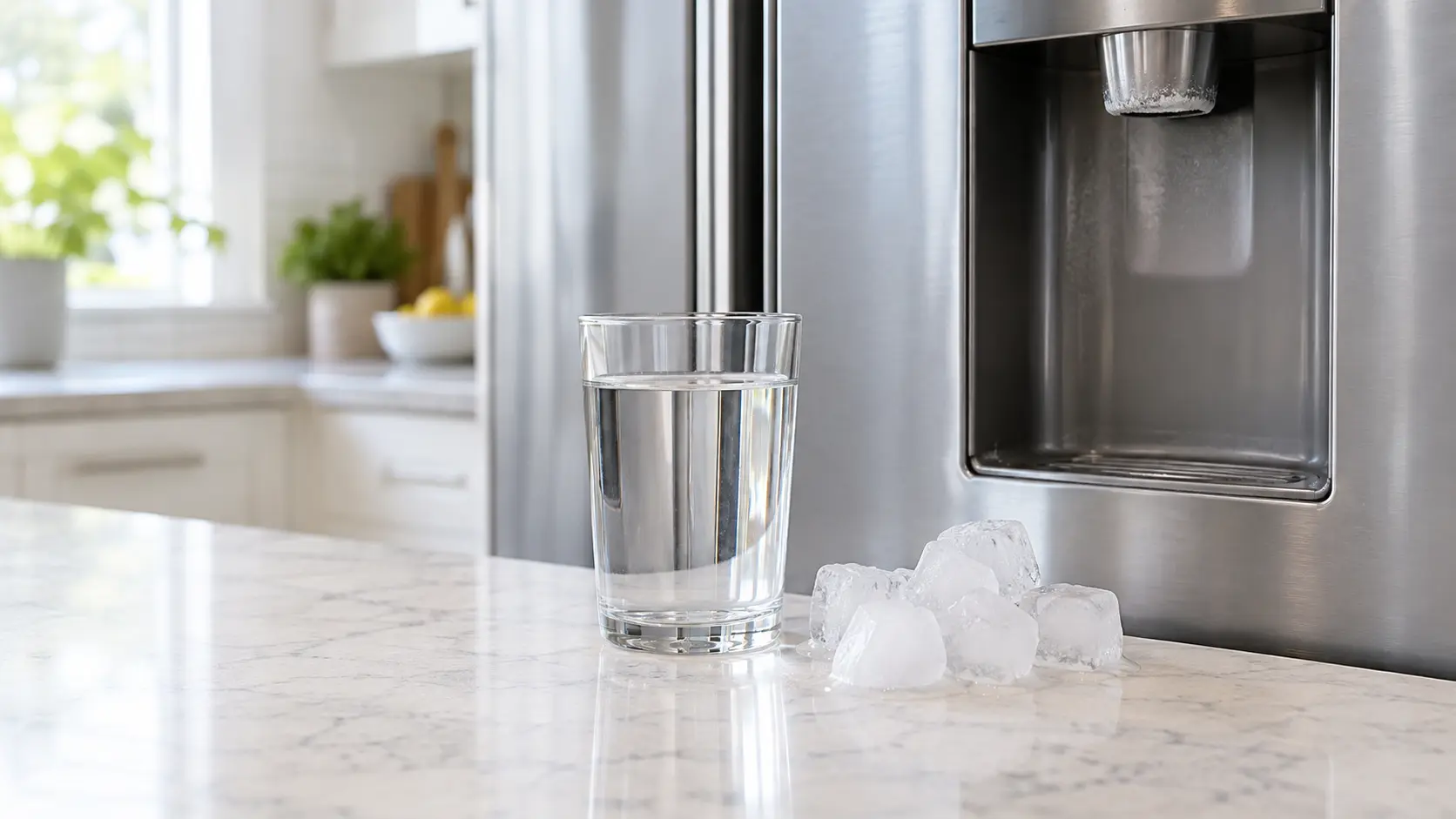
Refrigerator and ice maker lines are smaller but just as permanent. Sub-Zero asks for an easily accessible shutoff valve supplied by the plumber and warns against self-piercing valves, which do not deliver enough flow. Whirlpool reminds owners to check for kinks in the line after a refrigerator has been moved, since a pinched line both restricts water and strains its fittings.
- Braided stainless or copper to the dish care machine, never plastic
- Copper or the maker's specified tubing to cold storage, with its own valve
- No self-piercing or saddle-type taps on any appliance line
- Slack left in each line so the appliance can come forward without pulling it
Source: Whirlpool — Ensuring correct water pressure (refrigerators) — Refrigerators operate on 30–120 psi at the connection; check for kinks in the supply line after the refrigerator was moved; Whirlpool — Connecting a dishwasher to the water supply — Hot water line with a dedicated shutoff; copper with compression fitting or braided line; plastic not recommended; do not over-tighten; check for leaks after opening the valve; Sub-Zero — Water line saddle valve — Connect through an easily accessible shutoff valve supplied by the plumber; do not use self-piercing valves
Habits that keep a small leak small
Speed Queen tells owners to close the laundry shutoff valves at the end of each wash day, which removes pressure from the hoses for most of the week. LG asks for the faucets to be turned off and the machine unplugged before a vacation. Speed Queen adds an unusual warning for homes where the hot water has not been used for two weeks or more: hydrogen gas can collect in the system, so run every hot faucet for several minutes before starting a load, and keep flames and sparks away.
Source: Alliance Laundry Systems (Speed Queen) — User's Guide for Frontload Washers, 808187 — Hoses face temperature and constant high pressure; check them monthly and replace any showing deterioration; replace every five years with the maker's hoses; flood-safe hoses not recommended; close valves at the end of each wash day; run hot faucets after two weeks unused because of hydrogen gas; LG Electronics — Washer owner's manual (WM4080) — Use new hoses, never reuse old ones; hand-tight then 2/3 turn with pliers; no flood-preventing hoses with auto shutoff; turn off faucets and unplug for vacations; do not touch a product in standing water; EPA — A brief guide to mold, moisture and your home — Dry water-damaged areas and items within 24–48 hours to prevent mold growth