Where carbon monoxide comes from in a kitchen
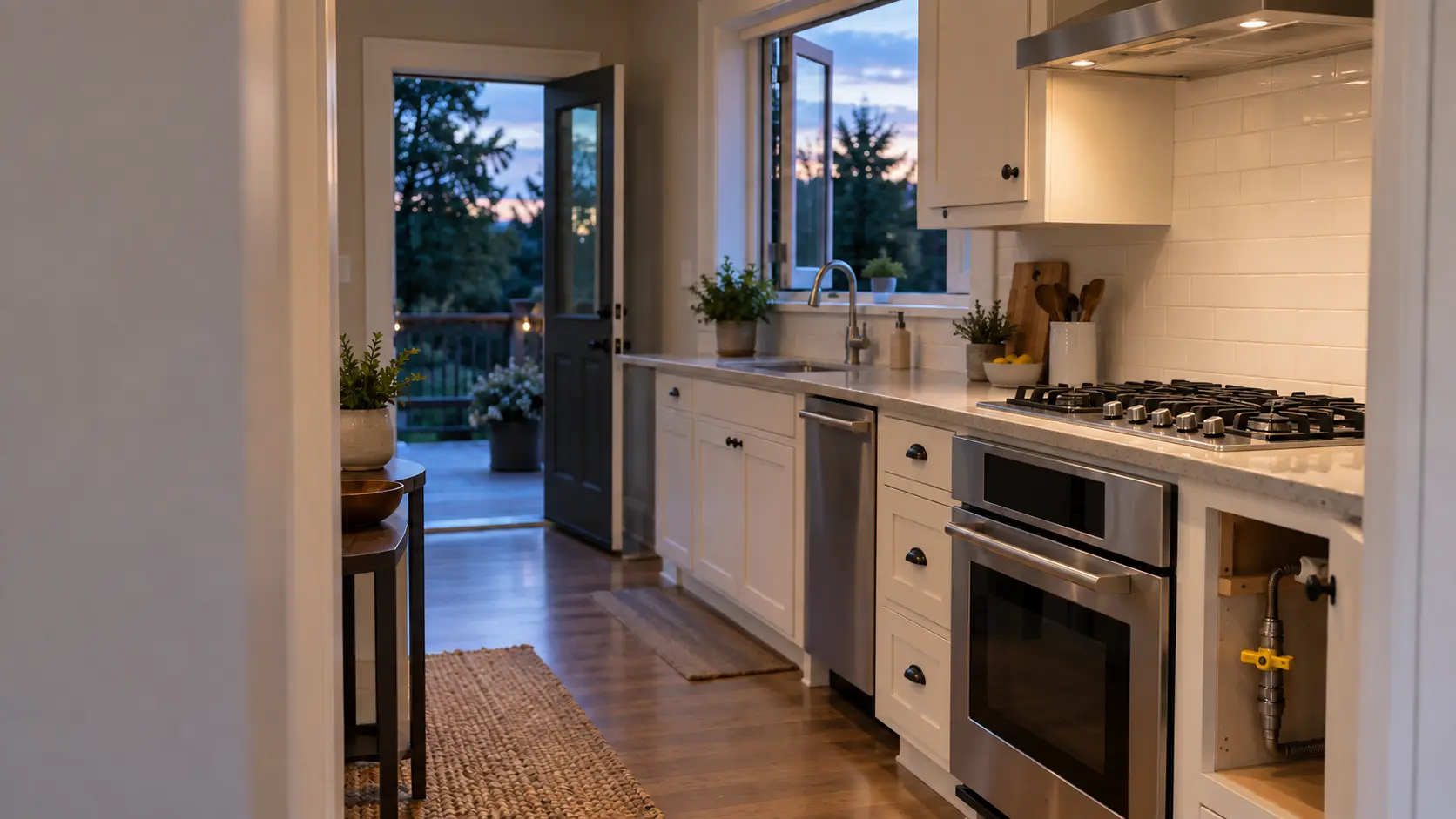
CDC describes carbon monoxide as an odorless, colorless gas produced whenever fuel is burned, and lists gas ranges and furnaces among the household sources. A burner makes it when combustion is incomplete, that is, when the flame does not get enough air or the gas and air are mixed badly. Most of the link between gas appliances and carbon monoxide comes down to that mix.
EPA gives numbers that show how much upkeep matters. Homes without gas cooking typically measure 0.5 to 5 parts per million. Near properly adjusted gas stoves, levels are often 5 to 15 ppm; near poorly adjusted ones they may reach 30 ppm or higher. The same cooktop can land in either group depending on how it has been kept.
Why adjustment matters more than age
EPA's first step for reducing exposure is to make sure combustion equipment is maintained and properly adjusted. An old burner that is clean, seated correctly and set for the right gas can burn better than a new one with clogged ports or a cap knocked askew during cleaning. That is why the maintenance jobs below are about cleanliness and fit rather than replacing parts.
Source: EPA — Carbon monoxide's impact on indoor air quality — 0.5–5 ppm in homes without gas stoves, often 5–15 ppm near properly adjusted gas stoves and 30 ppm or more near poorly adjusted ones; keep combustion equipment maintained and adjusted; CDC — Carbon monoxide poisoning basics — CO is odorless and colorless; gas ranges and furnaces are sources; yearly service of fuel-burning appliances; never heat a house with a gas oven; gas refrigerator odor needs an expert; detectors near sleeping areas, batteries checked spring and fall, replaced per maker or every 5 years; sleeping people may die before symptoms
Reading a burner flame
Whirlpool describes a proper flame as soft blue on natural gas, and blue with slightly yellow tips on propane. Flames that are the wrong color, too tall or too short may need adjusting by the installation instructions, and on a propane appliance an abnormal flame can mean the conversion from natural gas was done incorrectly, which calls for service rather than an owner's adjustment.
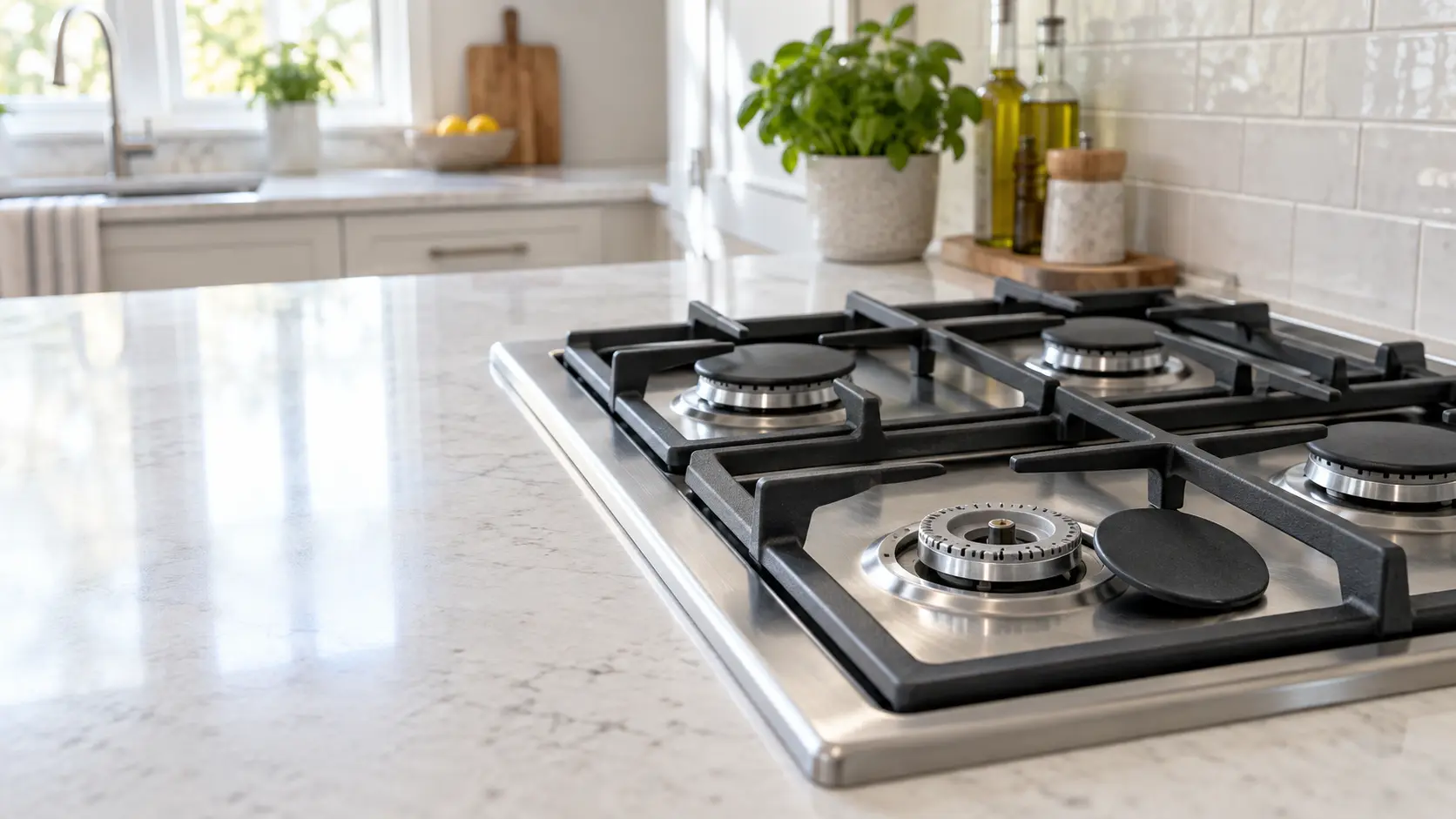
Before blaming the gas, look at the parts an owner controls. Whirlpool traces many uneven or lifting flames to a burner cap that is not seated flat on its base, or to ports clogged by a spillover. A cap should sit flush with minimal side-to-side movement, and the correct cap must go on each base.
- Even blue cones all the way around: burner clean and seated
- Gaps in the ring of flame: clogged ports
- Flame lifting or leaning to one side: cap off center
- Mostly yellow or orange, tall and lazy: needs a technician, unless a humidifier is running
- Orange or red flecks only while an ultrasonic humidifier runs: minerals in the air, not the burner
Cleaning ports and caps without harming them
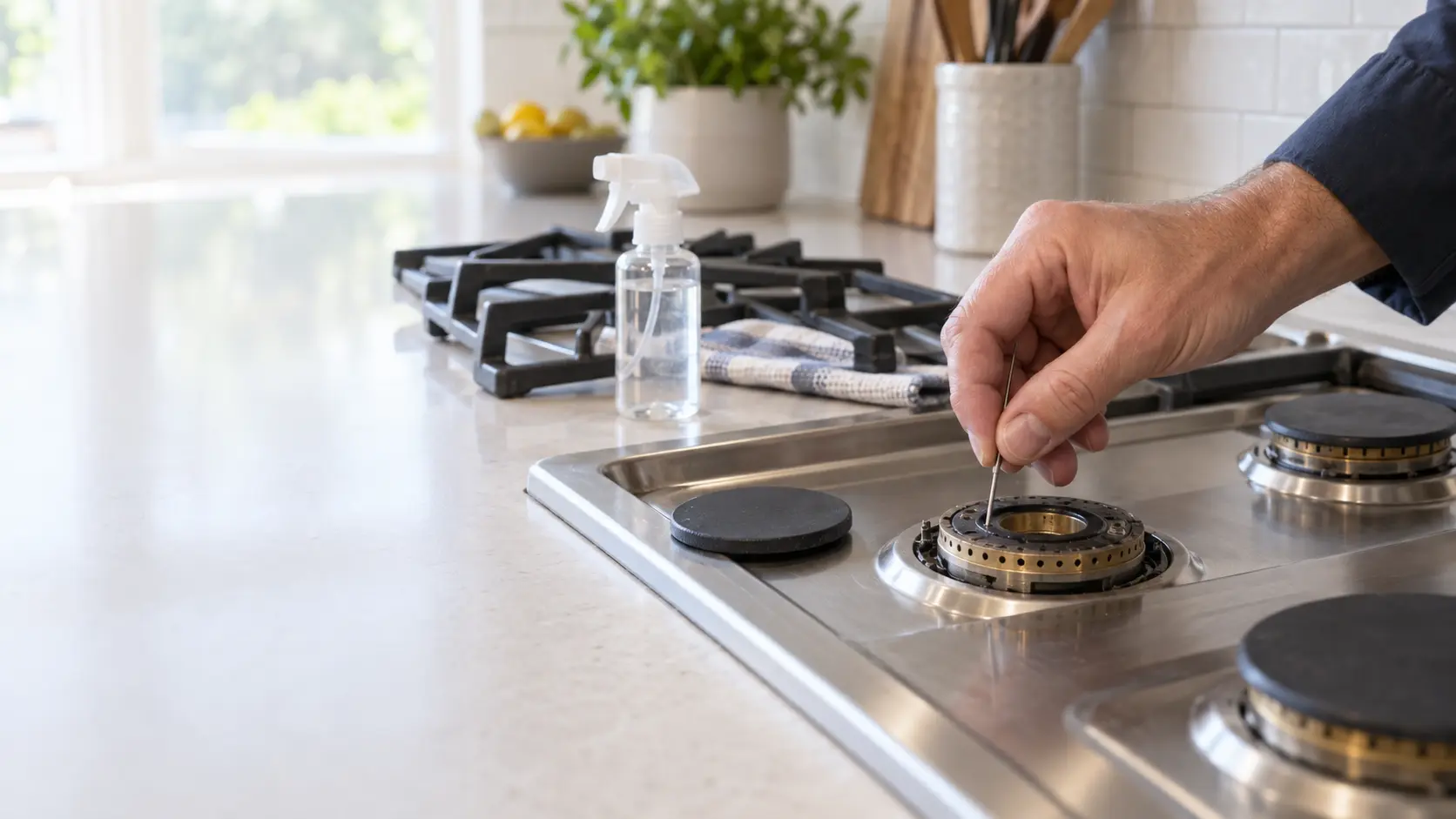
With the controls off and the top cool, Whirlpool clears clogged ports with a straight pin, a needle or a small-gauge wire, and warns against a wooden toothpick, which can snap off inside the port. Ports must not be enlarged or bent out of shape, and burner parts do not go in the dish care machine. Clean the caps after every spillover and routinely otherwise, paying attention to their undersides.
Source: Whirlpool — Burner flames abnormal colors, LP gas — Soft blue on natural gas, blue with slightly yellow tips on LP; adjust per installation instructions; improper LP conversion calls for service; clear ports with a pin, needle or small wire, no wooden toothpick, do not enlarge, not in the dishwasher; Whirlpool — Burner flames abnormal colors, natural gas — Caps seated flush on the matching base; clean caps after spillovers and routinely; humidifier minerals color the flame

Kitchen habits that raise carbon monoxide
Some of the biggest increases come from how the appliance is used rather than how it is kept. GE's gas range manual warns never to use the range to heat or warm a room, which can cause carbon monoxide poisoning and overheat the oven; CDC says the same about heating a house with a gas oven. The manual also warns against covering the oven bottom or a whole rack with foil or liners, because blocking the airflow can cause carbon monoxide poisoning.
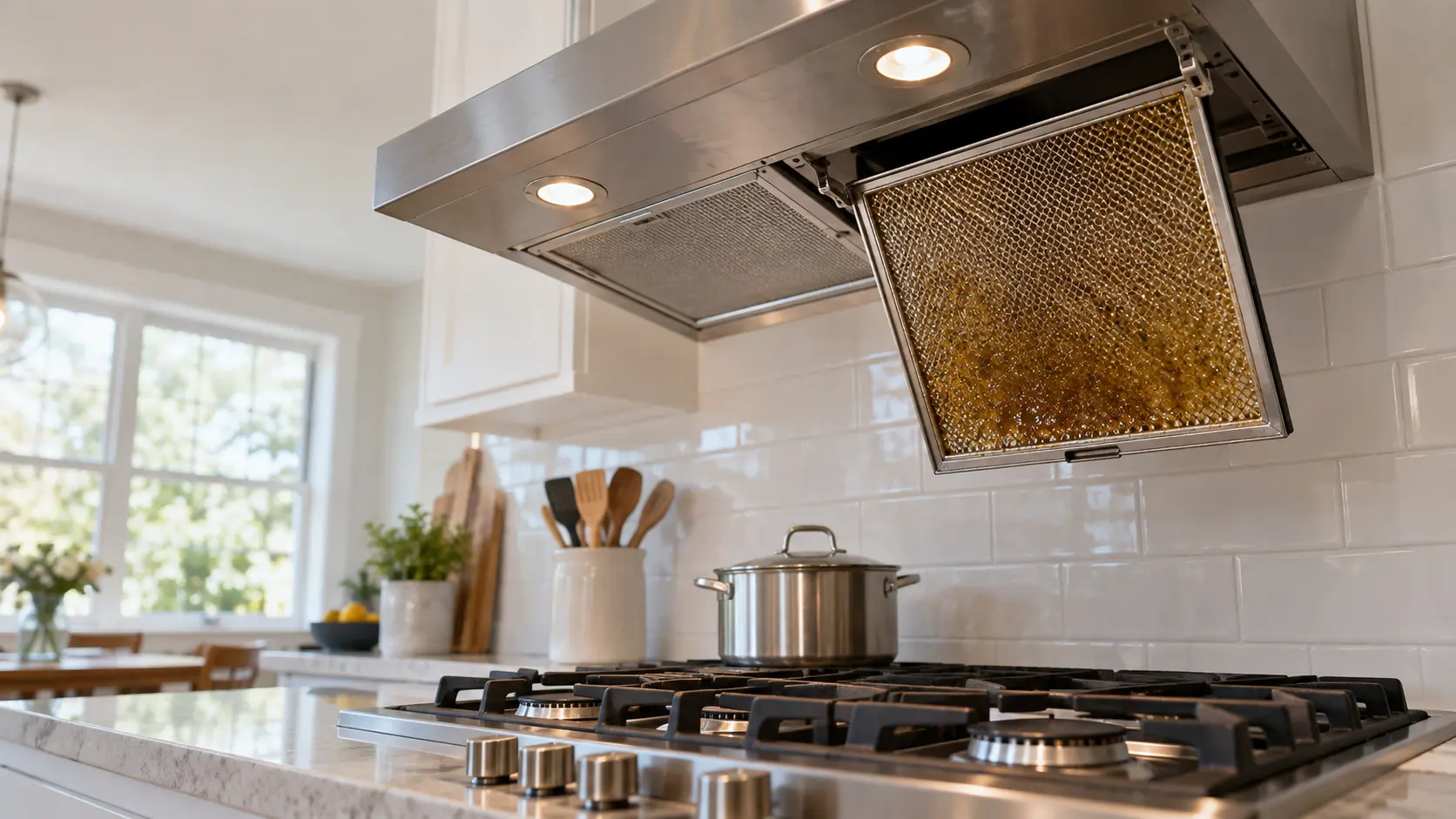
Ventilation is the other half. EPA recommends installing and using an exhaust fan vented to the outdoors over gas cooking, and keeping gas appliances properly adjusted. A hood that recirculates through charcoal traps grease and odor but does not remove combustion gases from the room.
- No foil or liners over the oven floor or its vent openings
- No after-market grill plates over the surface burners, which GE says cause incomplete combustion
- No oven door left open to warm the kitchen
- Hood fan on, ducted outdoors, whenever burners or the oven run
Source: CDC — Carbon monoxide poisoning basics — CO is odorless and colorless; gas ranges and furnaces are sources; yearly service of fuel-burning appliances; never heat a house with a gas oven; gas refrigerator odor needs an expert; detectors near sleeping areas, batteries checked spring and fall, replaced per maker or every 5 years; sleeping people may die before symptoms; GE Appliances — Single oven gas ranges owner's manual (49-2000316) — Never use the range to heat a room; foil or liners over the oven bottom block airflow and may cause CO poisoning; after-market stovetop grills cause incomplete combustion; what to do if you smell gas; EPA — Nitrogen dioxide's impact on indoor air quality — Keep gas appliances properly adjusted; install and use an exhaust fan vented to outdoors over gas stoves
Other gas appliances in the home
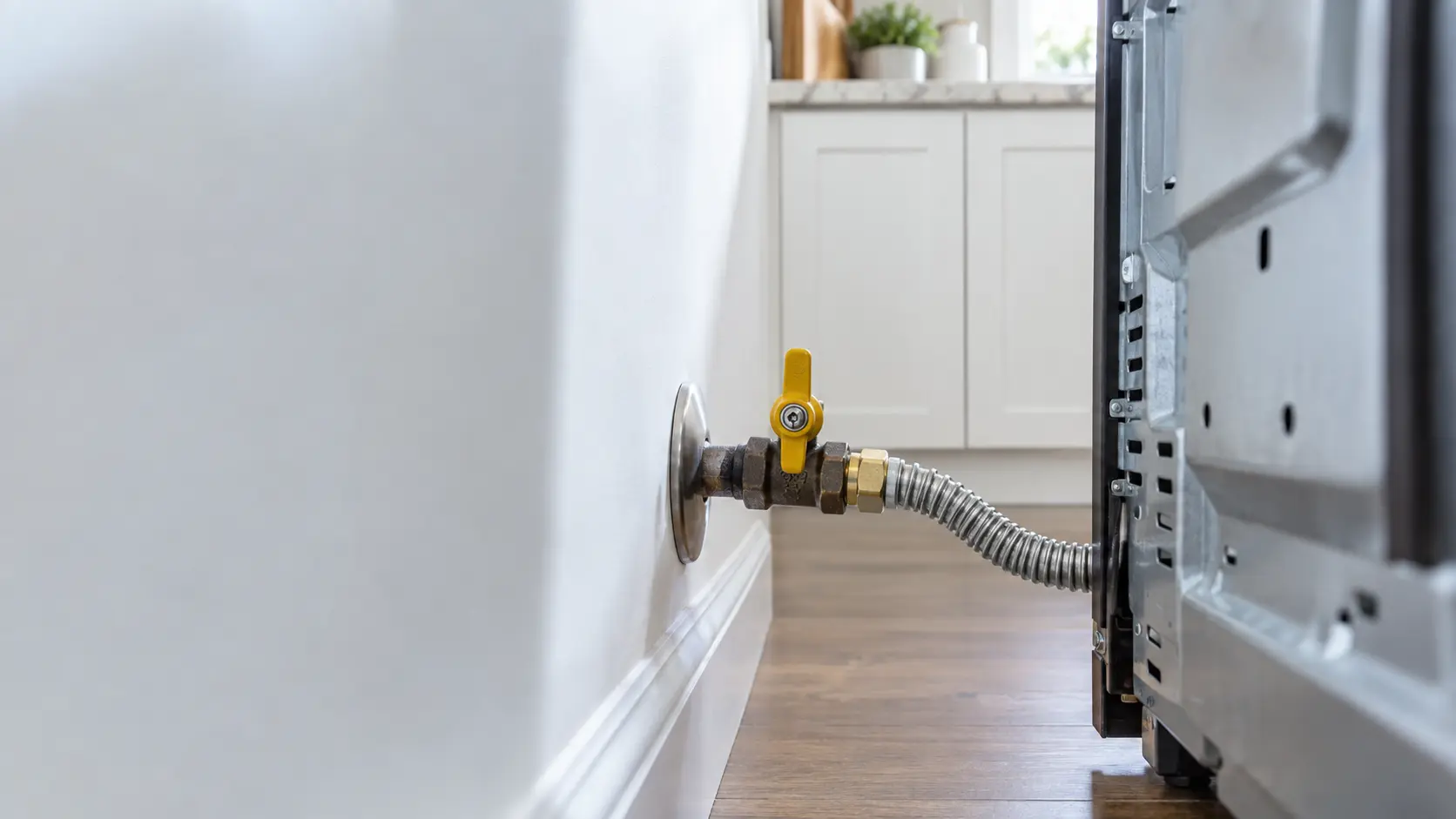
CDC recommends that the heating system, water heater and every other gas, oil or coal burning appliance be serviced by a qualified technician each year, and that gas appliances be vented properly. A gas laundry machine belongs on that list. NFPA asks for gas models to be inspected so the gas line and connection are intact and free of leaks, and GE's installation instructions call for an accessible manual shutoff within 6 feet of the machine, in the same room.
CDC also mentions a less common source: a gas refrigerator, found in some cabins and older homes, that gives off an odor should be serviced by an expert, since the smell can mean it is leaking carbon monoxide.
Source: CDC — Carbon monoxide poisoning basics — CO is odorless and colorless; gas ranges and furnaces are sources; yearly service of fuel-burning appliances; never heat a house with a gas oven; gas refrigerator odor needs an expert; detectors near sleeping areas, batteries checked spring and fall, replaced per maker or every 5 years; sleeping people may die before symptoms; NFPA — Clothes dryer safety tip sheet — Gas dryers should be inspected by a qualified professional so the gas line and connection are intact and free of leaks; GE Appliances — Dryer owner's manual and installation instructions (49-3000386) — Accessible manual gas shutoff within 6 feet of the dryer, in the same room
Carbon monoxide alarms: where and how many
CPSC recommends battery-operated CO alarms, or plug-in alarms with battery backup, on every level of the home and outside sleeping areas, and says interconnected alarms are best because when one sounds, they all sound. CDC suggests checking the batteries when the clocks change each spring and fall, replacing the alarm as its maker directs or about every five years, and considering a model with a digital readout that shows the highest level recorded.
A peak reading is useful to a technician. A number that climbs whenever the oven runs points straight at the cooking side of the house, while one that climbs overnight points toward the furnace or water heater.
When the alarm sounds
CPSC's instruction is short: if you suspect carbon monoxide poisoning, get outside to fresh air immediately, then call 911. Do not stay to find the source. The symptoms it lists are headache, dizziness, weakness, nausea, vomiting, sleepiness and confusion, and CDC notes that people who are asleep can be overcome before they notice any of them.
Source: CDC — Carbon monoxide poisoning basics — CO is odorless and colorless; gas ranges and furnaces are sources; yearly service of fuel-burning appliances; never heat a house with a gas oven; gas refrigerator odor needs an expert; detectors near sleeping areas, batteries checked spring and fall, replaced per maker or every 5 years; sleeping people may die before symptoms; CPSC — Carbon monoxide — Battery or battery-backup CO alarms on every level and outside sleeping areas, interconnected best; symptoms; if CO poisoning is suspected, get outside to fresh air, then call 911