How lint in the exhaust run turns into heat
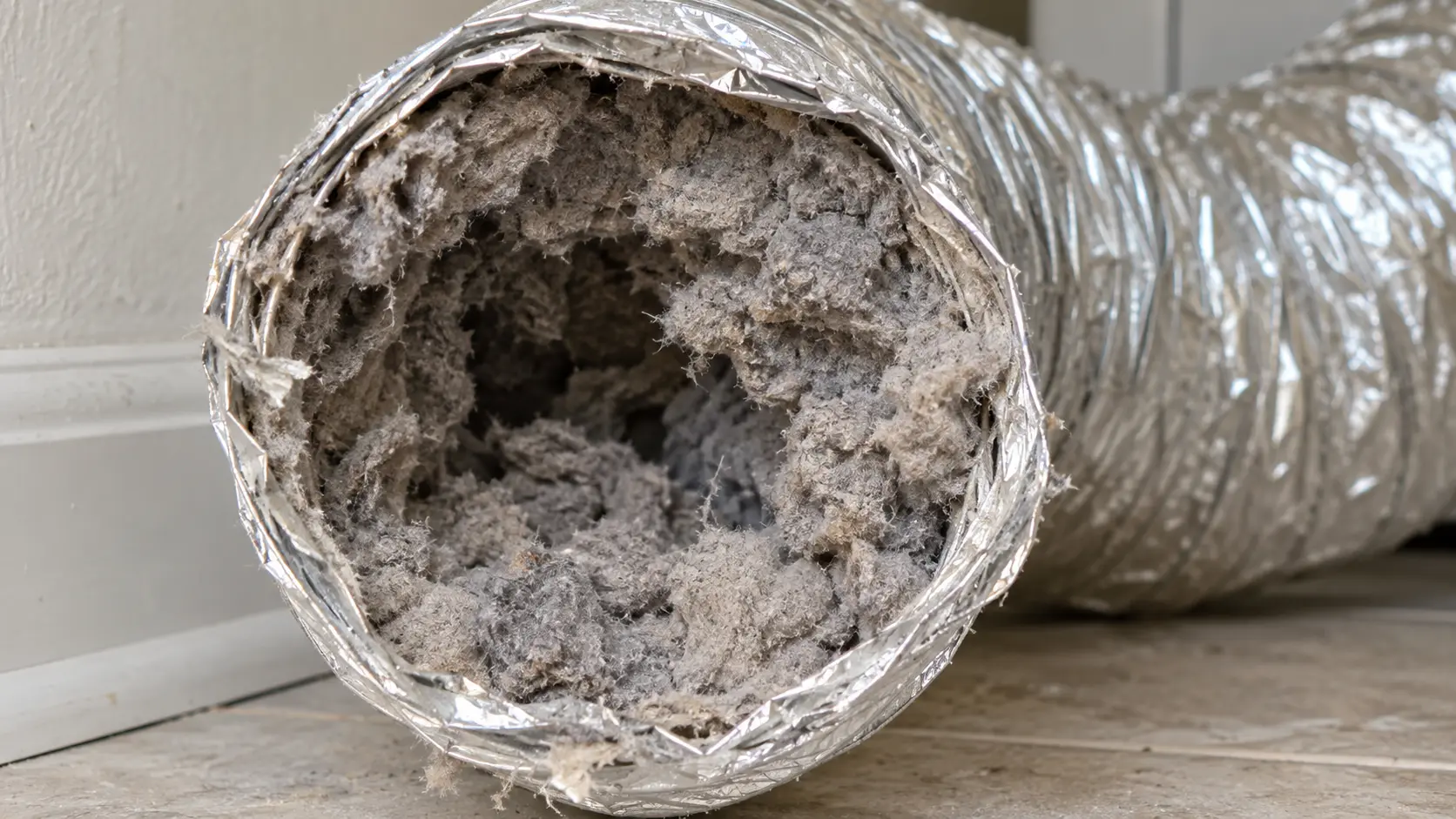
CPSC puts the chain simply: lint builds up in the machine or in the exhaust duct, blocks the flow of air, causes excessive heat and can start a fire. A heated laundry machine is built on the assumption that a steady stream of air carries heat and moisture out through the wall. When that stream slows, the air inside the drum and the duct runs hotter, the heater cycles on its safety limits, and the lint lining the duct becomes fuel sitting next to the heat.
The US Fire Administration measured how often this happens in practice. Across 2018 to 2020, machines that had not been cleaned accounted for 31 percent of home laundry fires, more than any other factor. That makes the dryer vent fire risk less a matter of bad luck than of maintenance that was skipped.
Warning signs well before any smell
A blocked run gives weeks or months of notice. CPSC names the first sign: clothes still damp at the end of a normal cycle, or drying that takes longer than it used to.
- Towels still damp when the timer runs out
- The top of the cabinet or the laundry room hotter than usual
- Little or no air felt at the outside hood while the machine runs
- A flap on the outside hood that stays shut during a cycle
- Lint gathering around the outside hood or behind the machine
Source: CPSC — Overheated clothes dryers can cause fires (Publication 5022) — Lint blocks airflow and causes heat and fire; damp clothes signal a blockage; use rigid or corrugated semi-rigid metal duct; check air at the outside vent; reconnect the duct; have the cabinet interior cleaned periodically; care with chemically soiled clothes; U.S. Fire Administration — Appliance and electrical fire safety — Failure to clean (31%) was the leading factor contributing to ignition of home clothes dryer fires, 2018–2020
What the exhaust run should be made of
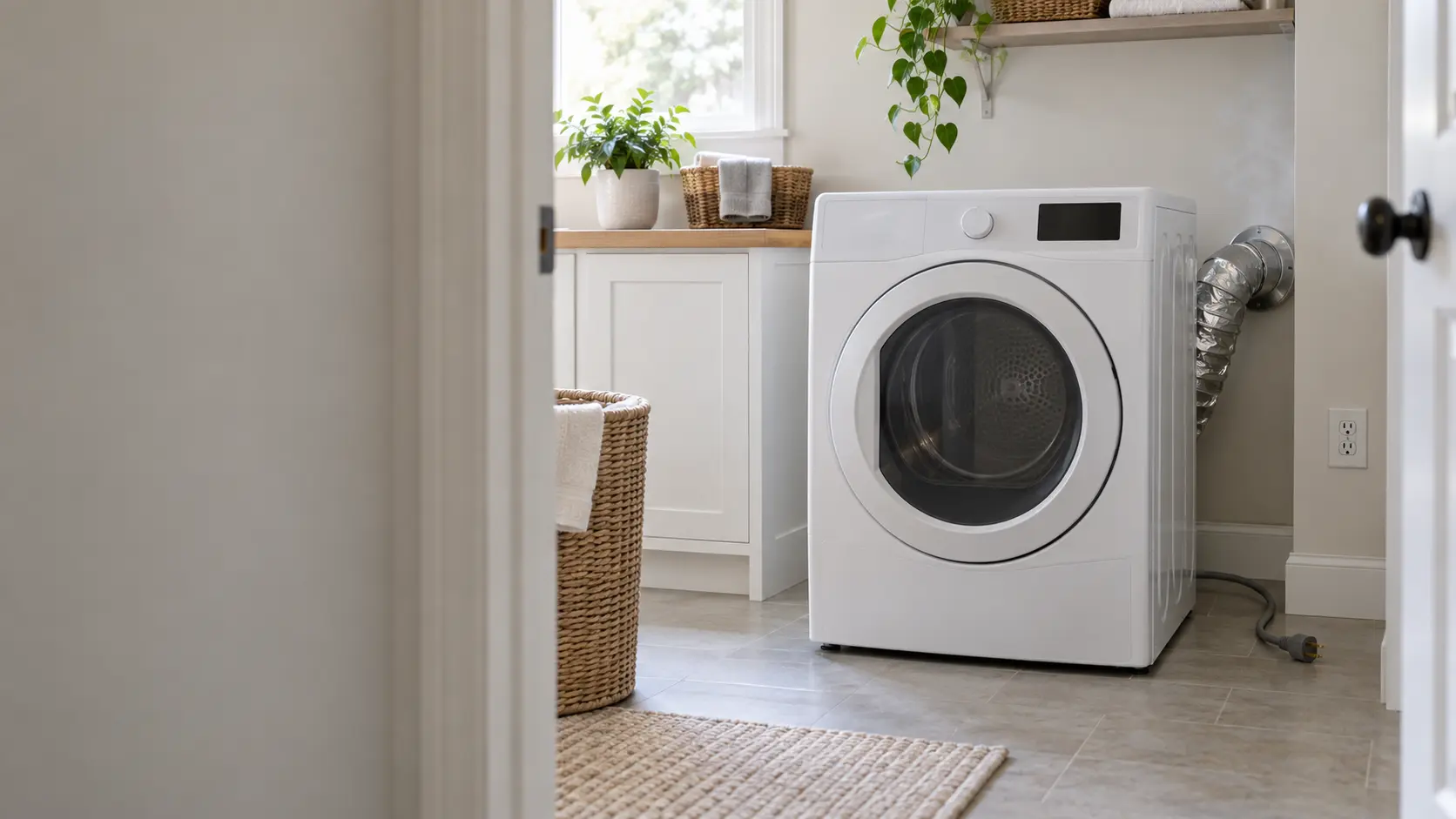
CPSC recommends replacing plastic or foil accordion ducting with rigid or corrugated semi-rigid metal duct, noting that most makers specify metal because it gives the most airflow. The soft accordion kinds trap lint in their folds and crush easily behind a machine pushed back against the wall. Speed Queen's installation instructions go further and warn that flexible venting materials collapse, crush and trap lint, all of which obstruct airflow and raise the risk of fire.
The same Speed Queen instructions list the details that decide whether a metal run stays clean inside. Most of them are invisible once the laundry pair is pushed into place, which is why a maintenance visit pulls the machine out to look.
- 4-inch diameter rigid or flexible metal duct; no plastic, thin foil or type B vent pipe
- Flexible metal limited to 7.87 feet in total and never inside a wall or ceiling
- The male end of each section pointing away from the machine, so joints do not catch lint
- Seams joined with duct tape or pop rivets where local code allows, never with sheet metal screws that poke into the duct
- Its own run to the outside, never tied into another duct, vent or chimney
- A weather hood with a hinged damper at least 12 inches above the ground
Source: CPSC — Overheated clothes dryers can cause fires (Publication 5022) — Lint blocks airflow and causes heat and fire; damp clothes signal a blockage; use rigid or corrugated semi-rigid metal duct; check air at the outside vent; reconnect the duct; have the cabinet interior cleaned periodically; care with chemically soiled clothes; Alliance Laundry Systems (Speed Queen) — Installation instructions for dryers, D516902 — 4-inch metal duct, no plastic, thin foil or type B; flexible metal max 7.87 ft and not in walls or ceilings; male ends away from the dryer; tape or rivets, no screws; no connection to other ducts; hinged hood 12 in above ground; length table by elbows, 6 ft per extra elbow; static pressure max 0.6 in w.c.; no booster fan
How long a run may be
Every foot of duct and every bend costs the blower some of its push. Speed Queen publishes the limit for a 4-inch rigid metal run by number of 90-degree elbows and by style of outside hood, and deducts 6 feet for each elbow beyond four. The figures below are for the first of its two hood styles; the second allows 6 to 10 feet less at each step. Other makers print their own table, and the limit that applies is the one in the installed machine's manual.
| 90-degree elbows | Maximum run |
|---|---|
| 0 | 65 feet |
| 1 | 55 feet |
| 2 | 47 feet |
| 3 | 36 feet |
| 4 | 28 feet |
When the numbers are hard to judge
A run that climbs through an attic or crosses a basement can be hard to measure with a tape. Speed Queen gives a second test: static pressure in the duct should not exceed 0.6 inches of water column, read with a manometer 2 feet from the machine while it runs empty. A technician can take that reading in a few minutes, and a high number points to length, elbows or buildup even when the duct cannot be seen.
Source: Alliance Laundry Systems (Speed Queen) — Installation instructions for dryers, D516902 — 4-inch metal duct, no plastic, thin foil or type B; flexible metal max 7.87 ft and not in walls or ceilings; male ends away from the dryer; tape or rivets, no screws; no connection to other ducts; hinged hood 12 in above ground; length table by elbows, 6 ft per extra elbow; static pressure max 0.6 in w.c.; no booster fan
Cleaning the lint path from screen to outside hood
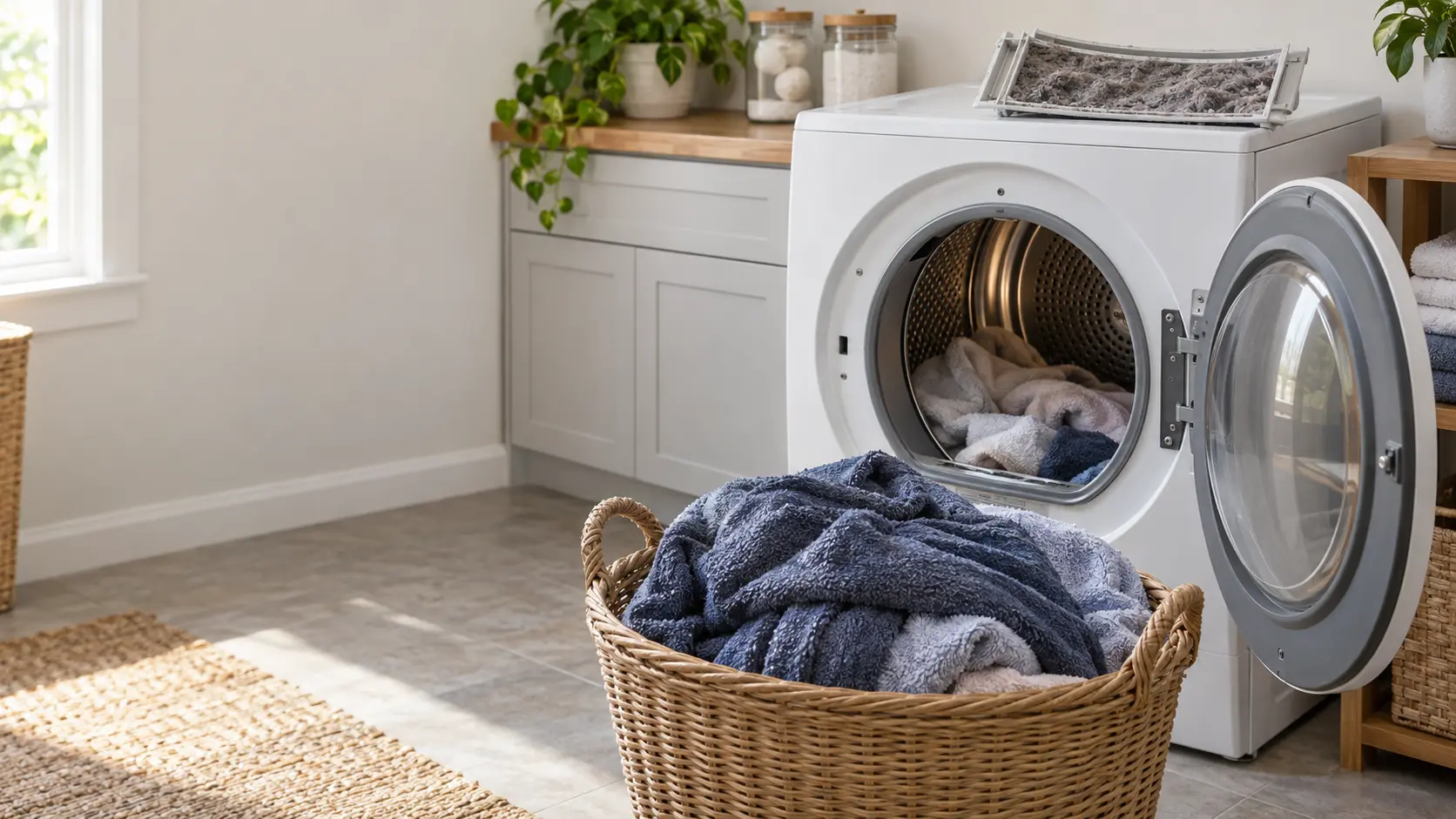
The US Fire Administration asks for the lint screen to be cleaned before and after each cycle, for the machine never to run without it, and for lint behind the machine to be cleared as well. NFPA sets the whole vent pipe at once a year, sooner when drying slows. Samsung places it at once or twice a year and recommends a professional vent cleaning service for the job.
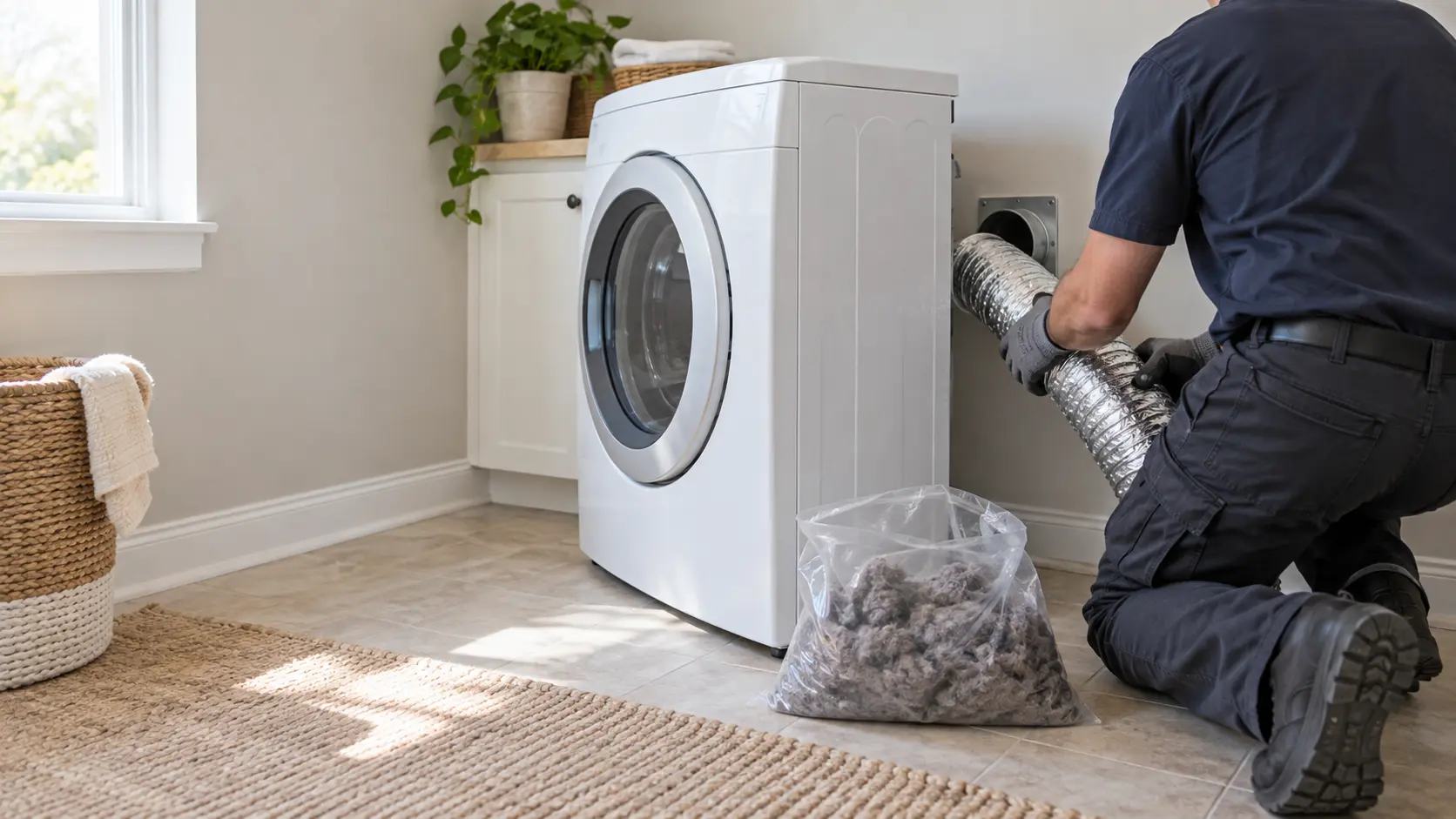
CPSC notes that clearing a blockage may mean disconnecting the duct from the machine, and that it must be reconnected to both the machine and the outside hood before the next load. The agency also recommends having a qualified service person clean the inside of the cabinet from time to time, since lint gathers around the heater and motor where an owner cannot see it.
Machines with no exhaust run
ENERGY STAR explains that a heat pump model dries in a closed loop, pulling moisture out through a condenser instead of blowing air outside, so it needs no vent at all. Its lint screen still matters, and its condenser or secondary filter has its own cleaning step in the owner's manual.
Source: CPSC — Overheated clothes dryers can cause fires (Publication 5022) — Lint blocks airflow and causes heat and fire; damp clothes signal a blockage; use rigid or corrugated semi-rigid metal duct; check air at the outside vent; reconnect the duct; have the cabinet interior cleaned periodically; care with chemically soiled clothes; U.S. Fire Administration — Clothes dryer fire safety flyer — Clean the lint filter before and after each cycle, never run without it, clean behind the machine, check the venting is not crushed and the outdoor covering opens; NFPA — Clothes dryer safety tip sheet — Clean lint from the vent pipe once a year or sooner; keep combustibles away; turn the machine off when leaving home or going to bed; Samsung US — How to clean your dryer — Clean the exhaust vent once or twice per year; a professional vent cleaning service is recommended
The laundry closet and the room around the machine
A heated laundry machine draws its air from the room, so the room must be able to supply it. GE's installation instructions require closet doors to be louvered or otherwise ventilated with at least 60 square inches of open area, or 120 square inches when the closet holds both the washing and drying machines. A solid door added during a remodel quietly takes that air away.
NFPA asks owners to keep boxes, cleaning supplies and clothing that can burn clear of the machine, and to switch it off before leaving home or going to bed. CPSC adds a warning about clothes soiled with gasoline, cooking oils, cleaning agents or finishing oils: wash them more than once, preferably hang them to dry, and otherwise use the lowest heat with a cool-down at the end, never leaving them piled warm in the drum or a basket.
Source: CPSC — Overheated clothes dryers can cause fires (Publication 5022) — Lint blocks airflow and causes heat and fire; damp clothes signal a blockage; use rigid or corrugated semi-rigid metal duct; check air at the outside vent; reconnect the duct; have the cabinet interior cleaned periodically; care with chemically soiled clothes; NFPA — Clothes dryer safety tip sheet — Clean lint from the vent pipe once a year or sooner; keep combustibles away; turn the machine off when leaving home or going to bed; GE Appliances — Dryer owner's manual and installation instructions (49-3000386) — Closet doors louvered or ventilated with at least 60 sq in open area, 120 sq in when the closet holds a washer and a dryer