
Why appliance maintenance slips without a calendar
Nothing in a kitchen announces that a condenser coil has furred over or that a charcoal filter stopped trapping odors months ago. The household simply adjusts: loads that need a second round of drying, smaller ice cubes, a hood fan that sounds strained. By the time something is plainly wrong, the inexpensive moment has usually passed.
A home appliance maintenance schedule changes that by writing each job against a date. The intervals on this page come from the makers' own care pages and manuals, and they fall into a tidy pattern: a few tasks with every use, a few monthly, a larger group twice a year and a short list yearly or less often. Four checkpoints cover nearly all of it.
Hang the jobs on dates you already keep
CDC suggests checking carbon monoxide detector batteries when the clocks change in spring and fall, and those two weekends make a natural home for the twice-yearly appliance jobs as well. The first cool week of the heating season suits the yearly gas and exhaust checks, since the furnace and the burners start working harder at the same time and any weakness shows sooner.
Small jobs: every load and every month
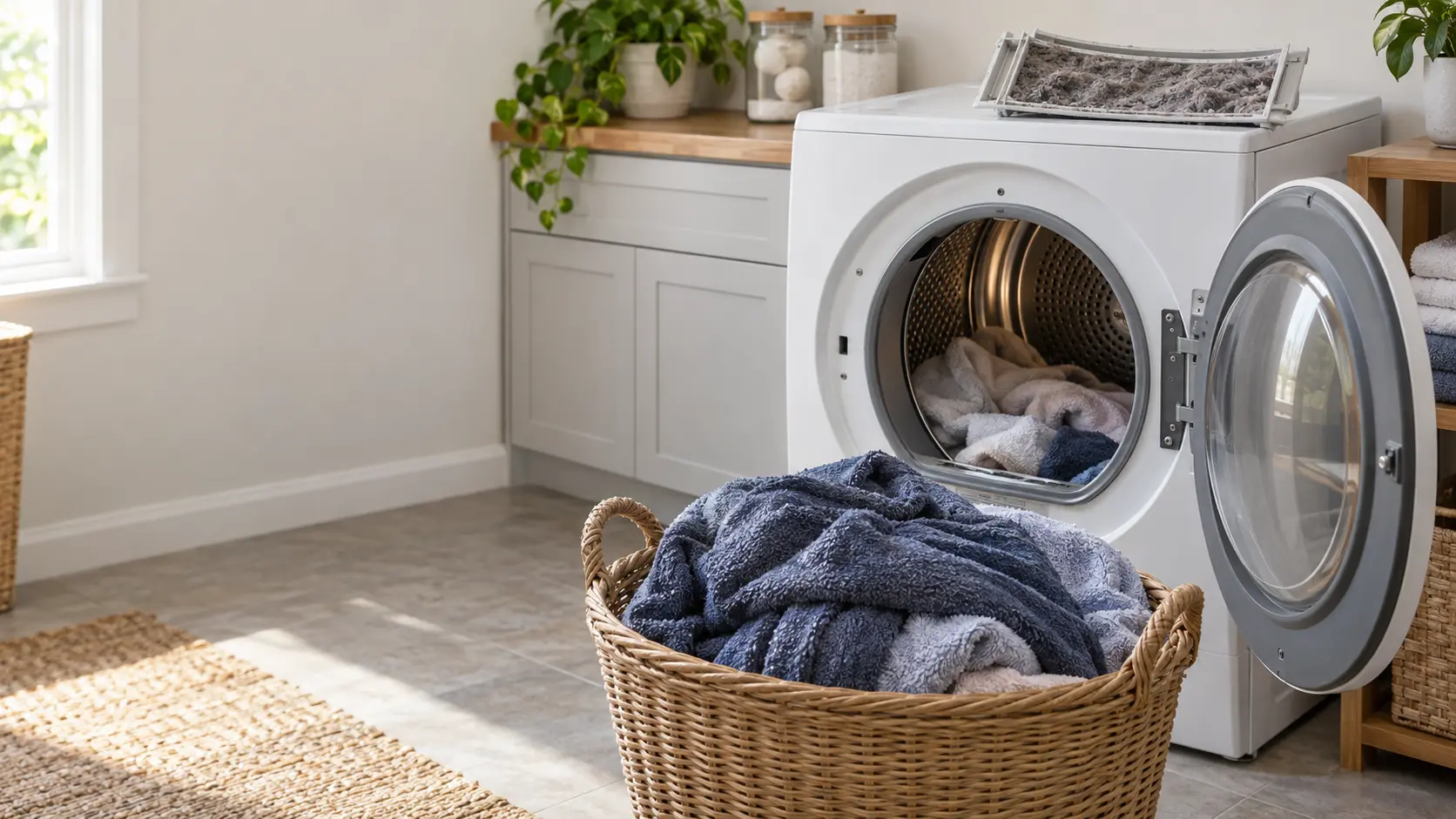
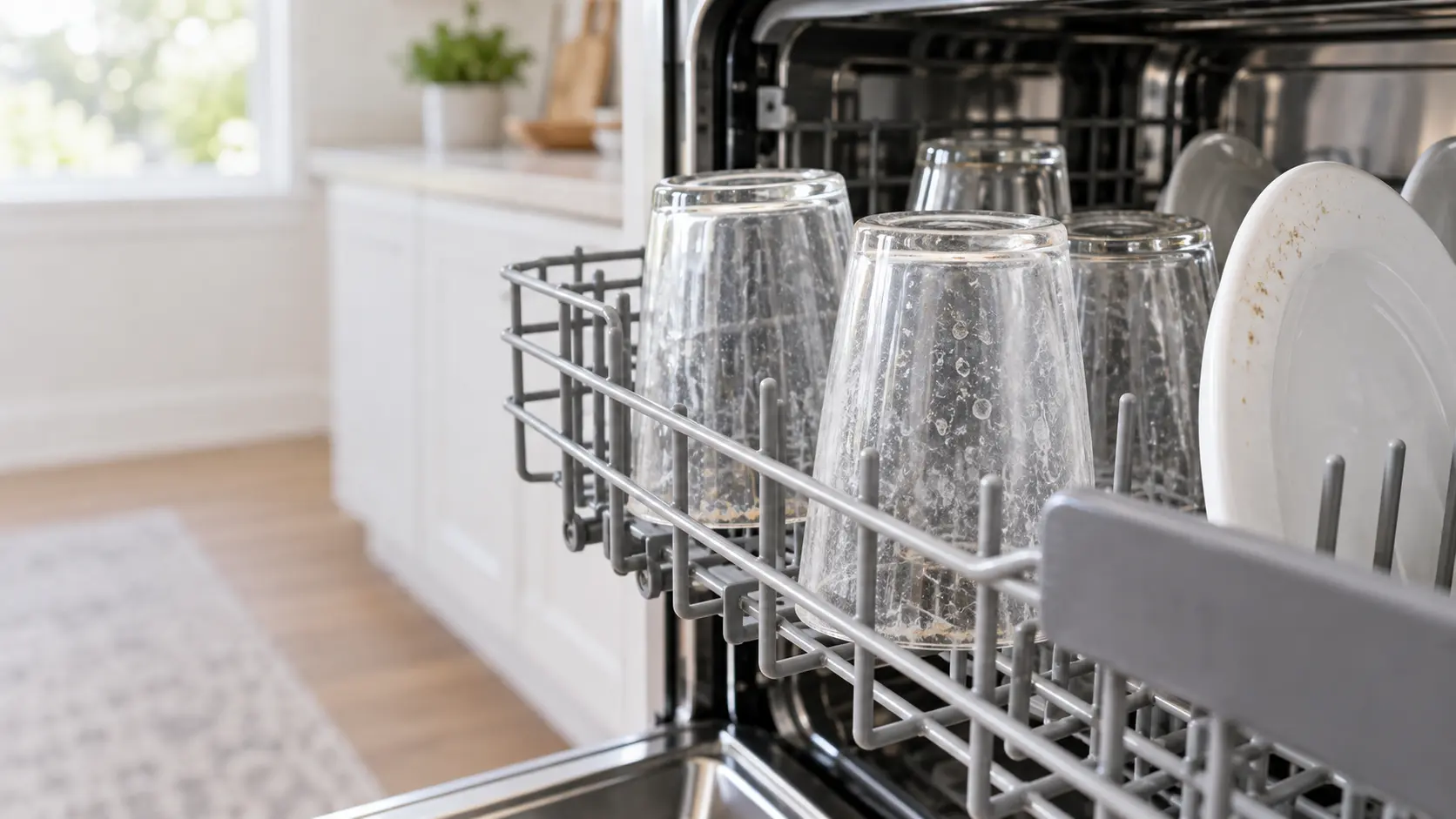
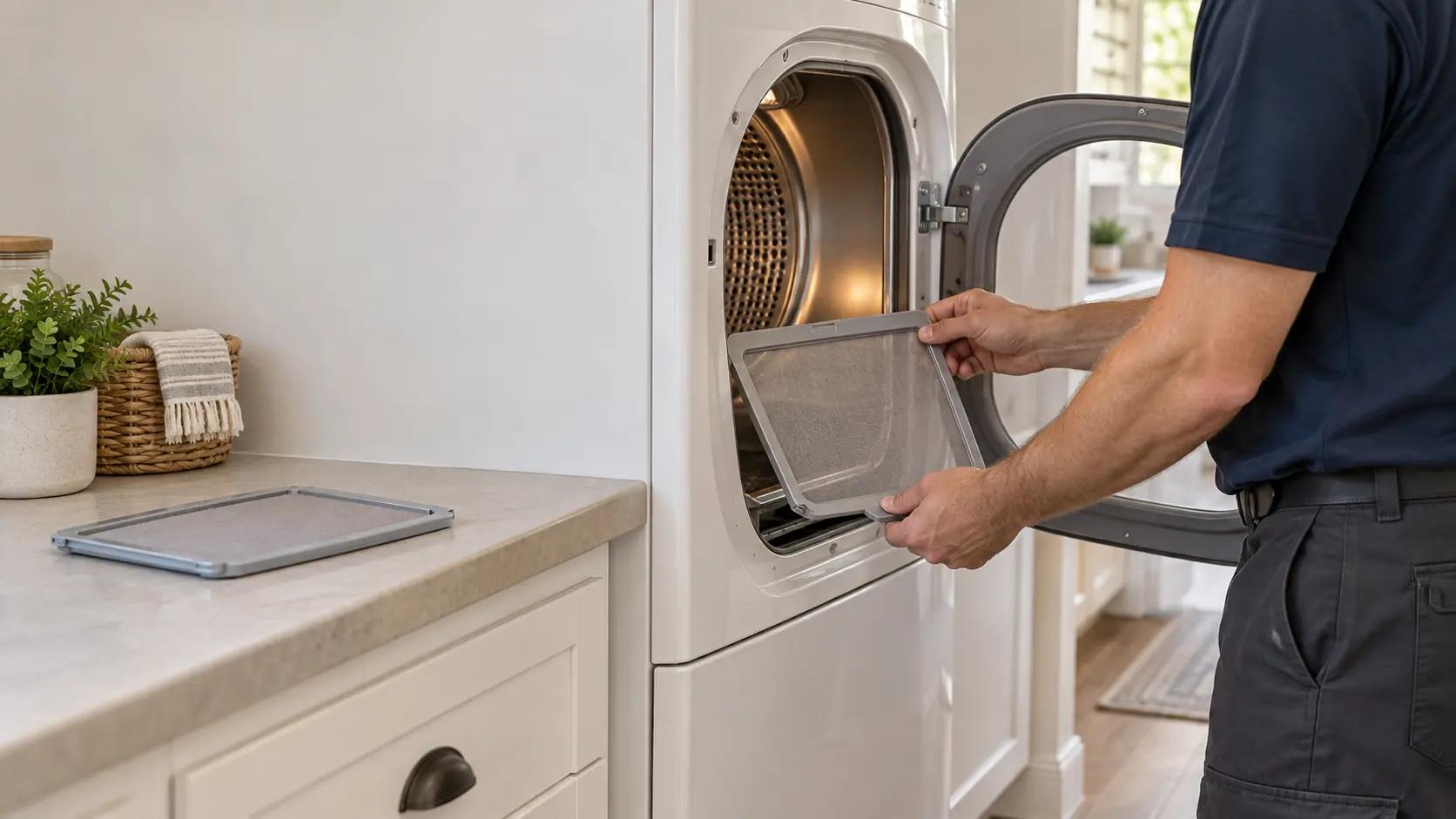
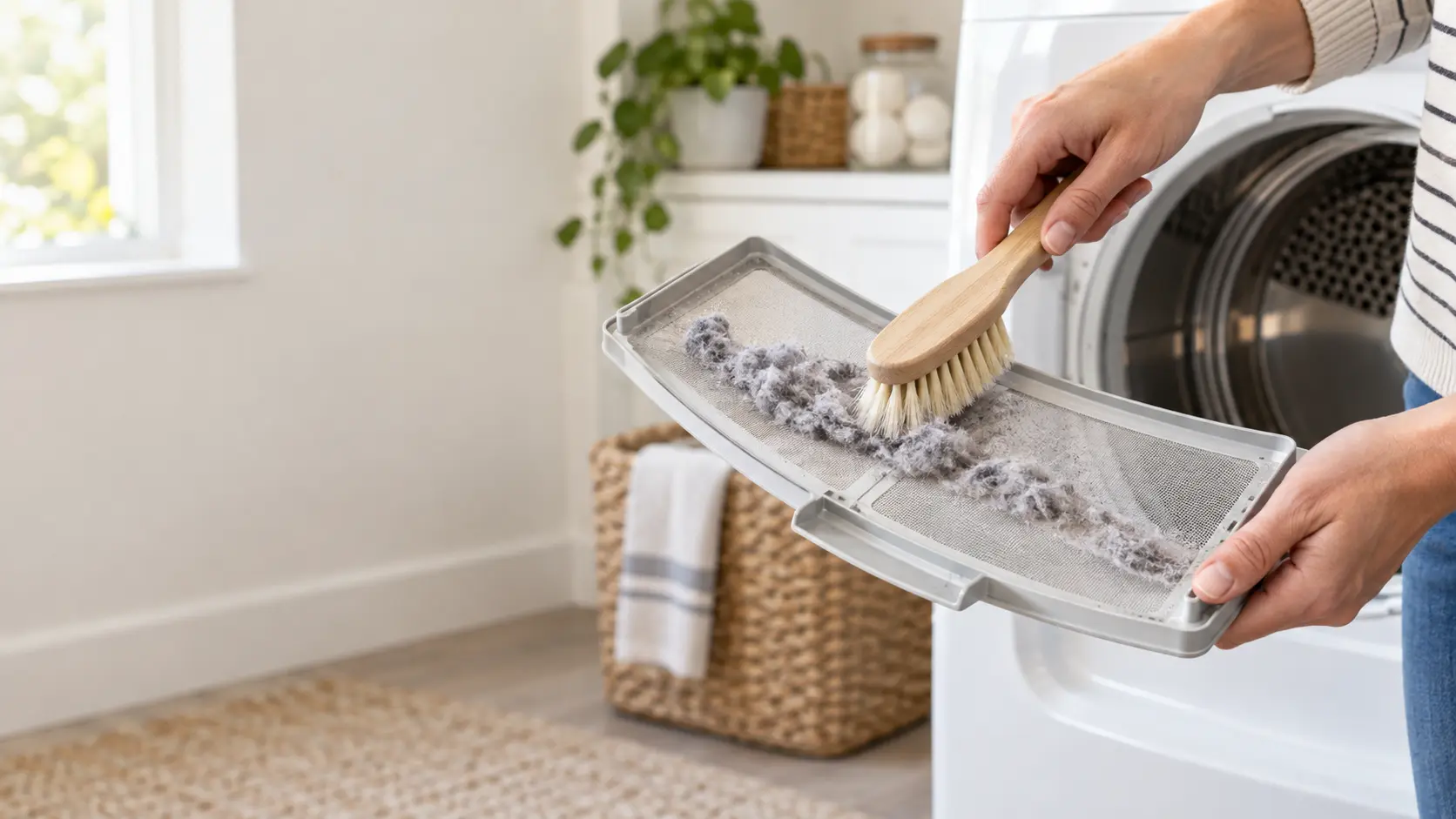
The shortest intervals belong to the parts built to catch debris. A lint screen gathers a layer with each load, a dish care filter holds back food soil, and a front-loader's drain pump filter traps coins, hair and fluff before they reach the pump. Each takes minutes; each one skipped for a season returns as a longer cycle, a smell or a stalled drain.
- Every load: clear the lint screen before or after drying, and never run the machine with the screen out
- Monthly: rinse the upper and lower dish care filters under running water, using no wire brush or scouring pad
- Monthly or about every 40 washes, whichever comes first: open and clean a front-loader's drain pump filter
- Monthly: look along the fill hoses and the drain for drips, and rock the laundry machine by its corners to confirm it still sits level
- After each wash: leave a front-loader's door ajar for an hour or two so the gasket can dry
Why the laundry jobs follow the load, not the month
Lint output tracks how much gets dried, not what the date is. A family of five running two loads a day fills a screen far faster than a couple running three a week, which is why fire agencies tie the screen to every cycle instead of a calendar date. The same thinking sits behind Samsung's 40-wash figure for its drain pump filter: the busier machine reaches it first.
Source: U.S. Fire Administration — Clothes dryer fire safety flyer — Clean the lint filter before and after each cycle and never use the machine without it; Whirlpool — Water remains in the dishwasher filter area — Clean the upper and lower filters and rinse them under running water at least once a month; Whirlpool — Cleaning the removable dishwasher filtration system — Do not use a wire brush or scouring pad on the filters; Samsung US — How to clean your washer — Clean a front-load pump filter at least once a month or about every 40 washes, whichever is more frequent; ENERGY STAR — Clothes washers — Leave a front-loader's door ajar for an hour or two after use so moisture can evaporate; Alliance Laundry Systems (Speed Queen) — User's Guide for Frontload Washers, 808187 — Monthly: check hoses and drain for leaks and check the washer is level; every six months: clean the fill hose filter screens; every five years: replace fill hoses and have a technician do general preventive maintenance
Twice a year: coils, water filters and hood filters
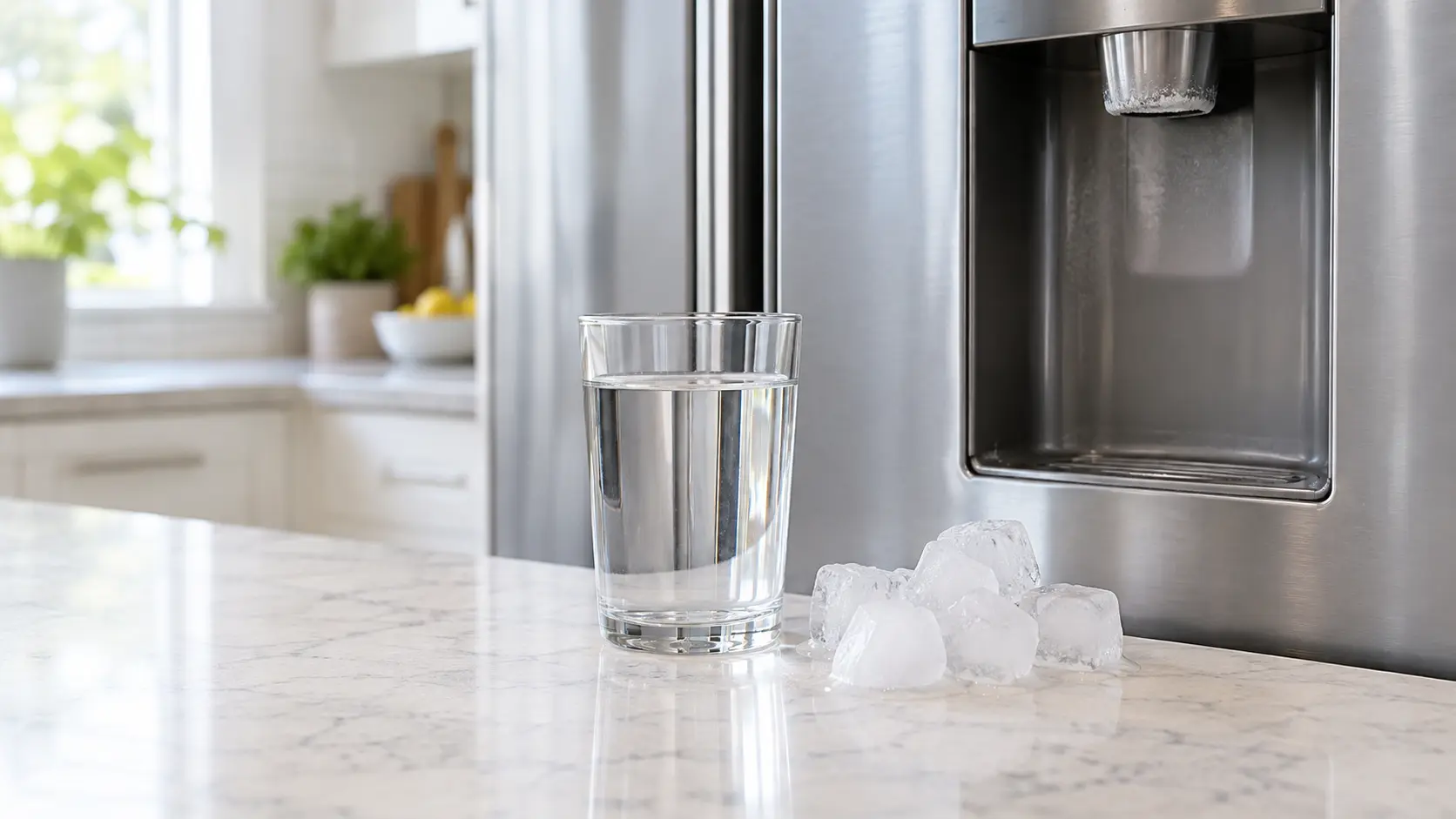
The six-month jobs are where most energy and ice complaints begin. Viking's built-in refrigeration manual asks for the condenser to be cleaned once every six months, and sooner after any dusty work near the unit. Whirlpool and GE both put the refrigerator water filter at six months; GE adds a volume limit of roughly 170 to 200 gallons, whichever arrives first. Broan-NuTone gives the charcoal filter in a recirculating hood the same six months.
Aluminum mesh and baffle grease filters sit on a similar line in Broan-NuTone's guidance: cleaned at least twice a year, or sooner once heavily coated. A household that fries or sears most nights will see that coating long before six months, so here the eye outranks the calendar.
- Condenser coil brushed or vacuumed with the power off, on every cold storage unit whose coil can be reached
- Refrigerator water filter replaced, then a gallon or two run through the dispenser to purge trapped air
- Charcoal filter swapped in a recirculating hood or an over-the-range microwave
- Grease filters soaked in warm soapy water and rinsed
- The small inlet screens where the fill hoses meet the laundry machine cleaned, per Speed Queen's six-month list
Homes where the coil job comes around sooner
Shedding pets, a renovation, a carpeted room beside the kitchen or a unit that breathes through a toe-kick grille near the floor all load a coil faster. In those homes six months is a ceiling, and a flashlight look through the grille at three months shows whether the brush should come out early.
Source: Alliance Laundry Systems (Speed Queen) — User's Guide for Frontload Washers, 808187 — Monthly: check hoses and drain for leaks and check the washer is level; every six months: clean the fill hose filter screens; every five years: replace fill hoses and have a technician do general preventive maintenance; Viking — FBI7360W built-in refrigeration use and care manual — Clean the condenser once every six months, and after construction or dusty work near the unit; Whirlpool — When to change the refrigerator water filter — Replace the water filter every 6 months or when the indicator comes on; GE Appliances — Refrigerator: replacing the water filter — Replace every six months or after about 170–200 gallons; dispense 1–2 gallons to purge air; Broan-NuTone — Range hood filter guide — Clean aluminum and baffle filters at least twice a year or when heavily coated; replace charcoal filters every six months
Once a year: the exhaust run, the burners and a maintenance visit
NFPA asks for lint to be cleaned out of the vent pipe once a year, or sooner when clothes begin taking longer to dry, and Samsung sets its own figure at once or twice a year with a professional vent service recommended. That job covers the whole run to the outside hood, not only the screen and the slot beneath it. In the US Fire Administration's figures for 2018 to 2020, nearly a third of home laundry fires traced back to machines nobody had cleaned.
Gas equipment gets its yearly look at the same time. CDC recommends that every gas, oil or coal burning appliance in the home be serviced by a qualified technician each year, and NFPA's tip sheet asks for a gas laundry machine to be inspected so its gas line and connection stay intact and free of leaks. A whole-home maintenance visit is the natural place to bundle both, together with the coils and gaskets that are easier to judge with the machines pulled forward.
The items on a longer clock
GE and Speed Queen both recommend replacing laundry fill hoses every five years, even when they look sound, and Speed Queen pairs that date with a general preventive check by a technician. A steam oven runs on a looser clock: Wolf puts its descaling at every 6 to 18 months depending on use and water hardness, and the oven's own display says when the day has come.
Source: U.S. Fire Administration — Appliance and electrical fire safety — Failure to clean (31%) was the leading factor in home clothes dryer fires, 2018–2020; NFPA — Clothes dryer safety tip sheet — Clean lint out of the vent pipe once a year or sooner if drying slows; have gas machines inspected for gas line leaks; check the outdoor flap is not covered by snow; Samsung US — How to clean your dryer — Clean the exhaust vent once or twice per year; a professional vent cleaning service is recommended; CDC — Carbon monoxide poisoning basics — Check CO detector batteries when the clocks change in spring and fall; have gas, oil or coal burning appliances serviced by a qualified technician every year
A season-by-season layout for the year
The table below is a template rather than a rule. Shift the rows to fit how the household's year actually runs, but keep the six-month jobs roughly six months apart, and clear the exhaust run before winter, when NFPA warns that snow can cover the outdoor flap.
| Checkpoint | Cold storage | Cooking appliances | Dish care and laundry |
|---|---|---|---|
| Spring clock change | Coils brushed, water filter replaced | Charcoal filter changed, grease filters washed | Hose inlet screens cleaned, hoses inspected |
| Early summer | Door gaskets wiped and pressed along their length | Burner caps lifted, ports cleared | Spray arms spun by hand, rinse aid topped up |
| Fall clock change | Coils brushed, water filter replaced | Charcoal filter changed, grease filters washed | Hose inlet screens cleaned, drum gasket washed |
| Start of the heating season | Ice bin emptied and wiped dry | Gas connections and flame looked at on the visit | Exhaust run cleaned out to the outside hood |
Source: NFPA — Clothes dryer safety tip sheet — Clean lint out of the vent pipe once a year or sooner if drying slows; have gas machines inspected for gas line leaks; check the outdoor flap is not covered by snow