Seven filters in an ordinary home
Knowing when to change appliance filters starts with knowing where they are, because several of them are out of sight. The table lists the usual set in a home with a water-dispensing refrigerator, a dish care machine, a front-load laundry pair and a hood over the cooking surface. Homes with an ice maker plumbed on its own line, or a steam oven, add their own.
| Filter | Where it is | Wash or replace | Usual interval |
|---|---|---|---|
| Water cartridge | Inside the fresh-food section, in the base grille or behind a door panel | Replace | About 6 months |
| Dish care filters | Center of the tub floor, beneath the bottom rack | Rinse | At least monthly |
| Lint screen | Door opening or top of the laundry cabinet | Clear | Every load |
| Drain pump filter | Behind a small panel at the bottom front of a front-loader | Clean | Monthly or every 40 washes |
| Inlet hose screens | Where the fill hoses meet the back of the laundry machine | Clean | Every 6 months |
| Grease filters | Underside of the hood or over-the-range microwave | Wash | At least twice a year |
| Charcoal filter | Behind the grille of a recirculating hood or microwave | Replace | About 6 months |
Washable filters against spent ones
Mesh, baffle and screen filters trap particles on a surface, so warm water and a soft brush bring them back to new. Carbon filters work differently: the carbon adsorbs what passes through until it has no capacity left, and EPA's filtration guidance notes that such filters are designed to handle a certain amount and should be replaced as their maker directs. Washing a carbon cartridge only wets it.
Source: EPA — Water Health Series: Filtration Facts — Activated carbon filters are designed to filter a certain amount and should be replaced as the manufacturer recommends; GE Appliances — Refrigerator: replacing the water filter — Replace every six months or after about 170–200 gallons, sooner if flow drops; dispense 1–2 gallons to purge air; the first ounces may sputter; Alliance Laundry Systems (Speed Queen) — User's Guide for Frontload Washers, 808187 — Clean the filter screens in the fill hoses every six months; Broan-NuTone — Range hood filter guide — Clean aluminum and baffle filters at least twice a year; replace charcoal filters every six months; many models have a 30-hour filter reminder
The water filter in cold storage
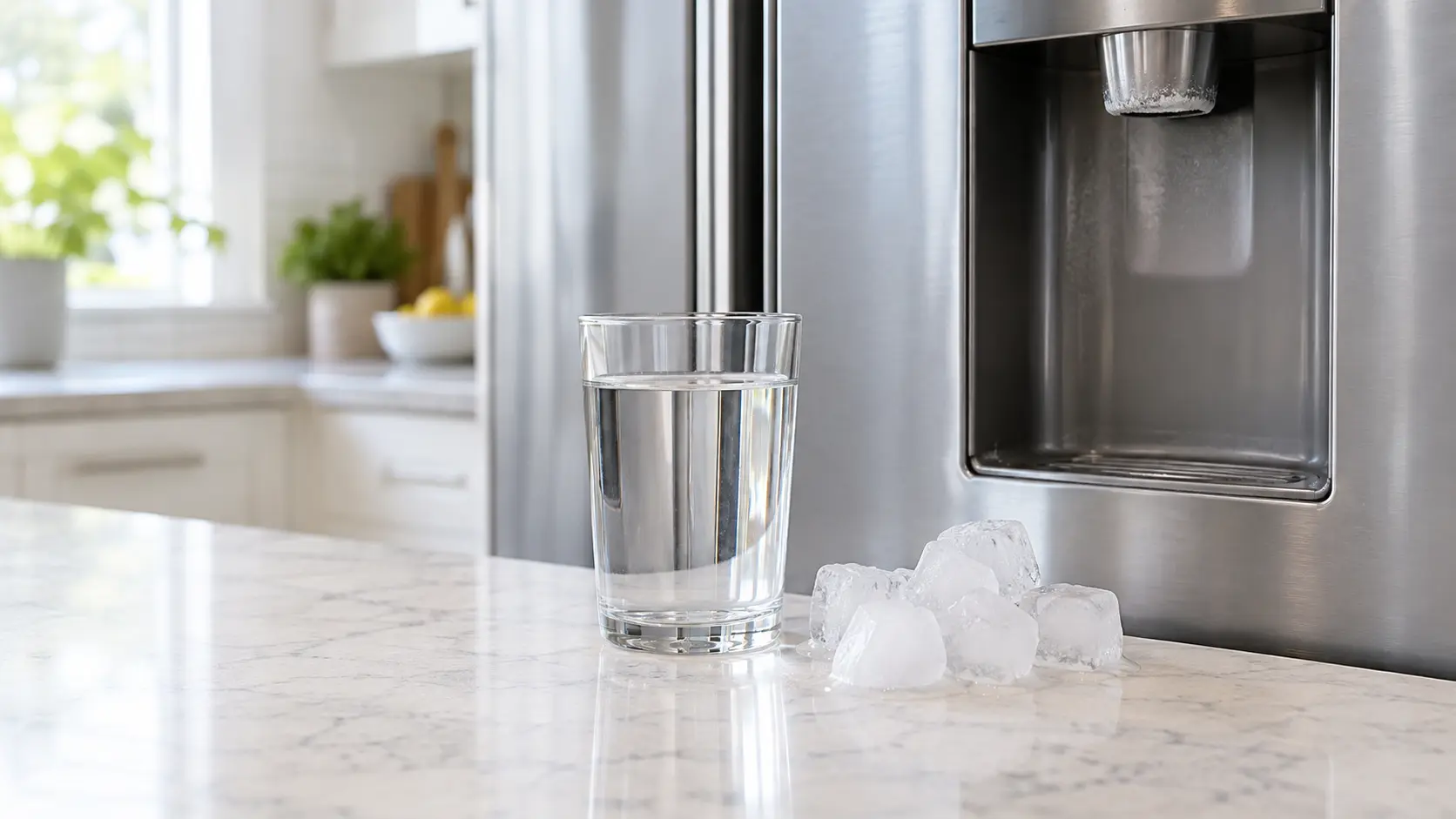
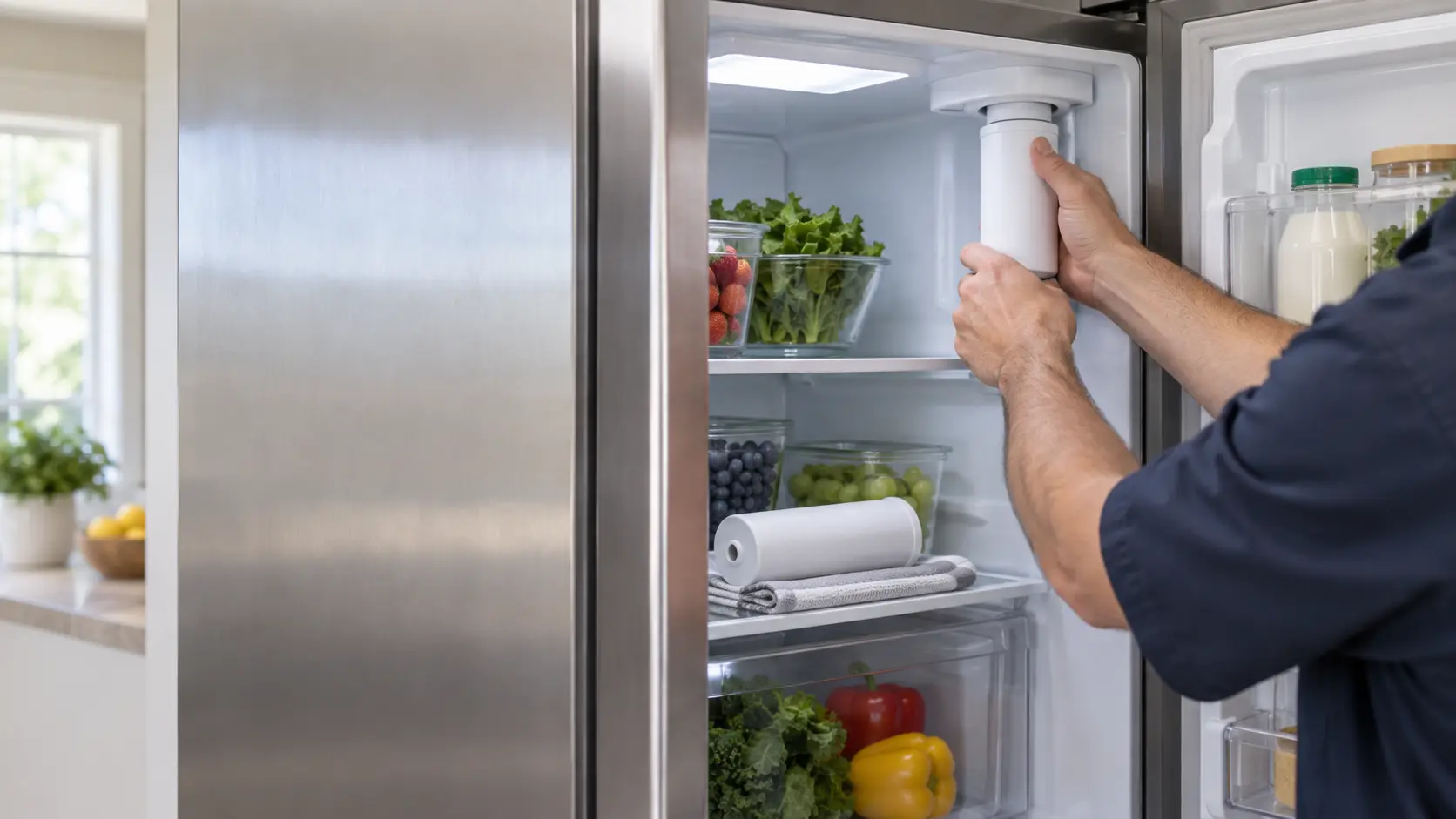
Whirlpool asks for its refrigerator water filter to be replaced every six months or when the status light comes on, whichever is first. GE gives the same six months with a volume cap of about 170 to 200 gallons, and tells owners to change it sooner if flow to the ice maker or dispenser drops. A cartridge that stays in too long does not announce itself with a bad taste first; it usually shows up as slower flow.
After a new cartridge goes in, GE says to run about one to two gallons through the dispenser, and warns that the first few ounces may sputter as trapped air clears. That water can go on houseplants. If the old cartridge is clogged and no spare is on hand, Whirlpool notes that many models run in bypass with the filter removed, delivering unfiltered water until the new one arrives.
- Water from the dispenser slower than it used to be
- Cubes that come out small, hollow or irregular
- The ice bin filling more slowly than normal
- The filter status light on, or six months since the last swap
What to check after the swap
Look at the cartridge housing for a drip over the first hour, since a cartridge that is not fully seated can weep at the head. Then confirm the status indicator was reset by the method in the owner's manual; a light left on trains everyone in the house to ignore it, and the next change is missed.
Source: Whirlpool — When to change the refrigerator water filter — Replace every 6 months or when the indicator comes on; a clogged filter causes small cubes, less ice and slow dispensing; bypass mode with the filter removed; GE Appliances — Refrigerator: replacing the water filter — Replace every six months or after about 170–200 gallons, sooner if flow drops; dispense 1–2 gallons to purge air; the first ounces may sputter; Frigidaire — How often should I change my water filter? — Change the filter every six months and use the same filter model

Dish care filters: rinsed, never scrubbed
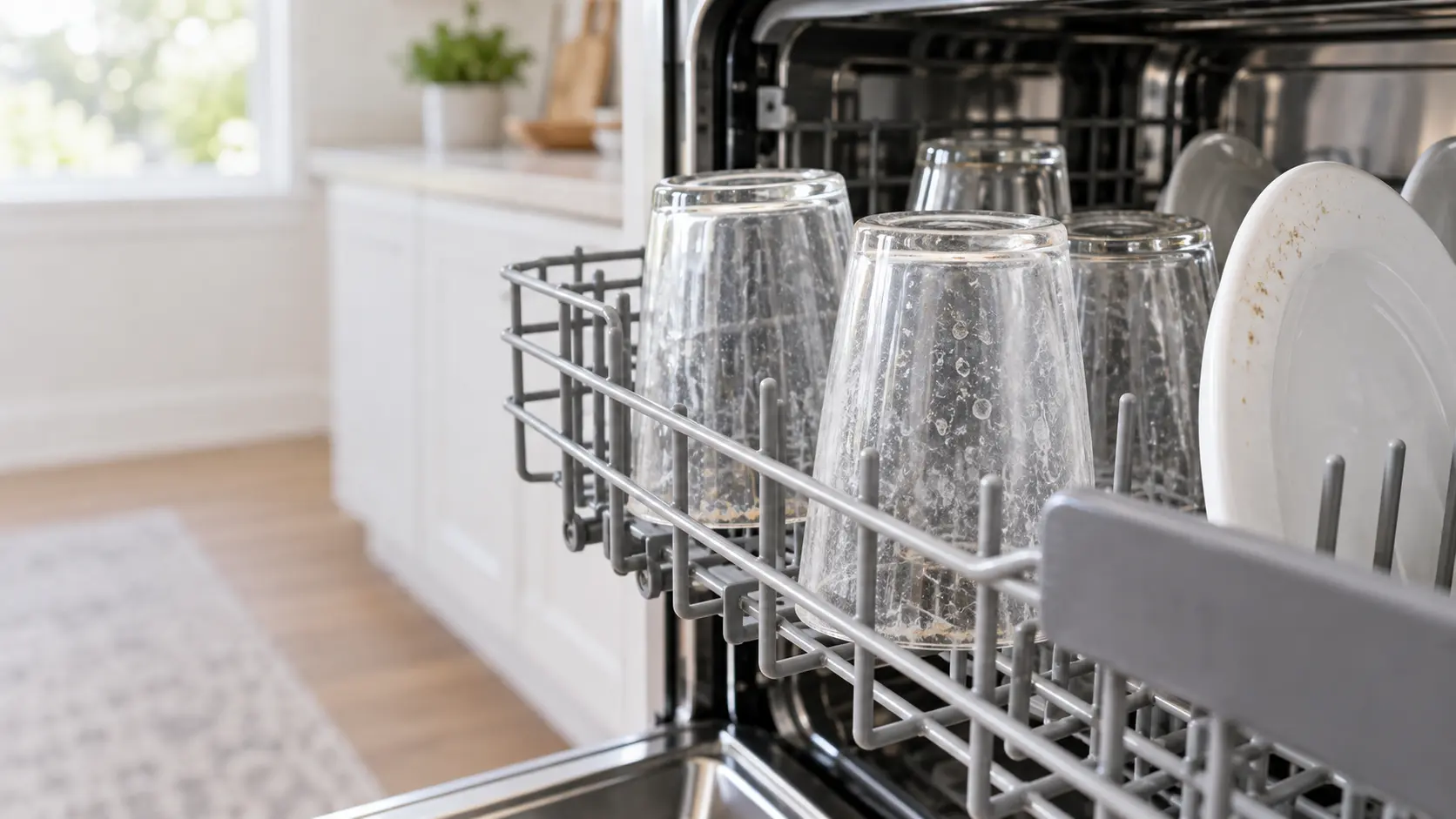
Whirlpool's own interval for its two-piece filter assembly is a monthly rinse of both parts under the tap. The signs that it is overdue are practical ones: food soil visible on the upper assembly, a film left on dishes, dishes that feel gritty to the touch, and an odor when the door opens. Pick out anything sharp from the sump by hand first, since broken glass or an olive pit can travel further once the filter is lifted.
The brand warns against wire brushes and scouring pads, which damage the mesh; a soft brush handles stubborn soil and hard-water deposits. The filters must be seated and locked before the next cycle, and Whirlpool is explicit that the machine should never run with them out. Some newer models have no removable filter at all, only a small cup under the lower rack that is emptied when it fills.
A little water under the filter is normal
Owners lifting the filter for the first time often find water sitting beneath it and assume a drain problem. Whirlpool explains that a small amount, roughly halfway up the filter area, is left on purpose to keep the seals from drying out, and it is flushed at the start of the next cycle. Water up to the door or over the filter is a different matter.
Source: Whirlpool — Water remains in the dishwasher filter area — Rinse upper and lower filters at least monthly; signs are visible soil, gritty dishes and odors; a small amount of standing water keeps the seals from drying; never run without the filters locked in; Whirlpool — Cleaning the removable dishwasher filtration system — Remove foreign objects by hand first; no wire brush or scouring pad; soft brush for calcium deposits; some models have only a foreign object cup
Laundry: the lint screen, the drain pump filter and the inlet screens
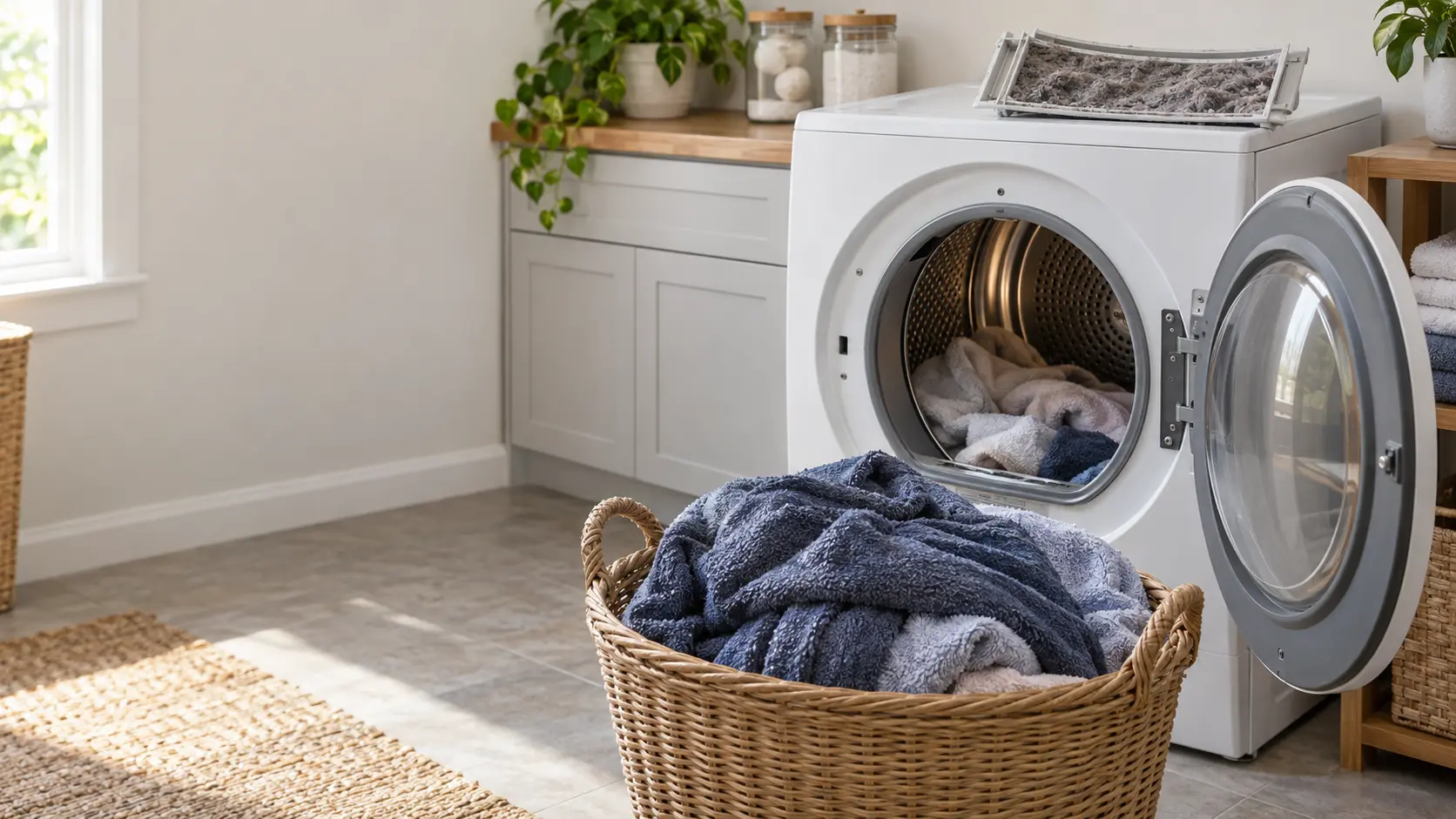
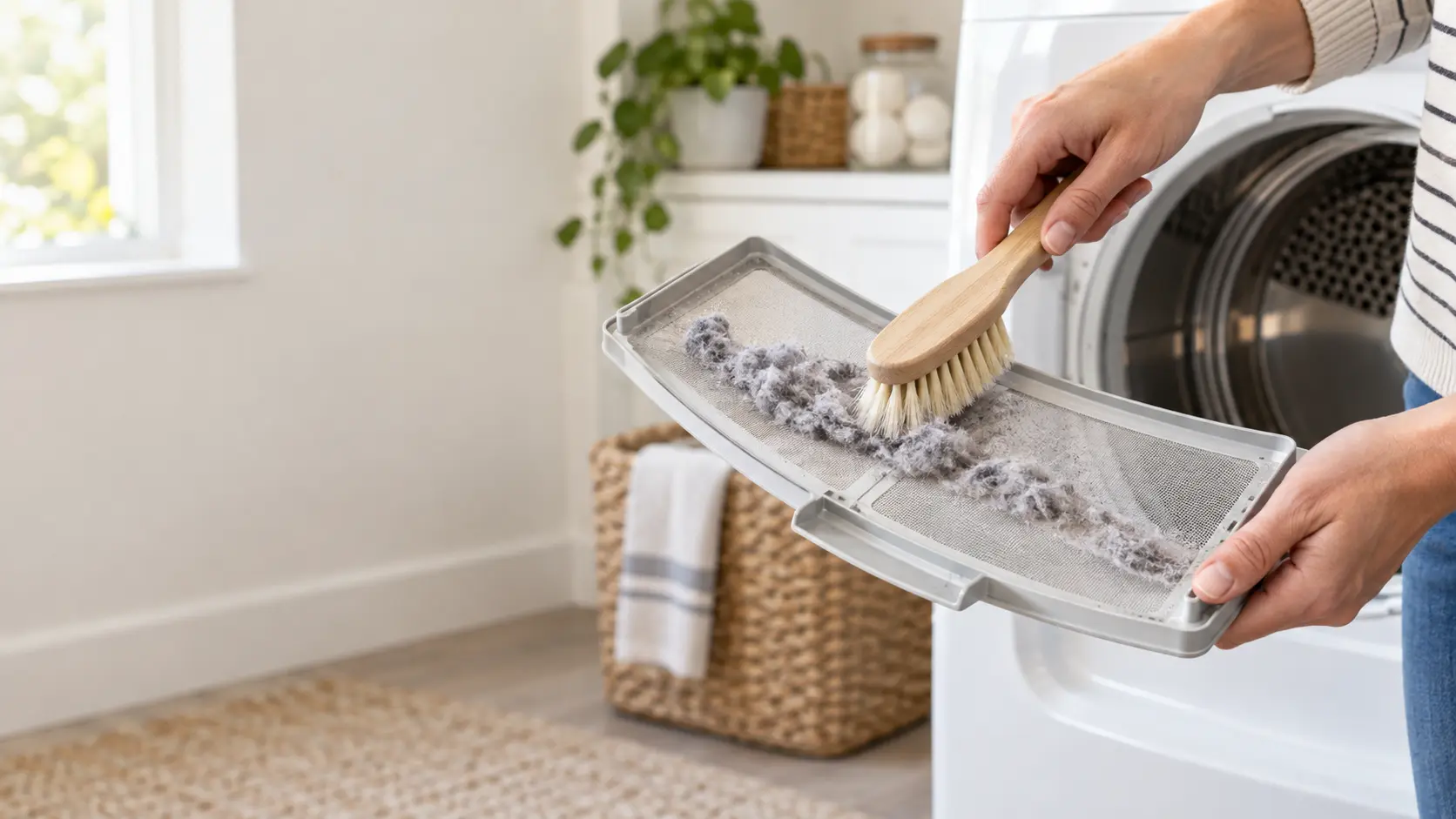
The lint screen is the only filter in the house with a per-use interval. The US Fire Administration asks for it to be cleaned before and after each cycle and for the machine never to be run without it. A screen that looks clean can still be glazed with fabric softener residue; if water beads on it instead of passing through, a wash with warm soapy water and a soft brush restores it.
A front-load machine has one more: the drain pump filter, reached through a small hatch low on its front panel. Samsung recommends cleaning it at least once a month or about every 40 washes, whichever comes first, and warns that water will drain out when it is opened, so a shallow pan and a towel go down first. Speed Queen's six-month list adds the small screens inside the hose inlets at the back of the machine.
- Lint screen: every load, washed when it stops passing water
- Drain pump filter: monthly or about every 40 washes, pan and towel ready
- Inlet screens: every six months, water off at both valves first
Where a top-loader keeps its debris
Samsung notes that its top-load machines have no pump filter at all. Lint and grit leave with the drain water instead, so where the drain hose empties into a laundry sink, a mesh lint catcher on the hose end keeps that fluff out of the sink drain and is emptied as it fills.
Source: U.S. Fire Administration — Clothes dryer fire safety flyer — Clean the lint filter before and after each cycle; never use the machine without it; Samsung US — How to clean your washer — Clean the front-load pump filter at least monthly or about every 40 washes; top-load washers have no pump filter; Alliance Laundry Systems (Speed Queen) — User's Guide for Frontload Washers, 808187 — Clean the filter screens in the fill hoses every six months
Hood filters: grease caught, odor absorbed
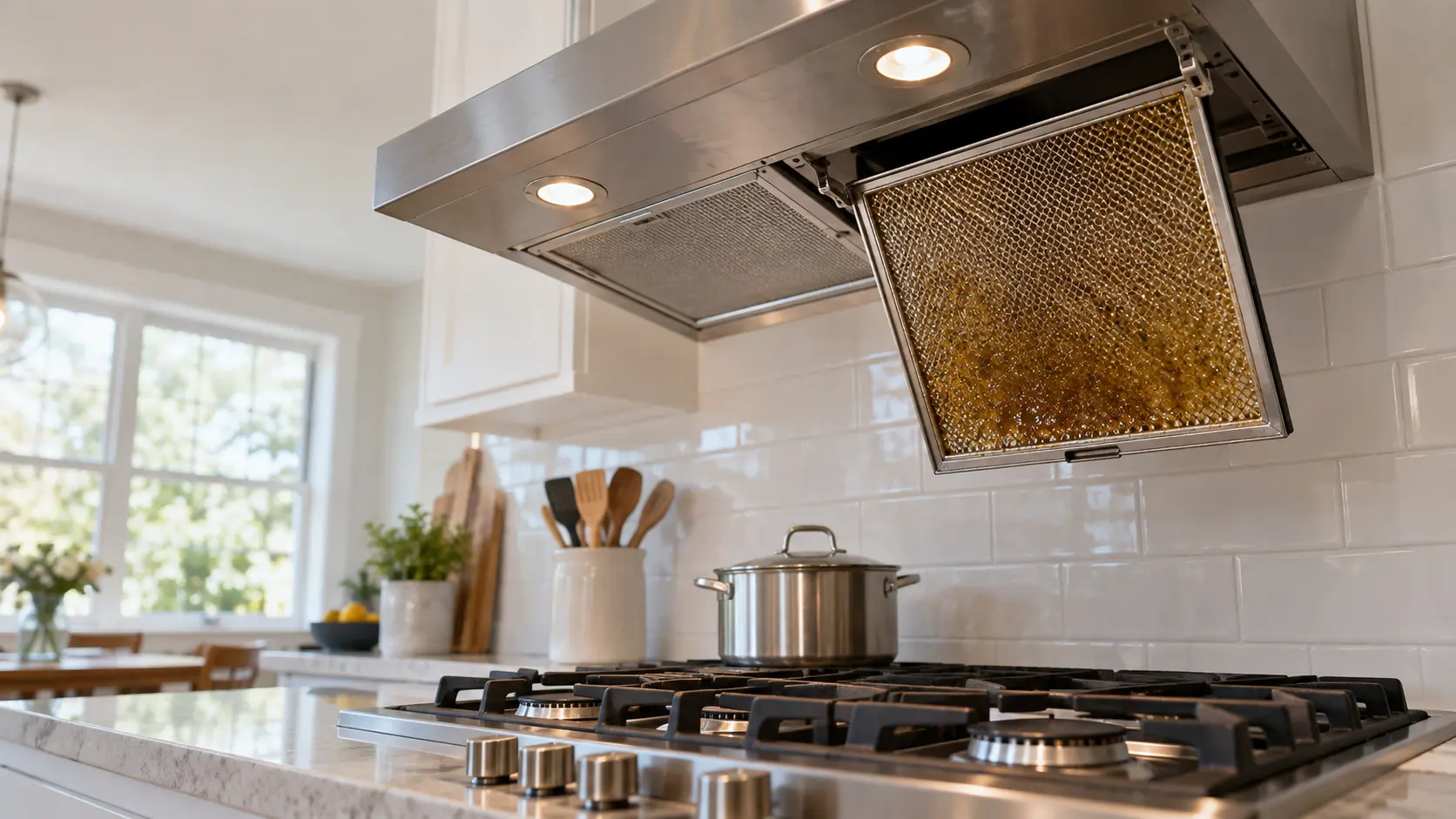
Broan-NuTone's guidance is to clean aluminum mesh and baffle filters at least twice a year, or whenever they look heavily coated, and to replace charcoal filters every six months. Many of its hoods carry a filter reminder that lights after about 30 hours of fan use, which in a busy kitchen arrives well before six months have passed.
Charcoal belongs only to hoods and over-the-range microwaves that recirculate air back into the room. GE lists two signs that one is spent: odors from the vent that do not match what is being cooked, and a surface that has turned shiny with grease where it should look dull and porous. A ducted hood has no charcoal to change, only the grease filters.
Washing grease filters without harming them
Soak mesh and baffle filters in hot water with a grease-cutting dish soap, rinse, and let them dry fully before refitting. Whether they may go through a dish care cycle is a question for the hood's own manual. Never run the fan with the filters out, because grease then settles on the blower and inside the duct.
Source: Broan-NuTone — Range hood filter guide — Clean aluminum and baffle filters at least twice a year; replace charcoal filters every six months; many models have a 30-hour filter reminder; GE Appliances — Over-the-range microwave charcoal filter replacement — Replace the charcoal filter when odors differ from the food being cooked or the whole surface looks shiny with grease