Three supplies, one rule: a way to stop each at the machine
Every appliance in the home takes at least one of three supplies: water, gas or electricity. Each supply should have a way to stop it at that appliance, so a problem at one machine does not mean shutting off water to the whole house or gas to the furnace in January. The main valves still matter, but as a backup rather than the first move.
Appliance shutoff valves only help if they can be reached and still turn. A valve behind a built-in refrigerator, painted over in a laundry closet or seized after fifteen untouched years gives no protection at all. The sections below take each supply in turn, then give a simple yearly test.
A one-page map of the valves
Walk the house once with a flashlight and note, for each appliance, where its water valve, gas valve and breaker are. Tape the list inside the panel door or a kitchen cabinet. The same walk usually turns up a valve that no longer turns or a breaker labeled for a room that was remodeled years ago.
Water valves for laundry, dish care and cold storage
The laundry pair of hot and cold valves sits on the wall behind the machine. Speed Queen asks for both to be closed at the end of each wash day, which takes pressure off the fill hoses for most of the week, and LG asks for them to be closed before a vacation. Lever-style valves make that daily habit much easier than round handles that need several turns.
Whirlpool wants its dish care machines fed from a hot water line with its own dedicated shutoff, usually under the kitchen sink or along the wall. GE says the valve for a refrigerator's water line is usually behind the refrigerator, under the sink, or in the basement or crawl space. Sub-Zero asks the plumber for an easily accessible valve, usually about 6 inches from the compression fitting, and allows it behind the kickplate as long as it can be reached.
- Laundry: hot and cold valves on the wall, closed after each wash day
- Dish care: a dedicated hot water valve, usually under the sink
- Refrigerator and ice maker: one valve on the line, never a self-piercing tap
- Plumbed coffee system or steam oven: a valve in the adjacent cabinet
Open means fully open
A valve left partly closed after a repair causes its own complaints. Whirlpool lists a not-quite-open shutoff among the reasons a refrigerator dispenses slowly or makes small cubes, and a dish care machine starved of water cleans poorly. After closing any valve, open it all the way again and check the machine fills normally.
Source: Alliance Laundry Systems (Speed Queen) — User's Guide for Frontload Washers, 808187 — Water connections have shutoff valves; close them at the end of each wash day; LG Electronics — Washer owner's manual (WM4080) — Turn off the faucets and unplug the appliance before a vacation; Whirlpool — Connecting a dishwasher to the water supply — Hot water line with a dedicated shutoff valve, usually beneath the kitchen sink or along the wall; GE Appliances — Icemaker does not fill with water — The refrigerator's shutoff valve is usually behind the refrigerator, under the sink, or in the basement or crawl space; Sub-Zero — Water line saddle valve — Easily accessible shutoff, usually about 6 inches from the compression fitting, acceptable behind the kickplate if accessible; no self-piercing valves

Gas shutoffs for cooking appliances and laundry
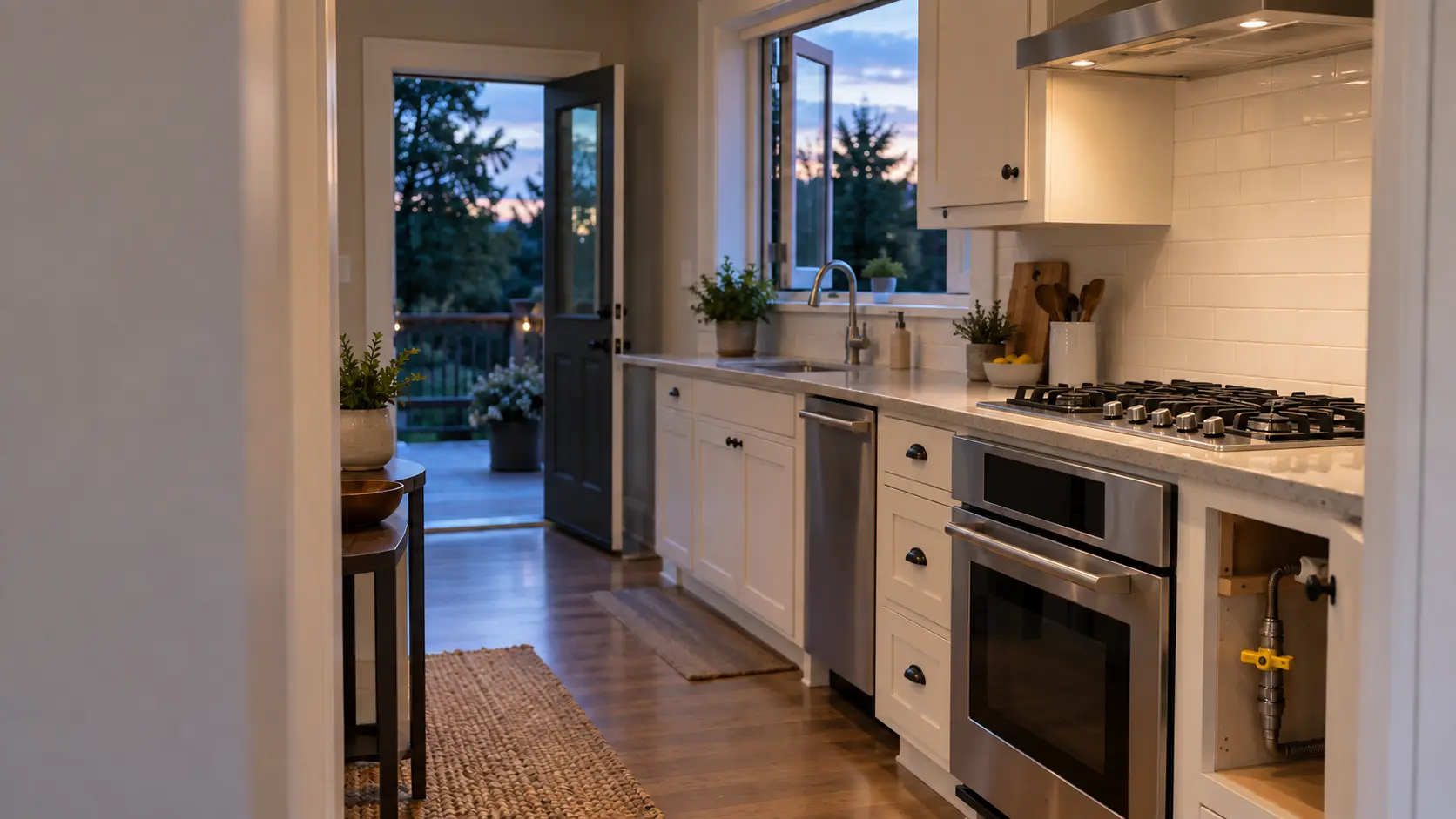
GE's installation instructions for a gas laundry machine call for an individual manual shutoff valve within 6 feet of the machine and in the same room, accessible without moving anything. For cooking, GE's wall oven manual asks the owner to have the installer show where the gas shutoff valve is and how to turn it off. That short demonstration on installation day is worth more than any diagram.
Some cooking appliances carry a second valve of their own. Whirlpool explains that the pressure regulator at the back of its gas ranges has a shutoff lever that is on from the factory but can be knocked off in transport; the surface burners still light while the oven gets no gas. It sits on the appliance, separate from the house valve, and checking it means sliding the range out, which is a job for a technician.
Closing a gas valve is not the same as working on one
An owner may close a gas shutoff in an emergency, which is exactly why its location matters. Reopening it after a leak, loosening a connector, or relighting a pilot on an older appliance is a different matter. GE's gas manuals send installation and service to a qualified installer, service agency or the gas supplier.
Source: GE Appliances — Dryer owner's manual and installation instructions (49-3000386) — Individual manual gas shutoff valve within 6 feet of the dryer, accessible and in the same room; GE Appliances — Built-in gas wall oven owner's manual (JGRP20) — Have the installer show you the gas shutoff valve and how to turn it off; Whirlpool — How to check the gas regulator shut-off valve on an oven — The regulator shut-off at the back of the range may be turned off in transport, leaving the burners working and the oven without gas; separate from the main supply
Power: plugs, breakers and the panel directory
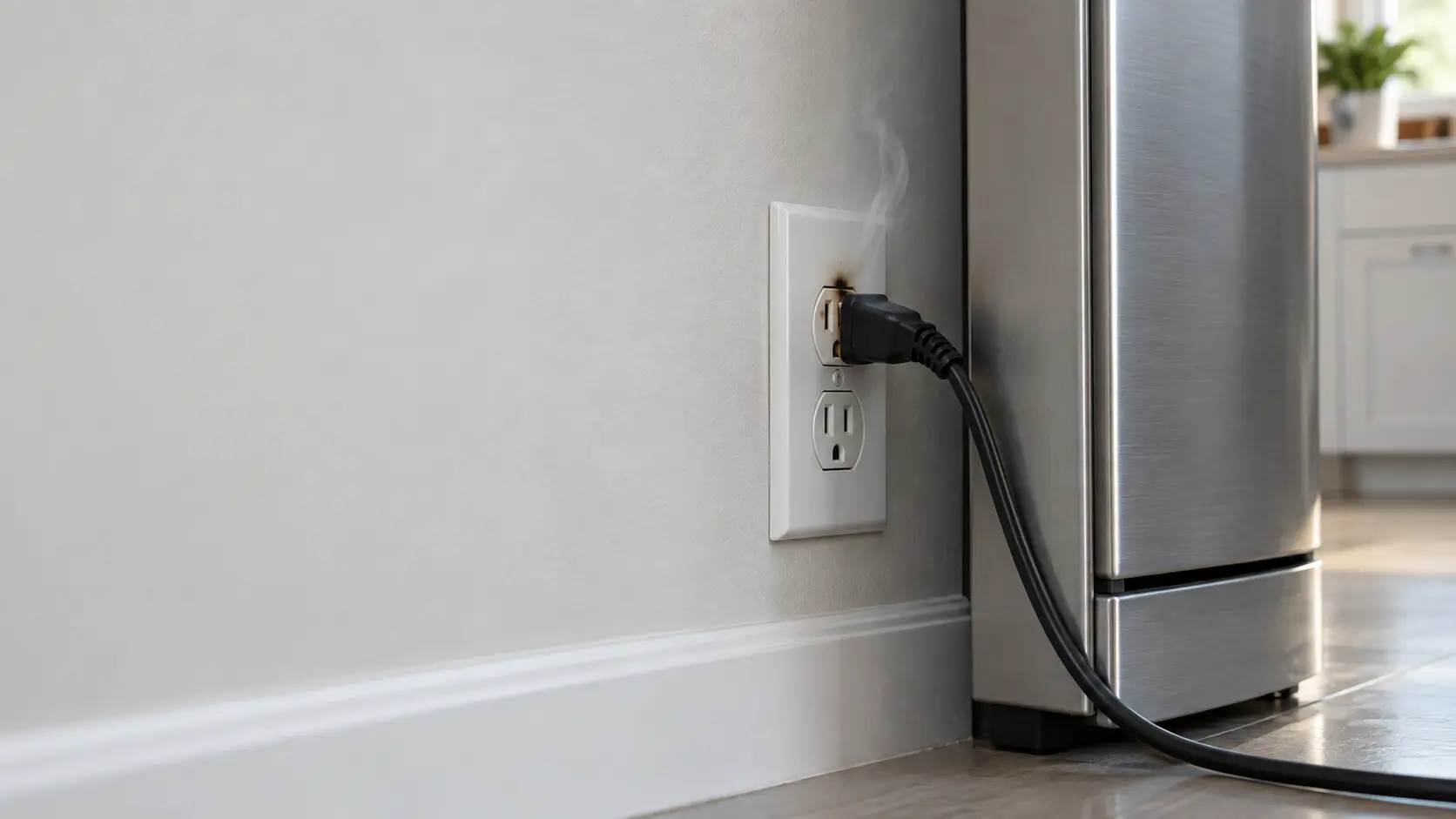
For a plug-in appliance, the plug is the shutoff, provided it can be reached. The US Fire Administration asks for major appliances, including refrigerators, laundry machines and cooking appliances, to be plugged directly into a wall outlet, never into an extension cord, which can overheat and start a fire. Many built-in and hardwired appliances have no reachable plug, so their breaker is the only way to cut power.
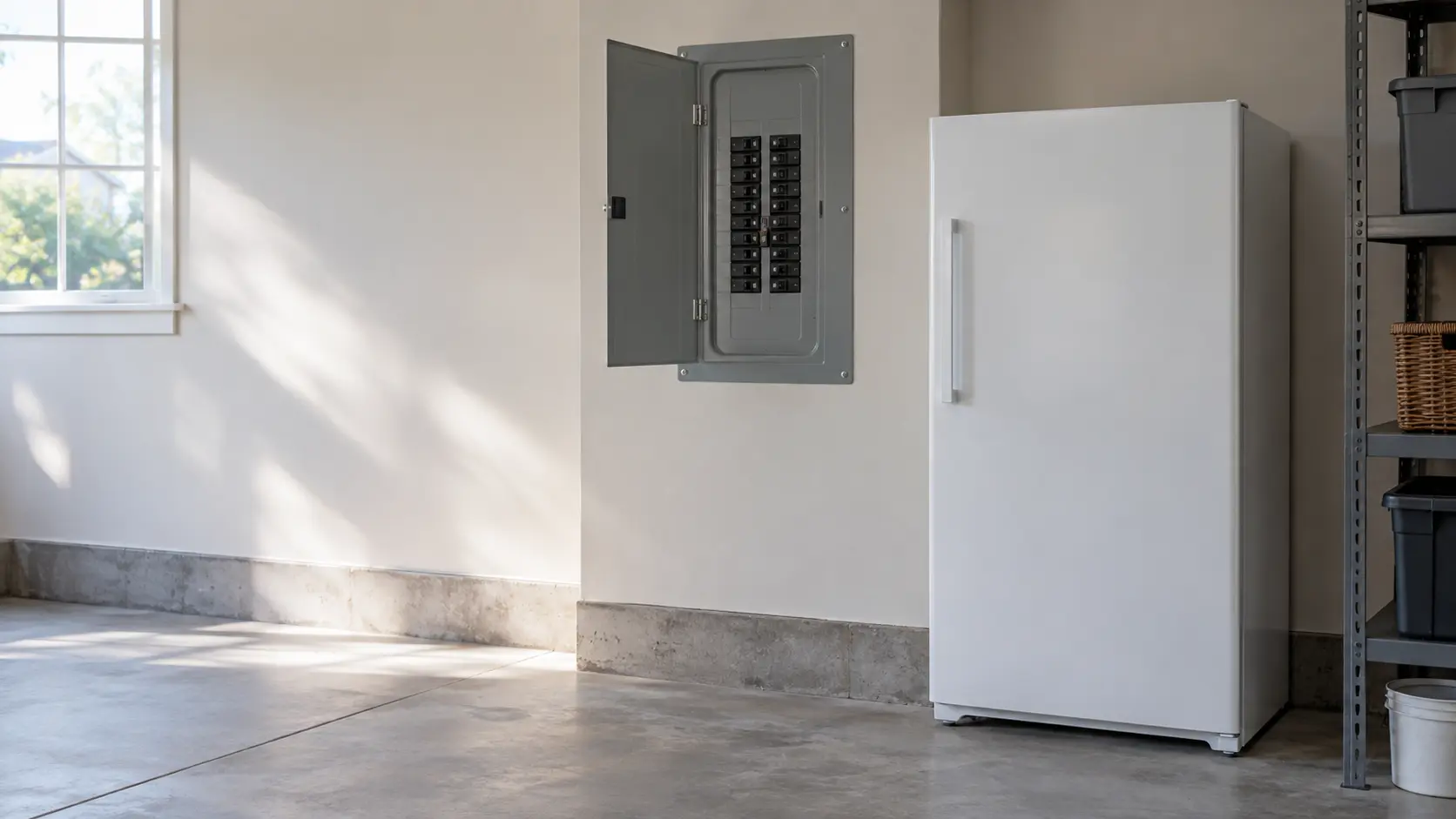
That makes the panel directory part of appliance upkeep. Each appliance circuit should be labeled plainly enough that anyone in the house can switch the right one off in the dark.
- Dish care machine, disposer and built-in microwave labeled separately where they are
- Wall oven and cooktop circuits named for the appliance, not the room
- Laundry circuits marked, including the separate heavy-duty circuit an electric drying machine uses
- Cold storage circuit noted, so it is never switched off by mistake
Source: U.S. Fire Administration — Appliance and electrical fire safety — Plug major appliances directly into a wall outlet; never use an extension cord, which can overheat and start a fire