How long can holiday food stay out?
Cooked food should go into the cold within two hours of leaving the heat, and within one hour if the room is above 90°F. A crowded table, a warm kitchen and long conversations are how that window closes without anyone noticing. Set a timer when the meal is served, and plan the clean-up around the timer, not the dishes.
Bacteria grow quickly in food left at room temperature, which is why the two hours count the time food spends cooling on the counter as well as the time it sits on the table. A simple order of work keeps the clock honest:
- Start the timer when the food is served.
- Clear the table first and the dishes later.
- Pack leftovers while the rest of the meal is still going on.
- Label each container with the date.
Food that has gone past the window should be discarded; reheating does not make it safe again. Keeping hot dishes hot and cold dishes cold while serving helps, but the leftovers are where most of the risk sits.
Why do shallow containers matter?
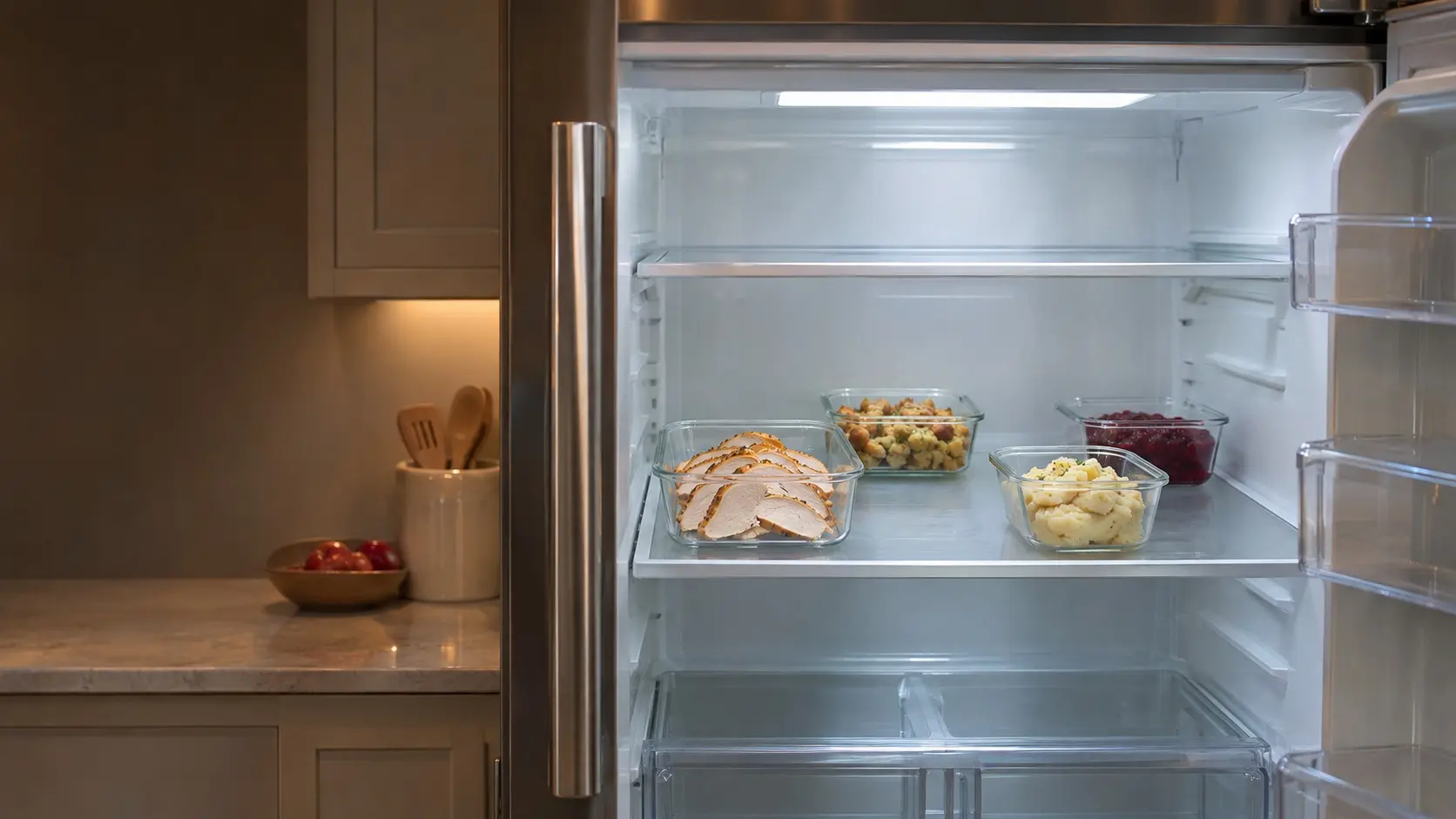
A big pot of stuffing cools from the outside in. The center can stay warm for hours, so the cold compartment has to chill it while also warming everything beside it. The FDA advises dividing large amounts of leftovers into shallow containers so they cool faster in the cold compartment, because a thin layer chills through to the center much sooner than a deep one.
Break down the bird
Take the meat off the bones and slice it into shallow containers. A whole bird holds heat in its thick parts and cavity, and cools far more slowly than sliced meat.
Split soups, gravy and stuffing
Divide them into several small containers rather than one deep one. Stir gravy once as it cools so the heat spreads out.
Cover loosely, then seal
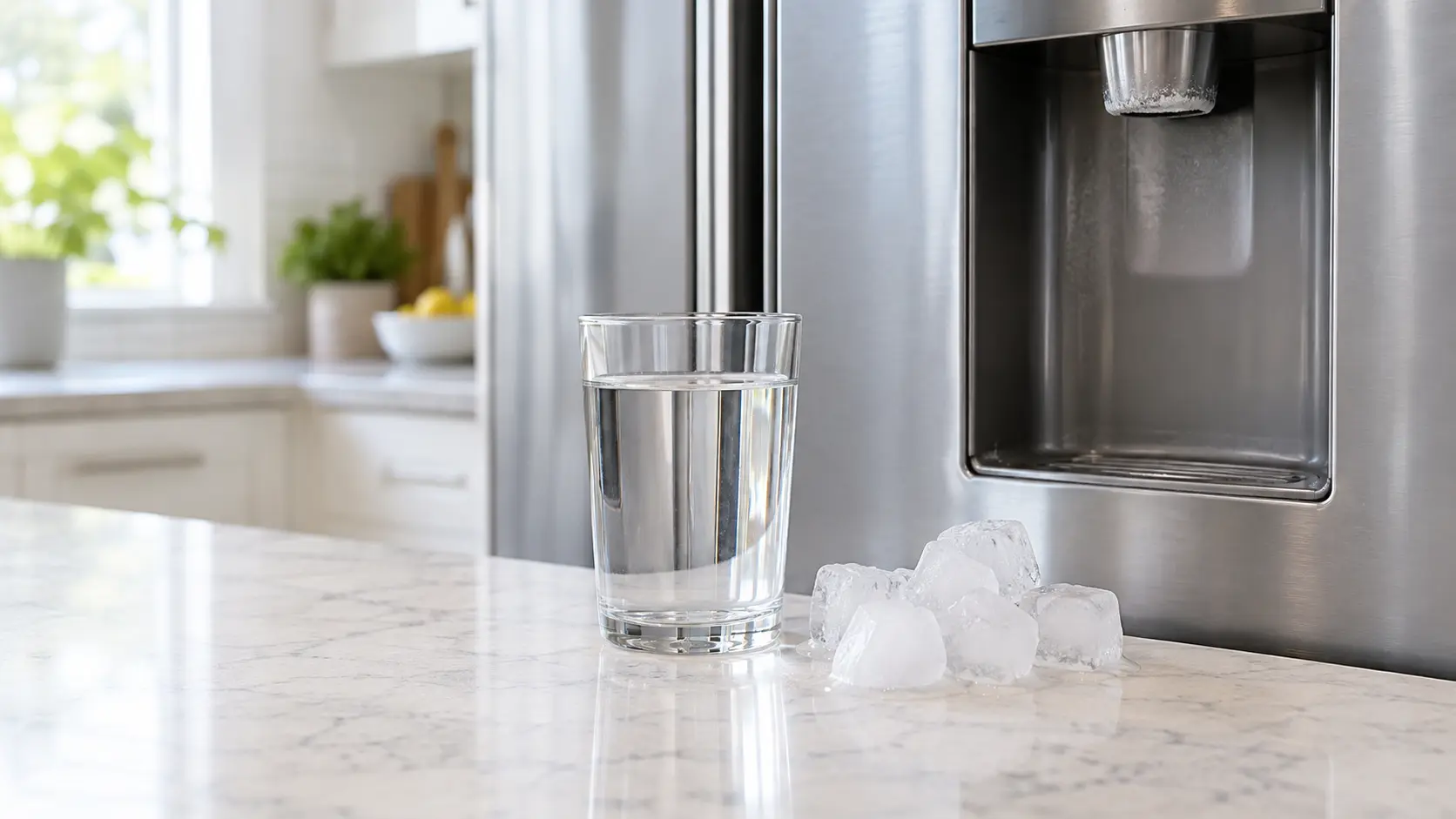
Set lids on loosely while the food is still warm so heat can leave, and close them once it has chilled. Do not wait on the counter for it to cool first. Leaving lids off completely dries food and lets odors travel, which can make the water or ice taste stale; see water or ice tasting stale.

Why does an overpacked cold compartment warm up?
The cold compartment cools by moving air past a cold surface and back through the shelves. The FDA advises not crowding it so tightly that air cannot circulate. Packed shelves and blocked vents stop that air, so one side stays cold and the other drifts upward. Warm dishes add heat on top.
- Leave a little gap between containers and the back wall, where vents often sit.
- Do not cover shelves with foil or trays that block air gaps.
- Put the biggest, warmest containers in the coldest part, usually near the back, on a middle shelf.
- Move drinks and condiments to another spot for a few days to make space.
- Do not stack dishes right up to the top of the compartment.
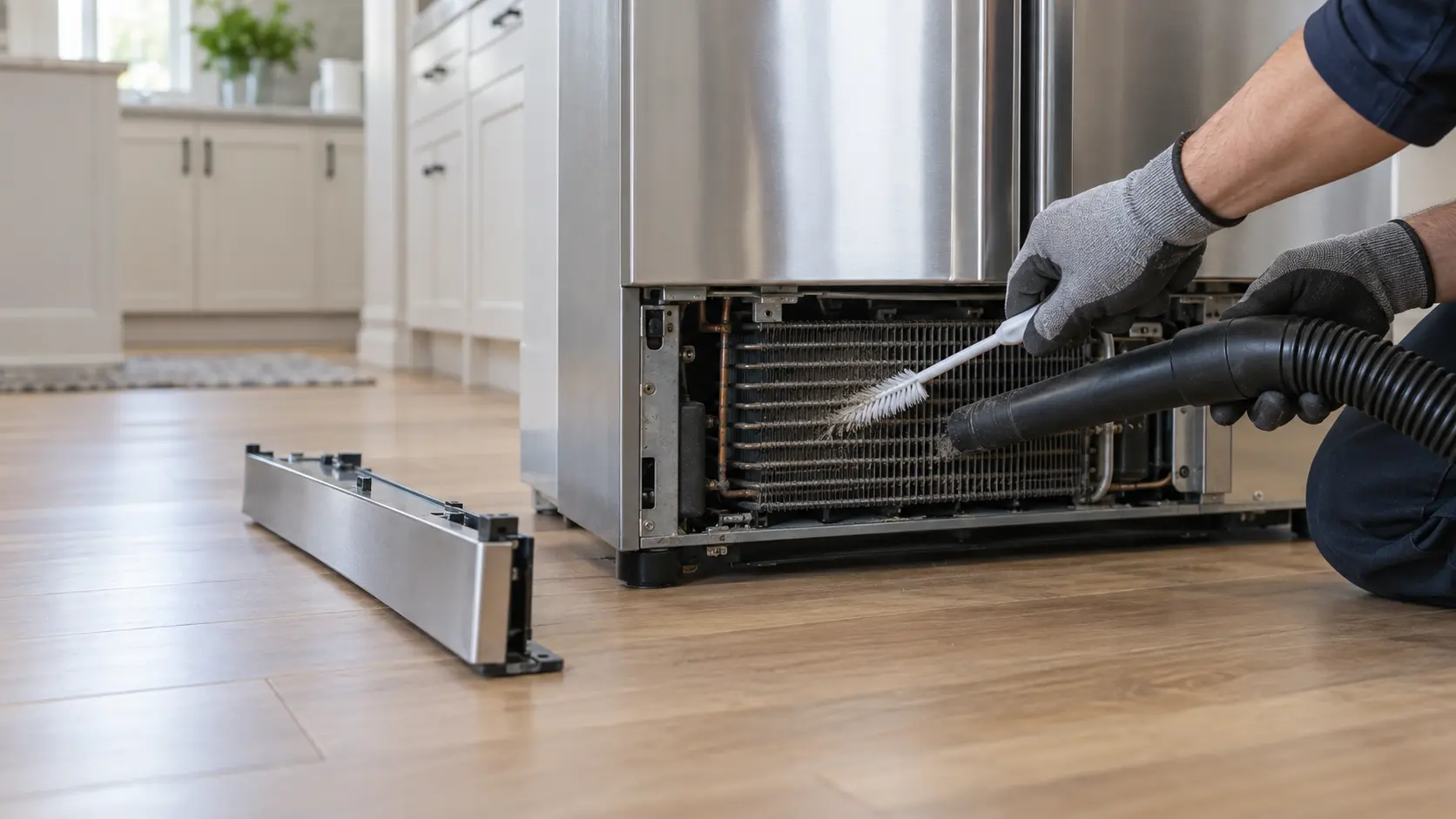
After a large meal the compressor may run nonstop for hours as it pulls warm food down. That is normal for a while. If it still runs all day after the load has cooled, look at cold storage running nonstop and consider the condenser coil cleaning service, because dusty coils make a busy week worse.
How do you check that it is at 40°F?
Do not rely on the dial or the display, which usually shows a setting and not the actual temperature. The FDA advises keeping the cold compartment at 40°F or below, the freezer at 0°F, and checking each with a separate appliance thermometer, noting that few controls show the true temperature.
Put the thermometer in the middle of a shelf, not on the door, where the temperature swings most. Read it a few hours after you load the shelves and again the next morning. If it reads above 40°F, set the control a notch colder, clear space and check again in 24 hours. For a routine that includes this, the ten-minute checks between visits is a good place to start.
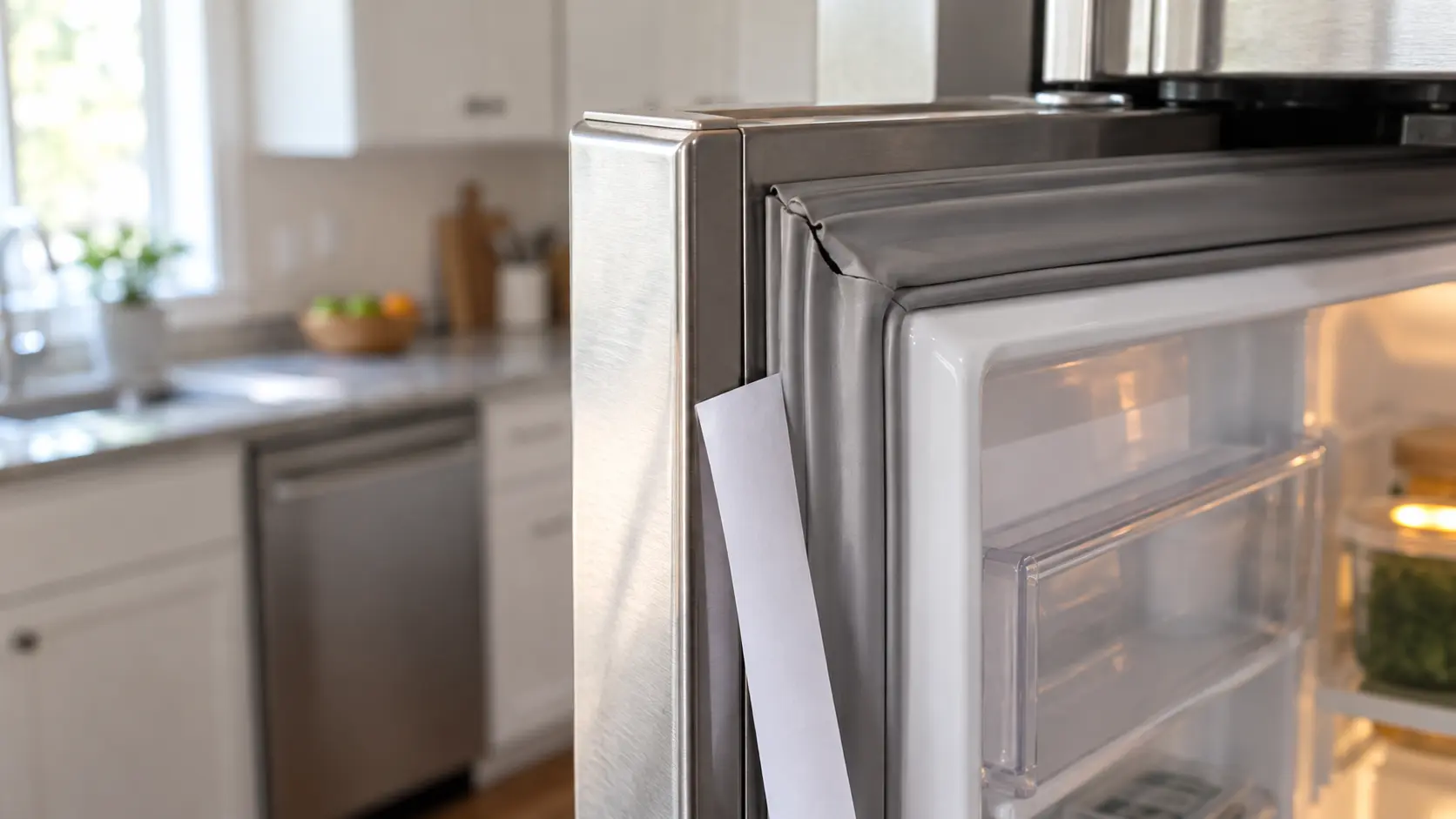
A door that does not close firmly also lets warm air in. Test the gasket by closing the door on a slip of paper; if it slides out easily, read about the door seal not holding and the door seal check and replacement service.
How long do leftovers keep?
The FDA storage chart gives three to four days for cooked meat, poultry and meat dishes kept at 40°F or below, and only one to two days for gravy and meat broth. Food kept frozen at 0°F stays safe, and the freezer times on the chart are for quality only. Write the date on masking tape on each container so nobody has to guess the day count.
| Leftover | In the cold compartment | In the freezer (quality) |
|---|---|---|
| Cooked turkey or other poultry dishes | 3 to 4 days | 4 to 6 months |
| Cooked meat and meat dishes, such as casseroles | 3 to 4 days | 2 to 3 months |
| Ham, fully cooked, slices | 3 to 4 days | 1 to 2 months |
| Gravy and meat broth | 1 to 2 days | 2 to 3 months |
Reheat leftovers to 165°F, the FDA's safe minimum internal temperature for leftovers and casseroles, read with a food thermometer, and bring gravy back to a boil. Reheat only what you will eat. A normal smell is not proof of safety; some harmful bacteria do not change the smell at all. Use a calendar and the thermometer rather than your nose. See also signs an appliance is overdue for service if the cold compartment seems to struggle, and the cold storage maintenance type page for general care.