
Frost Building Up in the Freezer Between Defrosts
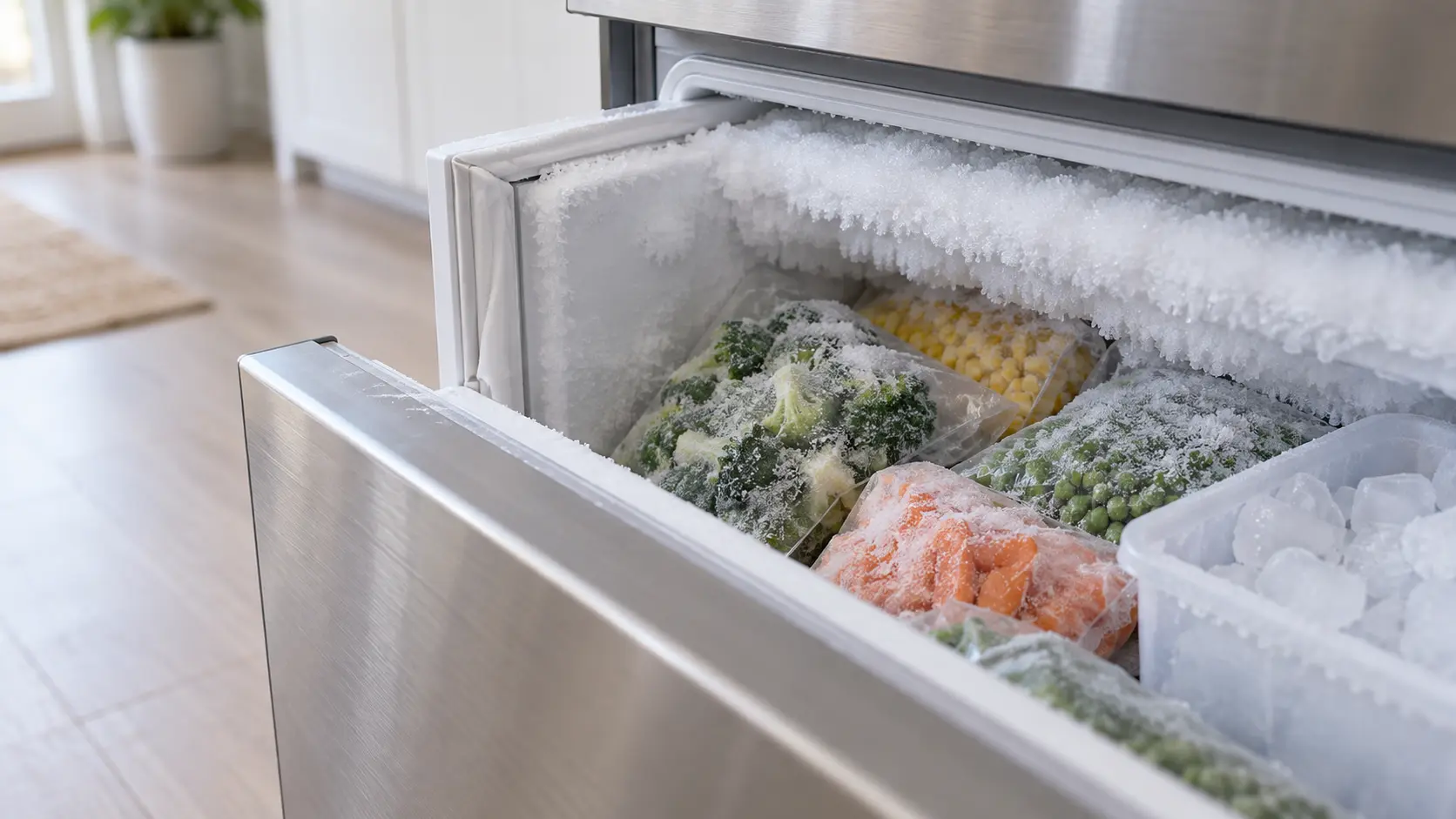
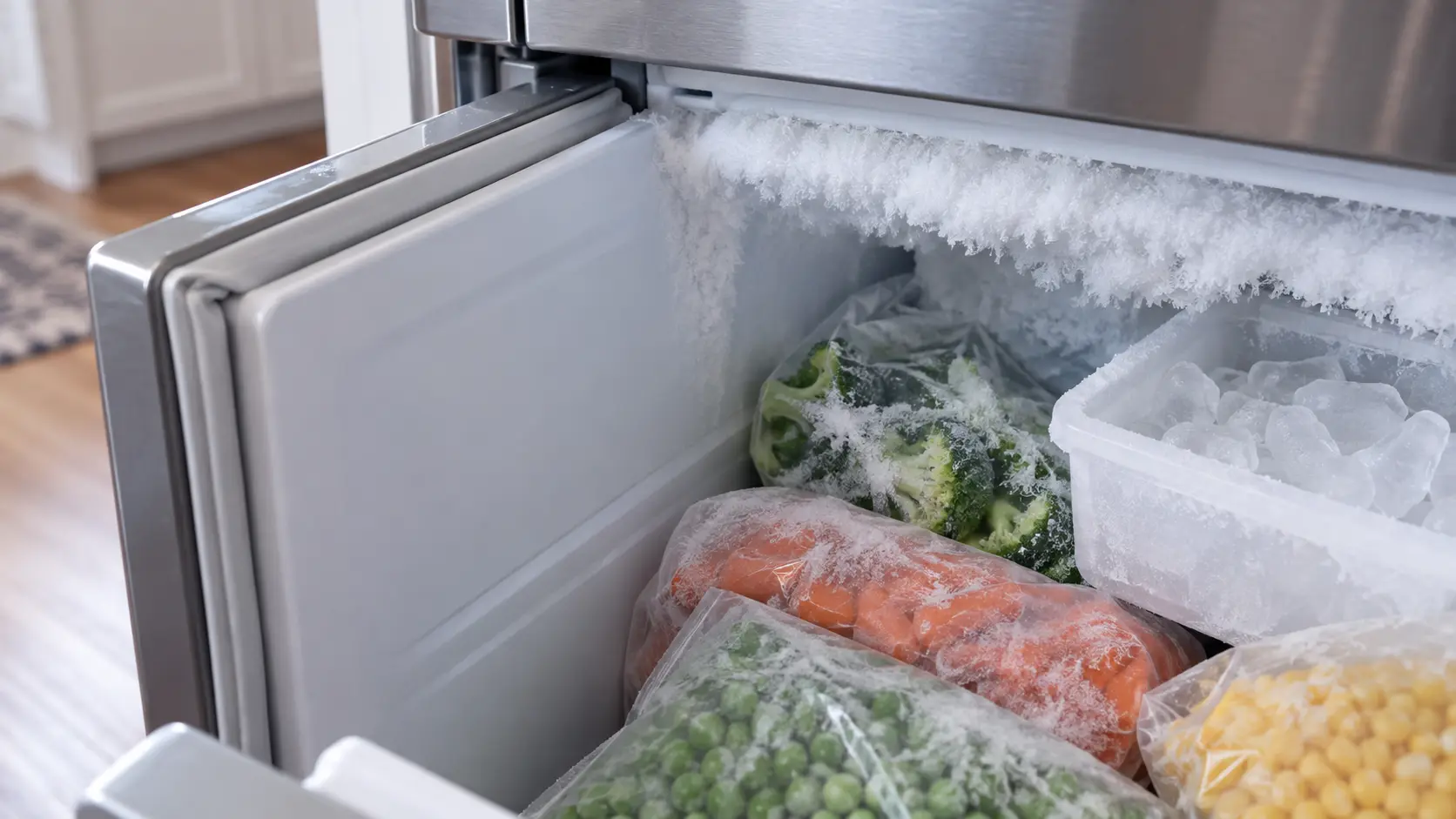
Frost building up in the freezer is a layer of white crystals growing on the walls, the ceiling, the ice maker or the packages inside, faster than the unit's defrost can clear it.
Mon–Sat, 8am–8pm
- 5 checks before you book
- 5 questions that narrow it
- 6 causes, cheapest first
Book a visit
Three short steps, about a minute.
or call (844) 879-5178
Loading appointment form…
The appointment form couldn’t load. Please try again.
What it
usually means.
Almost every modern freezer section and standalone freezer is frost-free: a heater melts the frost off the hidden evaporator coil on a schedule and the water drains out to a pan under the cabinet. A little frost on packages and around the door is normal. Heavy frost where you can see it means humid air is getting in faster than the unit can handle, and in most homes the reason is at the door. A gasket that no longer seals along its full length, a door that does not close fully because the cabinet has tilted forward, a drawer that is overloaded and leaves a gap, a freezer door opened often or left ajar by a child: each lets warm kitchen air in, and its moisture freezes on the first cold surface it meets. Frost that forms as a band along one edge usually points to the seal on that side. A manual-defrost chest or upright freezer needs defrosting by hand as part of its upkeep, once the frost is about a quarter inch thick. If the frost is thick on the back wall behind the panel, or the ice maker and its chute are buried while the doors seal well, the defrost heater, its timer or the drain may have failed; that is a repair for the sister freezer or refrigerator repair site.
 The 6 causes, cheapest first
Answer these first
Where is the frost thickest: along the door edge, on the back wall, or on the ice maker?
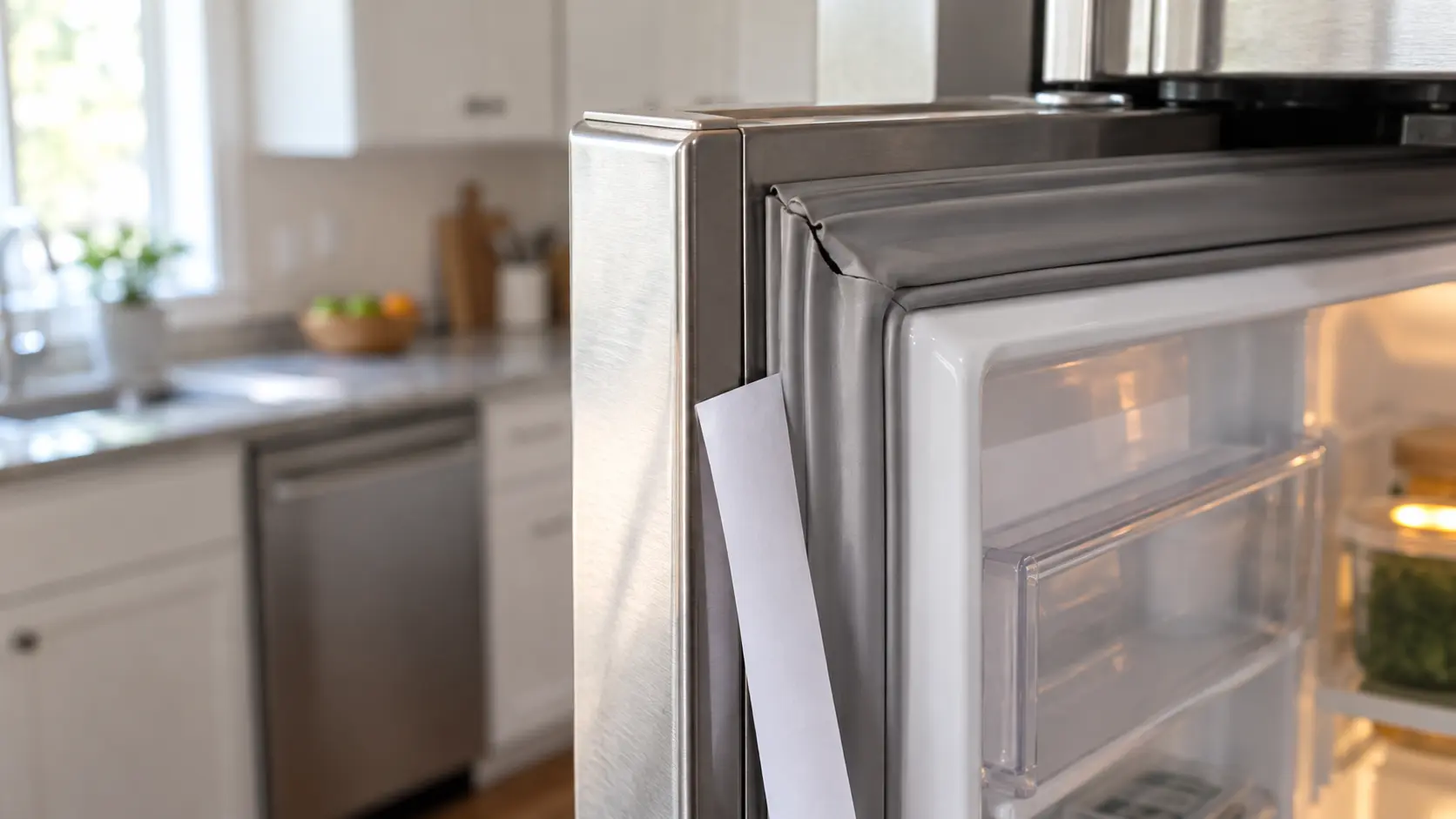
Does the door close on its own and seal on a strip of paper all the way around?
How often is the freezer opened, and has it been overloaded lately?
Is it a frost-free model, or a manual-defrost chest or upright that needs defrosting by hand?
Is there water under the crisper drawers or ice on the freezer floor?
Check these
before you book.
Frost building up in the freezer: 5 checks, and none of them costs anything.
Close the freezer door on a strip of paper at several points and feel for places with no drag.
Look at where the frost sits: along one door edge points to the seal, all over the back wall to the defrost.
Open the door a little way and let go to see whether it swings closed on its own.
Also worth checking
- Check that packages and drawers are not stopping the door or a drawer from closing fully.
- On a manual-defrost freezer, measure the frost and plan a defrost once it reaches about a quarter inch.
How soon does it need a visit?
Frost on its own can wait for a scheduled visit within a week or two, as long as the food stays frozen hard. If the freezer starts to soften, or water appears under the crisper or on the floor, move the food and book sooner.
The causes,
cheapest first.
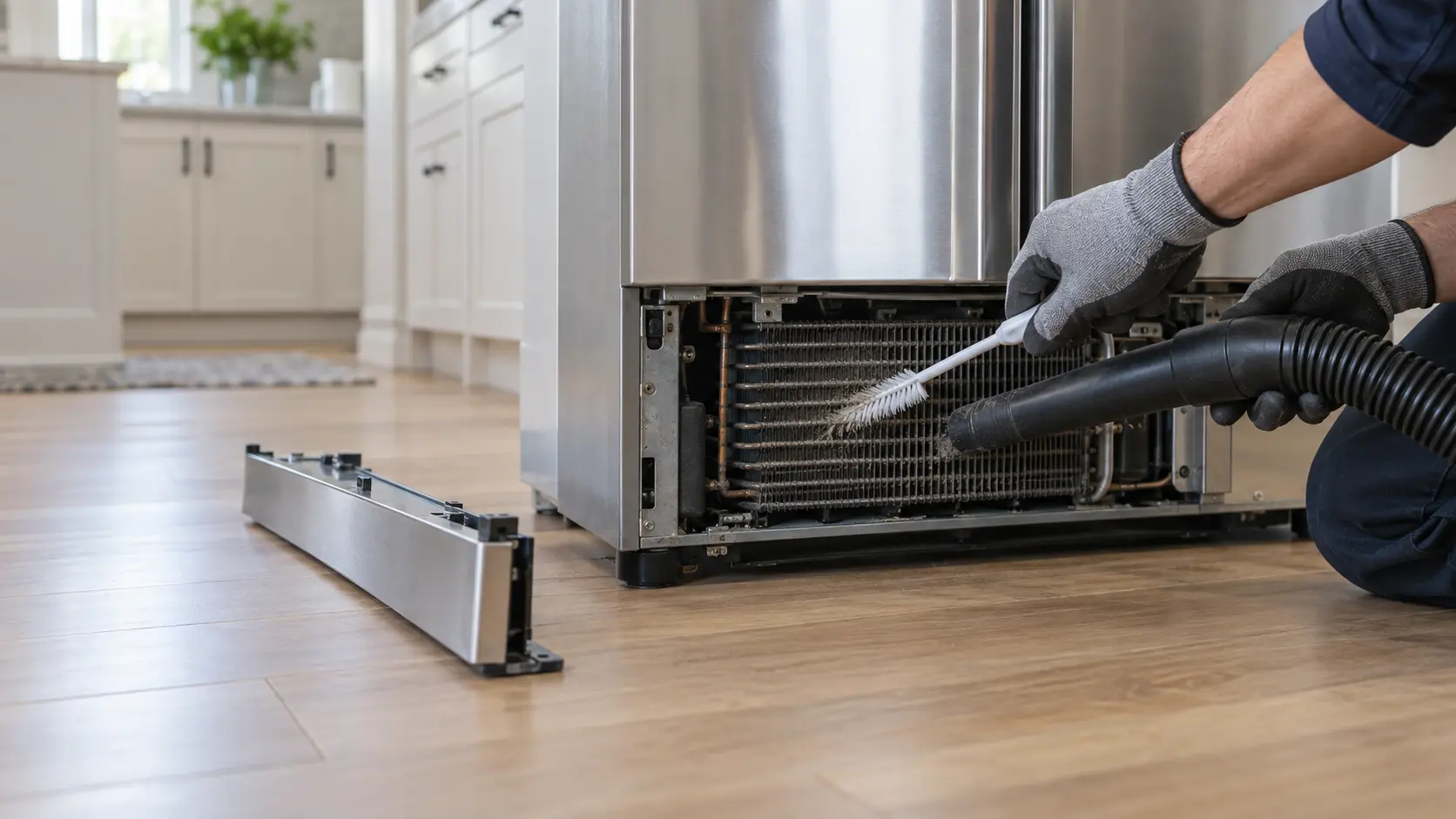
6 things frost building up in the freezer between defrosts turns out to be, from door opened often or left ajar to defrost heater, timer or sensor failed.
The cost guide-
01 no service
Door opened often or left ajar
A door that is held open while choosing, or that bounces off a package and stays a crack open, fills the freezer with moist air. Rearranging so the door closes cleanly and reminding the household is the first fix.
-
02 no service
Manual-defrost unit overdue
Chest and upright freezers without automatic defrost build frost by design. Once the layer is about a quarter inch thick, the food goes into coolers and the unit is defrosted as the manual describes, without scraping with metal.
-
03 low to moderate
Gasket not sealing along one side
A band of frost along one edge of the door almost always marks a seal that has flattened, torn or come out of its channel there. It is cleaned and reseated or replaced.
-
04 low
Cabinet tipped so the door does not swing shut
Without a slight backward tilt, a heavy freezer door can rest open by a few millimeters. The cabinet is leveled and the doors adjusted so they close by themselves.
-
05 low to moderate
Drain line blocked with ice or debris
Defrost water that cannot drain refreezes on the freezer floor or leaks under the crisper. Where the drain can be reached, it is flushed on a visit; where it is behind panels, the repair site takes it.
-
06 moderate
Defrost heater, timer or sensor failed
Frost on the back wall and around the vents, with doors that seal well, means the defrost is not running. That is a repair for the sister refrigerator or freezer repair site.
What else
it could be.
Most often confused with door seal not holding: gaps, tears and doors that drift open, then cold storage running nonstop: coil dust, clearance and door seals.
All problemsCodes that come with it
Also related


The makes
it happens on.
35 makes on this site; frost building up in the freezer between defrosts can show up on any of them. Each mark opens that make's own page.
All 35 brandsFrost Building Up in the Freezer Between Defrosts,
where we come out.
9 metros, each with its own page.
All service areasTampa BayFL · 31 areas
Miami / South FloridaFL · 47 areas
New York MetroNY · 75 areas
HoustonTX · 36 areas
ChicagoIL · 50 areas
Los AngelesCA · 95 areas
San DiegoCA · 31 areas

Questions about
frost building up in the freezer between defrosts.
Is some frost in a frost-free freezer normal?
Can frost be scraped off with a knife or a spatula?
Why does frost form on the ice in the bin?
How can a door that bounces open be prevented?
Back to your everyday
Still seeing frost building up in the freezer between defrosts?
Book with what you checked above — 5 answers save the technician the first part of the visit.