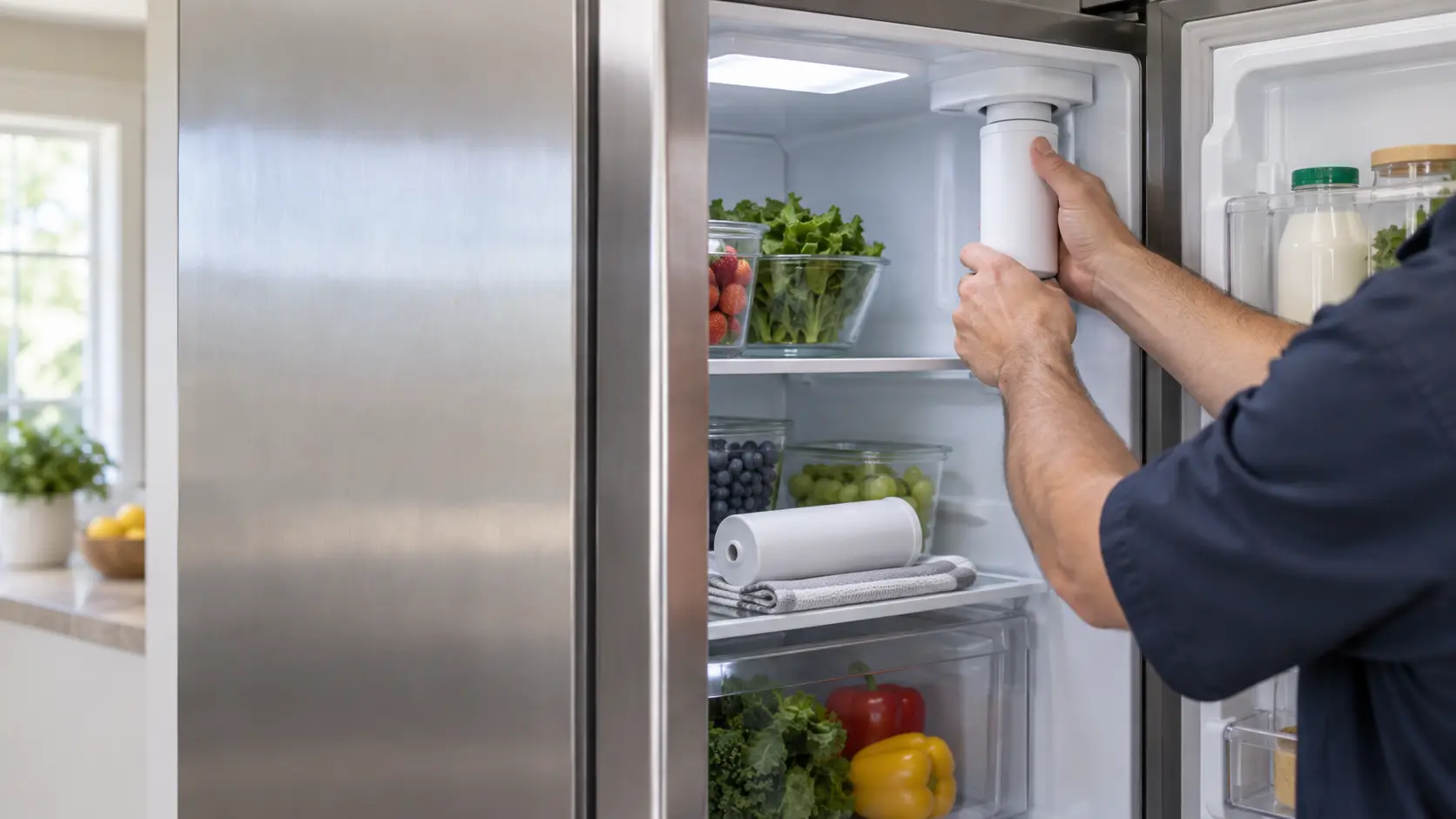
What kinds of replacement filter are there?
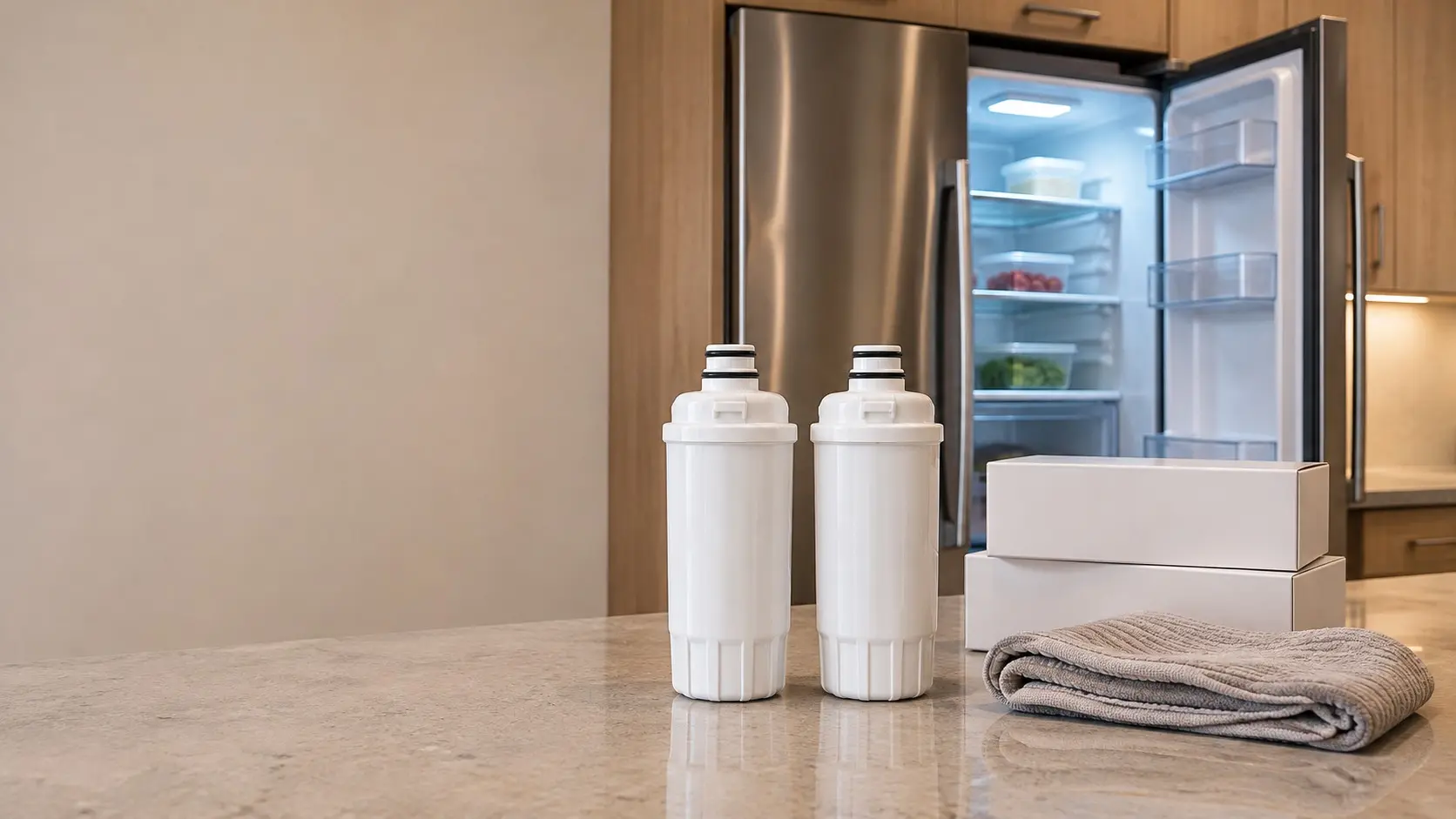
Three families cover most households. A maker cartridge is sold by the appliance brand for your model. A compatible cartridge is made by another company to fit the same housing. An inline filter sits in the water line itself, on the supply tube behind or under the appliance, and may be used with or without a built-in cartridge.
Each can be good or poor. What matters is which claims the cartridge is tested for, whether it fits without leaking, and whether it is the real product.
Maker cartridges
Fit is usually guaranteed, and the label often shows the tests the filter passed. They tend to cost more and the choice is limited to what is on sale for your model.
Compatible cartridges
Prices vary widely, and so does quality. A good one carries the same kind of certification printed on its own packaging and listed in the certifier's public database. A poor one claims "meets" or "exceeds" standards without naming a certificate.
Inline filters
They filter water before it reaches the appliance, so they can protect valves and lines as well as taste. They need a clean tube connection and a shutoff nearby, so they are a better fit if you are comfortable with the supply line; see shutoff valves every appliance needs.
What do the certifications mean?
The Centers for Disease Control and Prevention advises looking for an NSF certification on the filter's label to see what it will remove, and checking the label for the specific substances named. It lists standard 42 for taste and odor, 53 for cyst reduction, 58 for reverse osmosis and 62 for distillation.
| Claim on the label | What it covers | Good to know |
|---|---|---|
| NSF/ANSI 42 | Taste and odor, such as chlorine taste | Not a health claim |
| NSF/ANSI 53 | Health-related reduction claims, such as cysts | Only the substances listed on the label are covered |
| Other standard numbers, such as 401 | Further substances named on the label | Same rule: only what the label lists |
| "Fits" or "compatible" | Dimensions only | Says nothing about filtering |
| "Meets NSF standards" with no certificate | Unverified | Look the product up before buying |
A certification covers named substances at stated levels, not everything. A filter certified for taste and odor can be perfect for stale-tasting ice and useless for lead, and the other way around. Decide what you want removed, then match the claim. If you are not sure what is in your water, your local utility publishes an annual report, and a lab test shows more.

How do you check fit and avoid leaks?
A wrong cartridge can seat badly, leak, or bypass the filter media entirely, so water flows around the filter and the housing looks fine.
- Match the model code on the old cartridge, or the appliance model number, to the new product's compatibility list.
- Compare the O-rings, the twist or push lugs and the length with the old cartridge before installing; they should match.
- Follow the cartridge instructions for the O-ring, and do not grease it with household oil or petroleum jelly.
- Flush the new filter through the dispenser for the amount the label gives, to clear carbon dust and air.
After installing, run water and look for drips at the housing for several minutes, then again after a few hours. Slow seepage is easy to miss and can damage a floor over weeks. If you see it, read supply hoses and slow leaks and supply hose leaking. For a stuck housing or a recurring drip, the water filter and descaling service is the better route than extra force.
How can you tell a counterfeit?
Fake cartridges copy the packaging of well-known brands and sell for less. Some contain nothing useful. Signs to watch for are not a guarantee, but they add up.
- The seller is a marketplace listing with no business name, or the price is far below every other source.
- The printing is blurry, the colors are off, or the spelling is wrong on the box.
- The cartridge feels light, and the plastic rough, with poorly molded threads.
- The claim lists have no certificate number, or the number is not found in the certifier's database.
- The packaging looks used, is missing seals, or arrives without instructions.
Buy from a seller you can contact, keep the receipt and compare the product with the old one. If water starts to taste odd after a change, go back to the previous cartridge and see water or ice tasting stale.
How often should you replace it?
Follow the schedule on the cartridge or in your manual; the interval depends on the cartridge, the water you use and how much of it. The CDC says maintenance includes changing filters according to the manufacturer's recommendations. A filter left in too long can slow flow and stop doing its job, and in hard water the head can collect scale; see hard water scale and what it wears.
Write the date on the cartridge, set a calendar reminder, and list it with other recurring jobs in filters and when each one is due. An annual maintenance plan can keep the replacement on a schedule. Wear gloves and wash your hands afterward, and people with weakened immune systems should have someone else change filters, as the CDC advises.