
What makes an appliance low-maintenance?
An appliance is low-maintenance when it has few parts that need regular attention and no feature that stops working if you forget it. The less water, lint, grease or heat that passes through a removable part, the less you have to clean, replace or descale.
The fewer the chores, the better
Count the chores a model asks for in a year. A plain unit with a single filter and a gasket you wipe now and then is easier to live with than one with a filter, a tank, a pump, a self-clean cycle and a reminder screen. The upkeep is not a flaw; it is the price of a feature, and you should decide whether the feature is worth it.
Simple does not mean cheap
A basic control, a durable interior and a seal you can replace on its own tend to give fewer service calls, because there is less to fail and less to clean. That is a practical rule rather than a promise: check the manual for the model you are looking at.
Which features bring filters and water-fed upkeep?
Any feature that uses water brings a filter, a valve or a scale problem with it. Water-fed extras are where most upkeep hides.
Table: Features and the upkeep they imply
| Feature | Upkeep it brings | How often it comes up |
|---|---|---|
| Filtered water or ice | Filter replacement, tubing and valve care | On the maker's schedule in the manual |
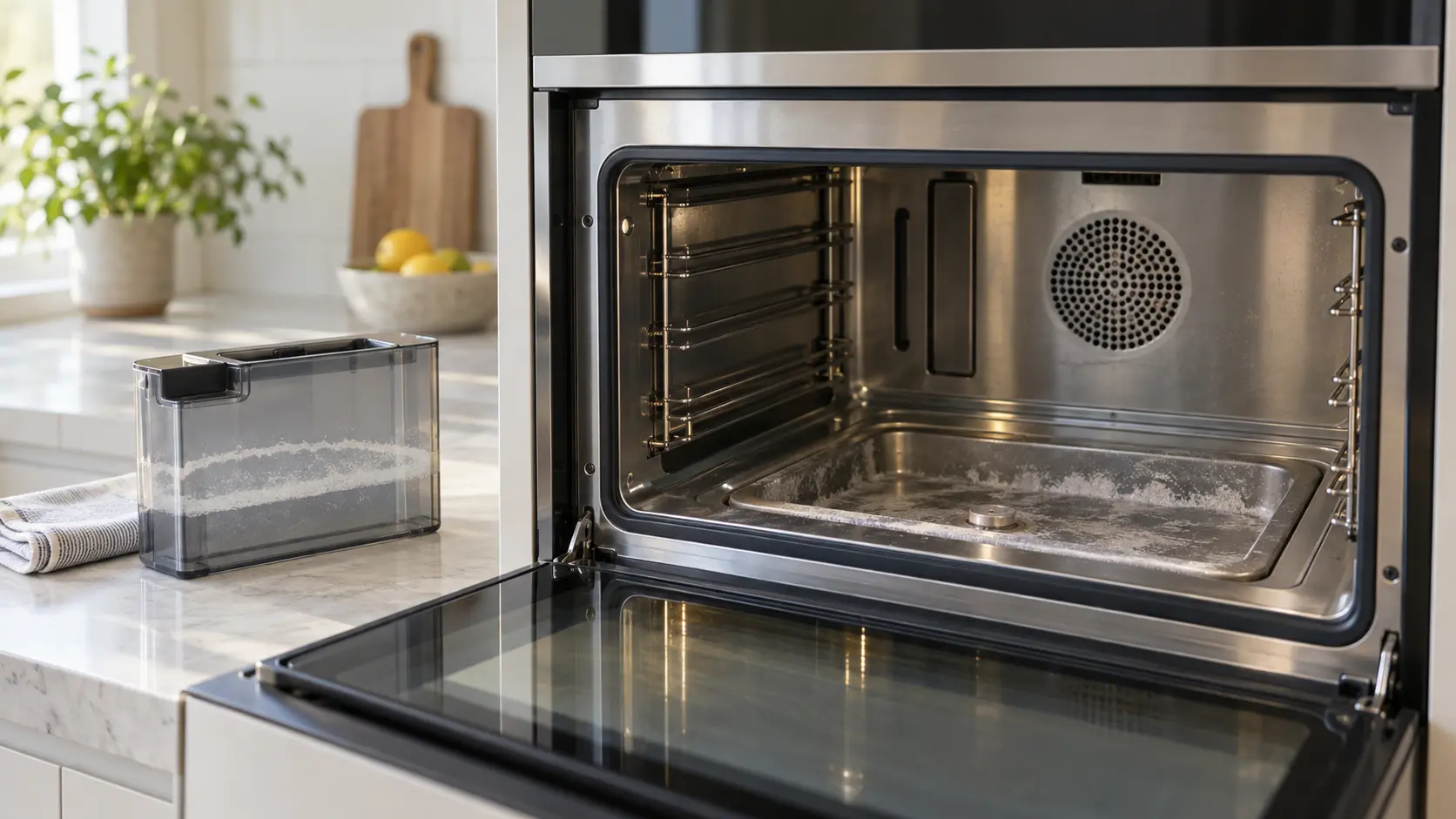
| Steam or hot-water function | Descaling, water tank cleaning | More often in hard-water areas |
| Drain pump | Pump or drain filter cleaning | When a cycle slows or leaves water |
| Washable grease or lint filter | Cleaning by hand | Regularly with use |
| Self-clean or sanitize cycle | Wiping out residue, running it on a schedule | When the display or smell says so |
A model that advertises a filter should tell you the replacement interval and what happens if you skip it. Our guide to filters and when each one is due lists the common ones. In hard-water homes, the guide on hard water scale and what it wears shows why a steam or hot-water feature asks for more.
Common examples, appliance by appliance
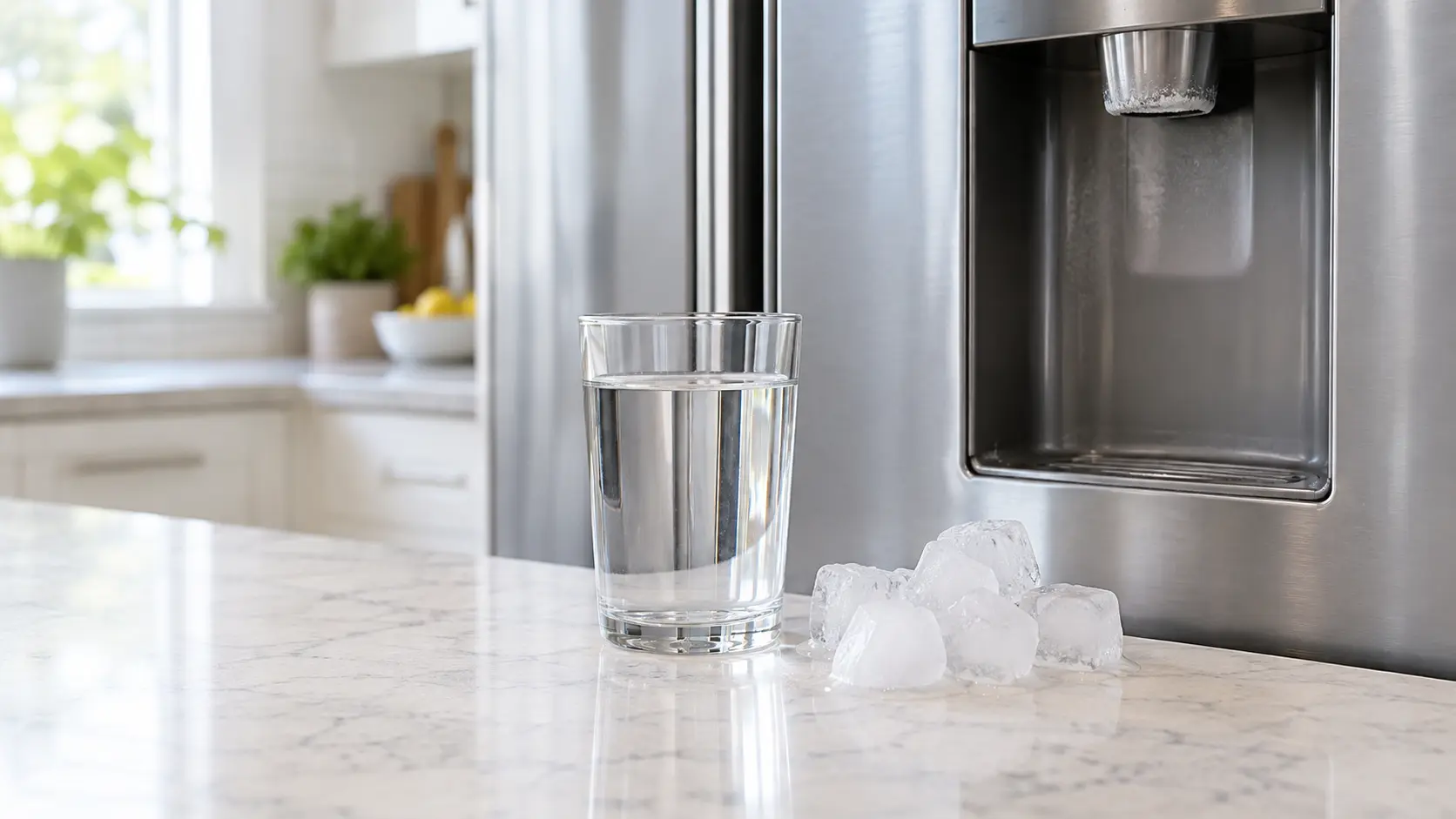
- Refrigerator: a through-door dispenser or a plumbed ice maker brings a water filter cartridge; a model without them usually has no water filter to change.
- Dishwasher: many current models use a filter you lift out and rinse by hand, which is quieter but needs regular cleaning; read the manual for how often.
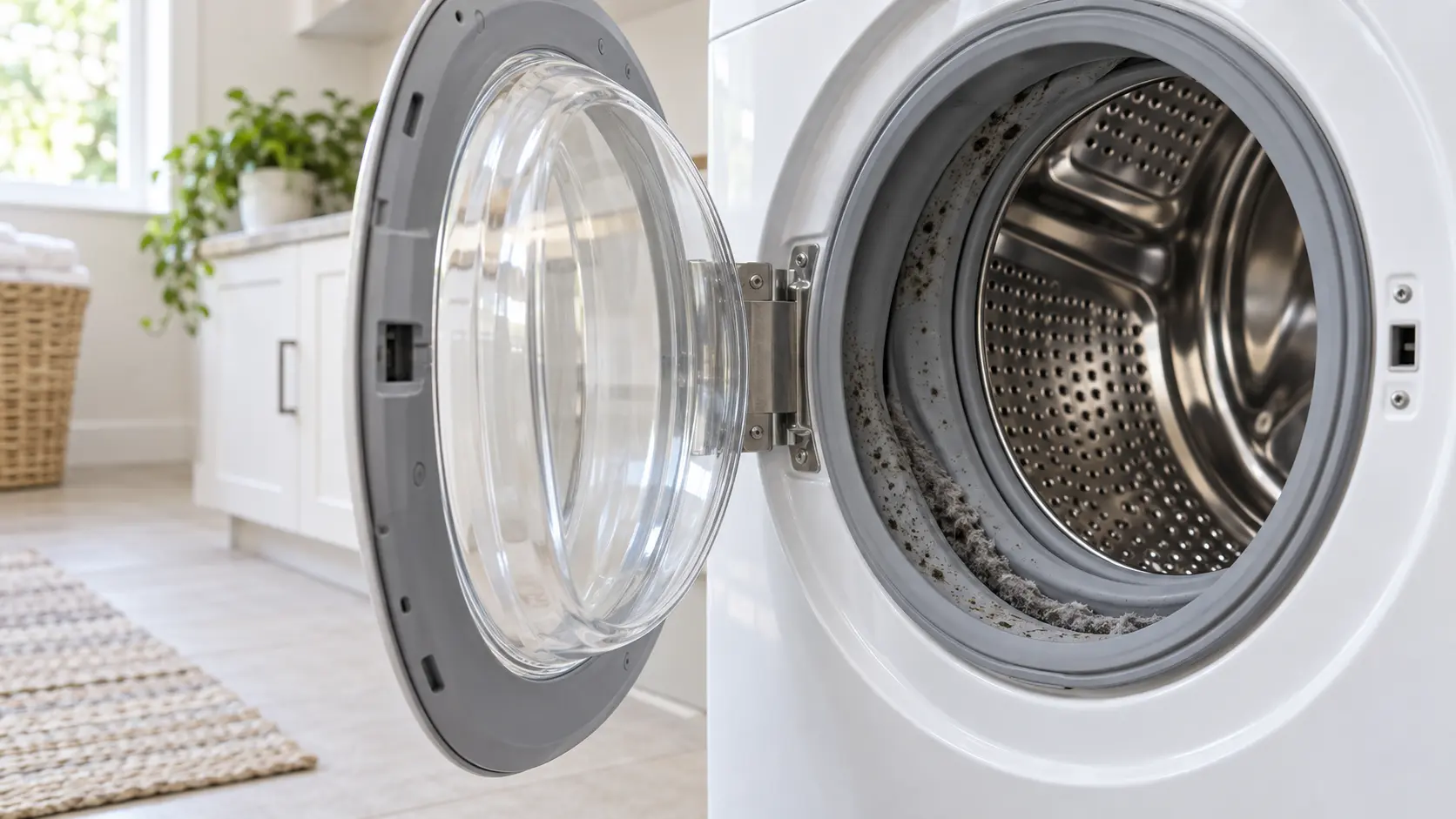
- Front-load washer: a door seal to wipe and dry, often a drain pump filter behind a small panel, and a tub-clean reminder on many models. A top-loader has no door boot to collect residue.
- Dryer: a lint screen to clear before every load on any model, plus the vent; a condensing or heat-pump dryer adds a condenser or extra filter to rinse.
- Coffee machine: descaling on a schedule set by water hardness, and a milk system that needs cleaning after every use if it has one.
Ask where the filter lives
A filter inside the cabinet, behind a panel or at the back is easier to forget and harder to reach. A filter on the front or the top that you can see is more likely to get cleaned. A water filter and descaling service covers the ones that are out of reach.

Which features add seals, drums and moving parts?
Gaskets, door boots and slides are parts that collect residue and wear out, so each one adds a small upkeep task. A tight door seal is good, but it traps moisture, and moisture is what builds odor and mildew in a closed drum or cavity.
Look at what rubs, flexes or holds water
- A flexible door seal around a drum or cavity needs wiping and drying.
- A removable drain trap or lint screen needs a regular rinse.
- Sliding drawers and glass doors need clean tracks and hinges.
- A rack or tray that stays wet will rust or stain.
Cleaning cycles are not always automatic
A self-clean or tub-clean cycle still depends on you to start it, wipe the seal and leave a door ajar afterward. The idea that a cycle makes upkeep disappear is a common mistake. The reminder lights and clean codes guide explains what those prompts mean and what to do when they will not clear.
How do you read a spec sheet for upkeep?
Read it for nouns that are parts: filter, tank, pump, trap, screen, descale, sanitize. Each one is a recurring task. Then read the manual's maintenance section, which is often a single page and often available online before you buy.
A quick way to score a model
- List every filter, tank, trap and screen the sheet mentions.
- Write down how often the manual says to clean or replace each.
- Mark which ones you can reach without tools.
- Note whether a reminder is based on use or on a fixed timer.
- Add the water type in your home: hard water raises the weight of every water-fed feature.
What the sheet may not say
The sheet may not tell you how long replacement parts stay available or how a clogged drain pump is reached. Ask the seller, and if the answer is vague, treat the feature as one more thing that can fail. A broader view is in keep maintaining or replace.
How do you plan for the upkeep you choose?
Put every task on a calendar once, and decide which ones you would hand off. A yearly list of five or six items is manageable; a list with fifteen is how things get skipped.
Match the plan to your home
Hard water, pets, heavy cooking and a large household all raise the load. The yearly upkeep calendar shows how to spread tasks across the year, and what a maintenance visit covers shows which ones you can leave to a technician.
Consider a plan
If you would rather not track every filter, an annual maintenance plan puts the checks on a schedule, and a diagnostic visit is the place to start if something already seems off.