

Which appliances need a surge protector?
A surge protector for appliances makes the most sense where the electronics are. The appliances most worth protecting are those with an electronic control board, a display or a sensor package, because that is the part a surge damages. A simple appliance with only a mechanical switch and a motor has less to lose.
Boards worth protecting
- Cold storage with electronic controls, sensors and a display.
- Ovens, ranges and cooktops with touch panels or clock boards.
- Washers and dryers with a main control board.
- Dishwashers with an electronic control.
- Coffee machines and other small appliances with boards and heaters.
Less urgent
A basic unit with a mechanical timer or a dial and no electronics has less to protect, though it still depends on a healthy circuit. If a protector will not change the odds much, the money may be better spent elsewhere.
Why is a power strip the wrong tool?
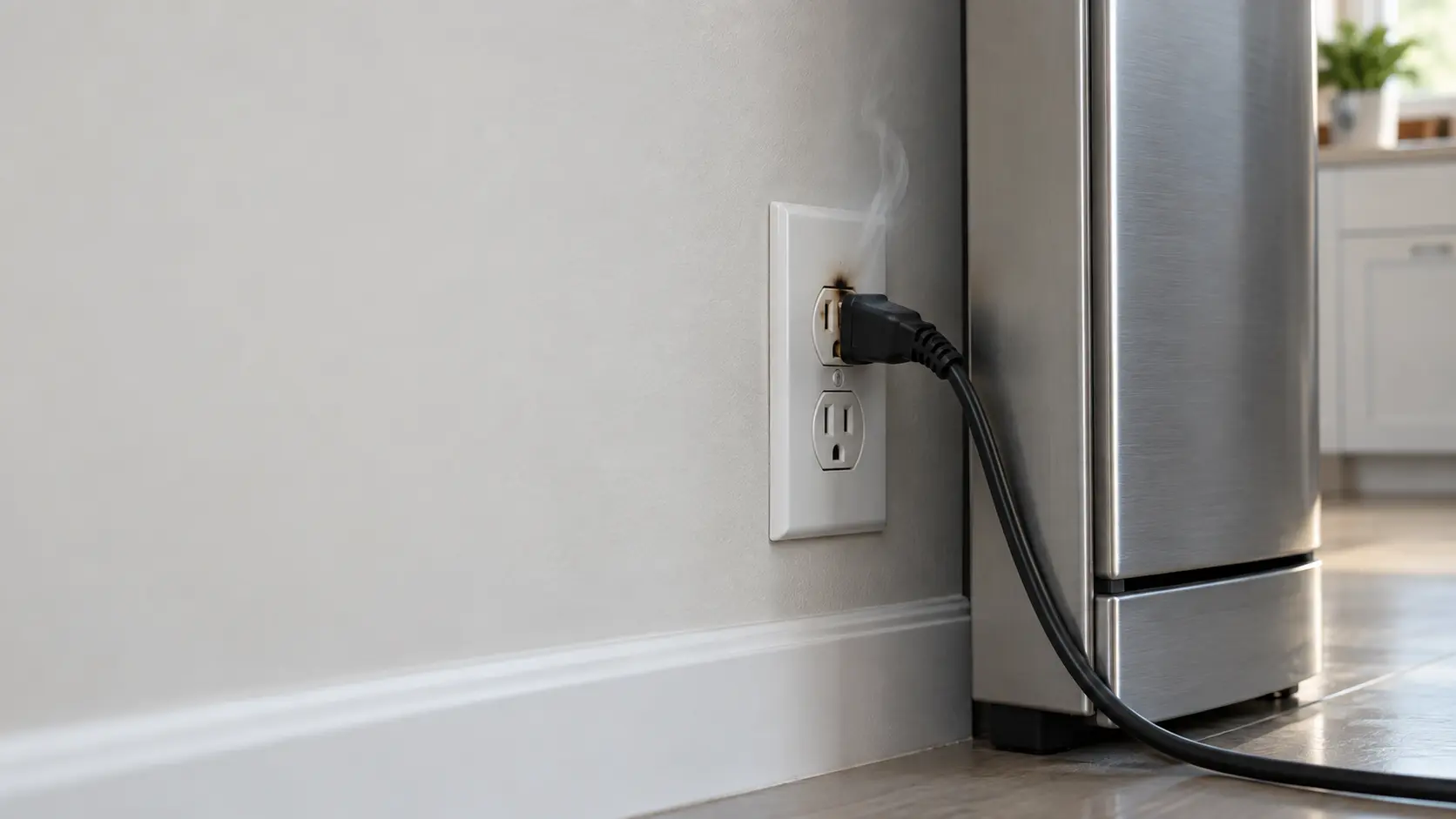
A plain power strip adds outlets and nothing else, and a large appliance on a strip or extension cord is a fire concern. The U.S. Fire Administration says to always plug major appliances, such as refrigerators, stoves, washers and dryers, directly into a wall outlet, and never to use an extension cord with one, because the cord can overheat and start a fire. Owner's manuals for large appliances say the same. That rules out a strip-style surge protector for those units, whatever its rating.
Read what is on the label
A real surge protector is listed to UL 1449, the safety standard for surge protective devices, and the package states its ratings, usually a joule figure and a voltage protection rating. For the same listing, a higher joule figure means more capacity to absorb surges, and a lower voltage protection rating means less of the spike gets through. A strip with no rating is not a protector, even if it has a switch and an indicator light. A protector wears out: its protective parts are used up by hits, and an indicator that goes dark means it is no longer protecting.
Do not run a cord to make it fit
If the cord of an appliance does not reach the outlet, do not add an extension or a strip. Have an electrician add or move an outlet, and protect the major appliances with a device at the panel. A refrigerator or freezer is the one most owners worry about, and the cold storage maintenance page covers what its upkeep includes.
Source: U.S. Fire Administration — Appliance and electrical fire safety — Plug major appliances directly into a wall outlet; never use an extension cord with a major appliance

What kinds of protection exist?
There are three practical layers: a point-of-use protector, a whole-home device and a plain good habit of unplugging during a storm.
Table: Protection types and what they do
| Type | Where it goes | What it does | Limits |
|---|---|---|---|
| Plug-in protector | At the outlet | Clamps a surge before it reaches a plugged-in countertop appliance | Wears out; not for major appliances, which go straight into the wall |
| Whole-home device | At the electrical panel, by an electrician | Reduces surges entering the house | Does not stop surges made inside the house |
| Unplugging | At the wall | Complete isolation of the appliance | Only works when you are there |
What none of them do
No protector promises to stop a direct lightning strike, and a protector does not fix a sag, a brownout or a loose neutral. A brownout is a drop in voltage, and some appliances dislike it as much as a spike. If lights dim when a large appliance starts, the problem may be the circuit and not the supply, and that is a job for an electrician.
How do you set up protection at home?
Match the device to the appliance, then check that the outlet behind it is sound.
A step-by-step approach
- List the appliances with boards, then rank them by cost and how hard they are to replace.
- For countertop units such as a coffee machine, use a listed plug-in protector rated for the load, plugged directly into the wall, if the manual allows it. Do not chain it to another strip.
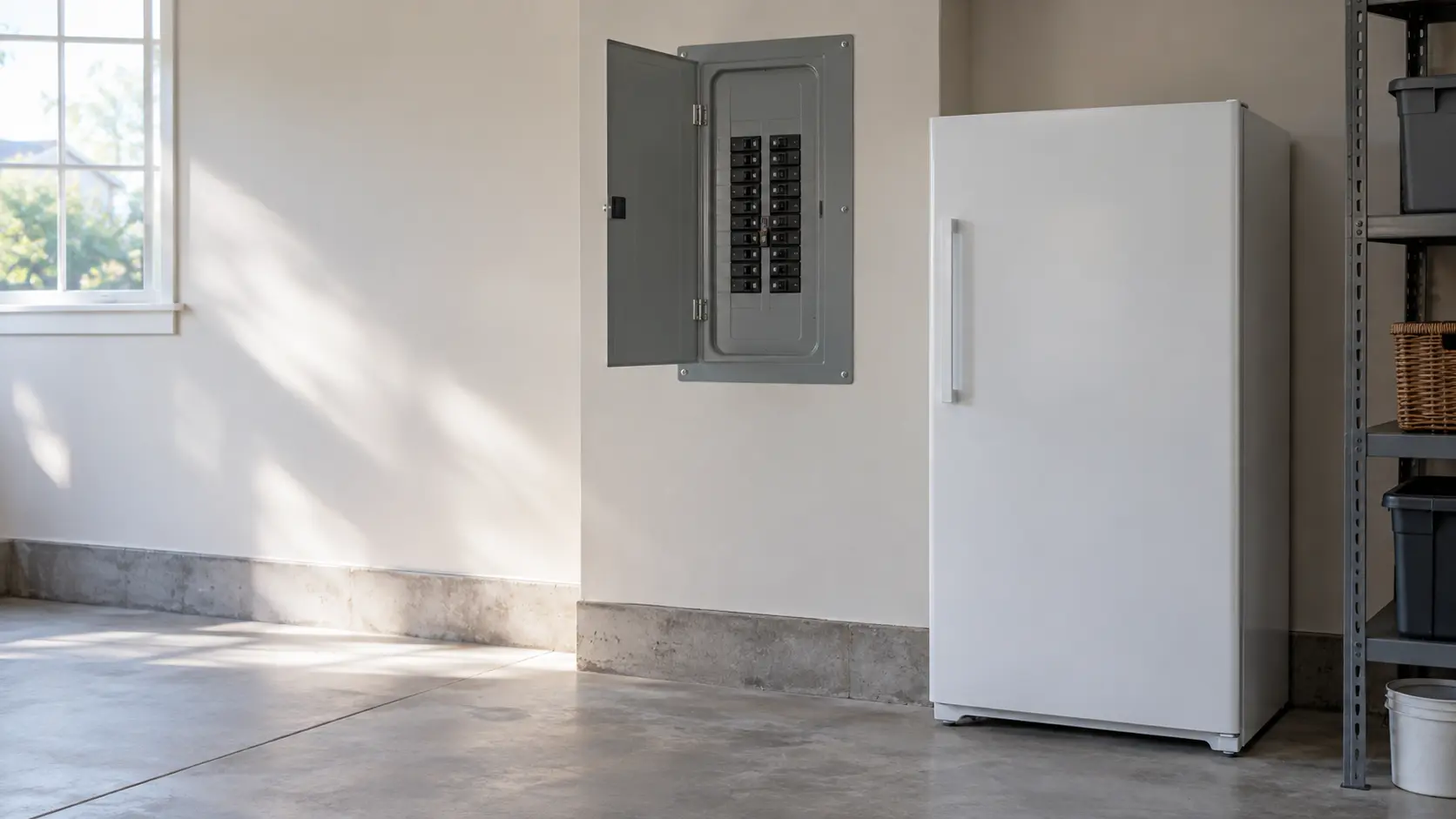
- For major appliances, 120-volt or 240-volt, keep the plug in the wall outlet and ask an electrician about a whole-home device at the panel.
- Replace a protector after a big storm or if the indicator light is off.
- Make sure the breaker labels on the panel door are readable, so you can find the appliance circuits quickly.
Keep the surroundings in good order
If a unit already seems off, signs an appliance is overdue for service lists what to watch. Loose outlets, warm plugs, aluminum-wiring concerns and tripping breakers are signs of trouble that no protector fixes. See appliance tripping breaker and appliance burning or electrical smell for what to look for before calling.
What should you do during a storm or outage?
Unplug what you can when a storm is close, and wait a few minutes before restoring power after an outage. Power often returns with a flicker or a spike.
After an outage
Turn off the appliance's own switch or leave it unplugged until the power is steady. The yearly upkeep calendar can include a storm-season check of protectors, cords and outlets. If an appliance behaves oddly after a surge, such as a blank display or erratic cycles, a diagnostic visit can find out whether the control board has failed; an annual maintenance plan also puts a look at plugs and outlets on the schedule.
Food and cold storage
Keep the refrigerator and freezer doors closed. The FDA says a closed refrigerator keeps food cold for about 4 hours, and a full freezer holds its temperature for about 48 hours (24 hours if half full). Perishable food that has been above 40°F for 2 hours or more should be thrown out; judge it by a thermometer, not by smell.
Source: FDA — Food and water safety during power outages and floods — Closed refrigerator about 4 hours; full freezer about 48 hours, half full 24; discard perishables held above 40°F for 2 hours or more