

Where do appliance leaks start?
Leaks begin at a short list of places, and almost all of them are connections that carry pressure or drain water. Knowing the list tells you where a sensor earns its keep:
- The wall valve and the line to the machine.
- The drain hose and the pan under it.
- The cartridge housing and any ice or dispenser line.
- Valves and joints crusted with scale.
The supply connection
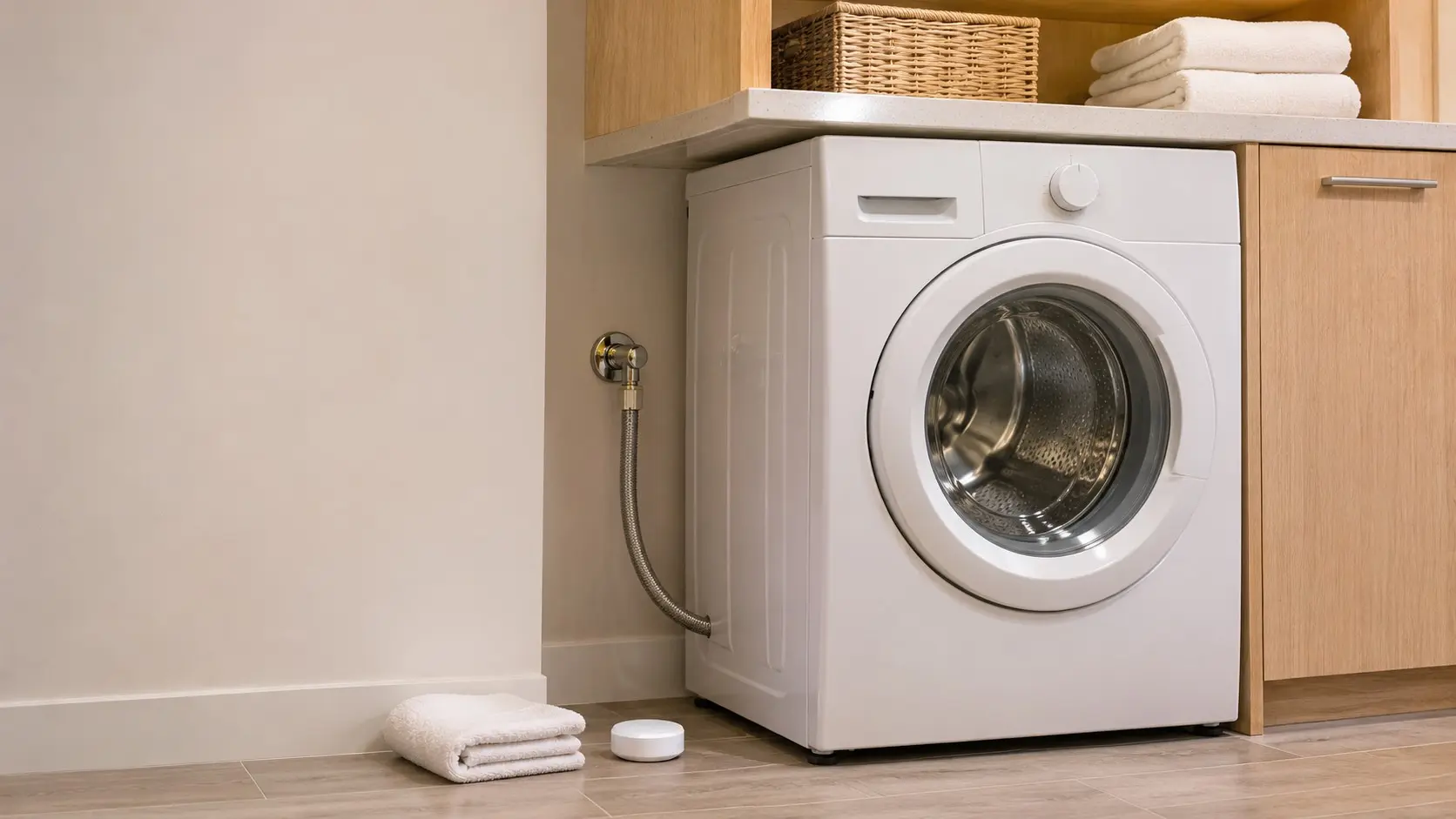
A braided line or plastic tube runs from the wall valve to the machine. The coupling at either end can drip, and the line itself can bulge or crack with age. Read supply hoses and slow leaks for how to spot them early.
The drain and its pan
Drain hoses can loosen, kink or clog, and a drain pan can overflow. Water that escapes there often runs behind the machine and under cabinets.
The filter housing and ice line
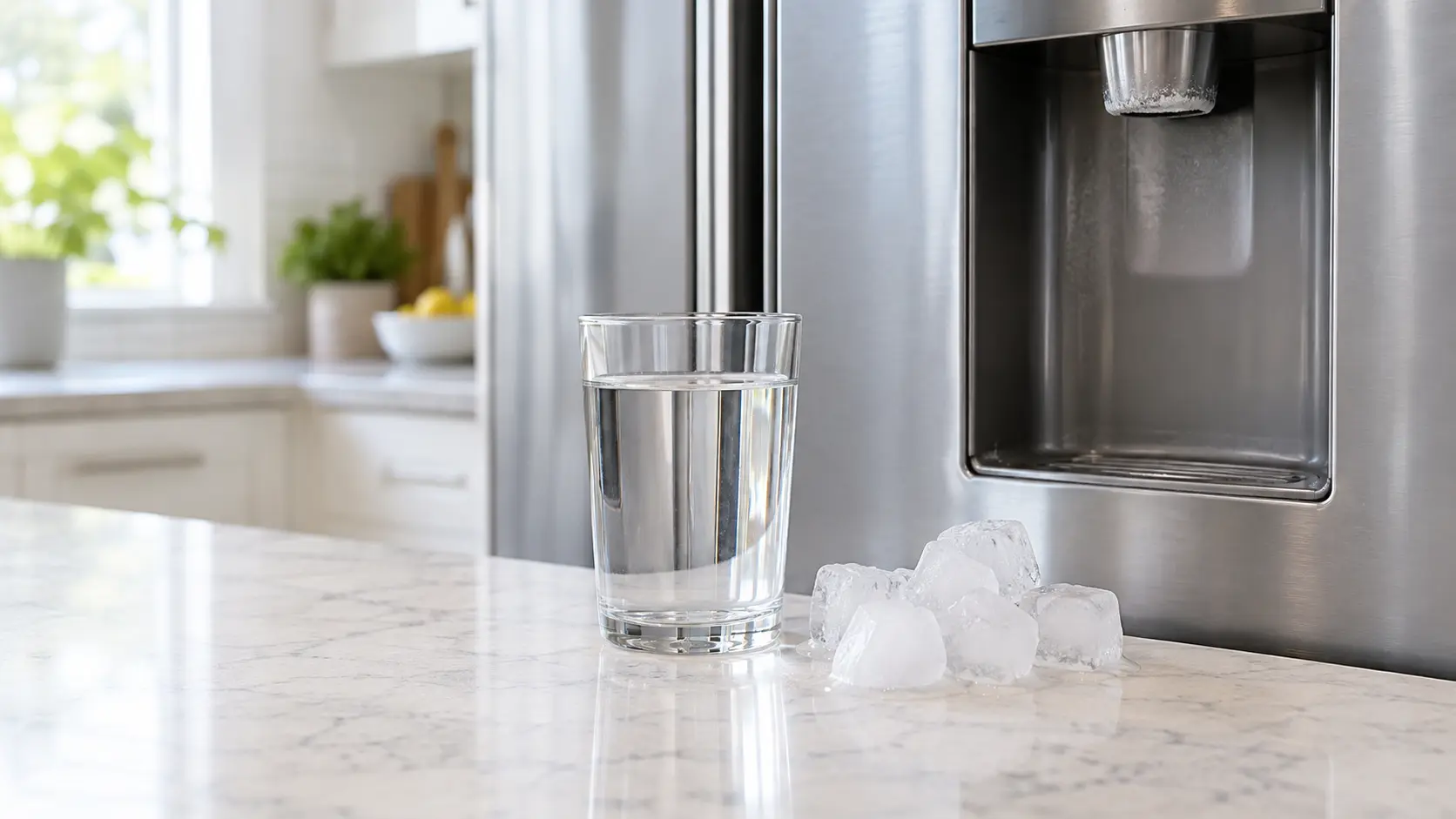
A cartridge housing or a thin plastic line to a dispenser can seep around an O-ring. See choosing a replacement water filter if you have just changed one.
Scale and condensation
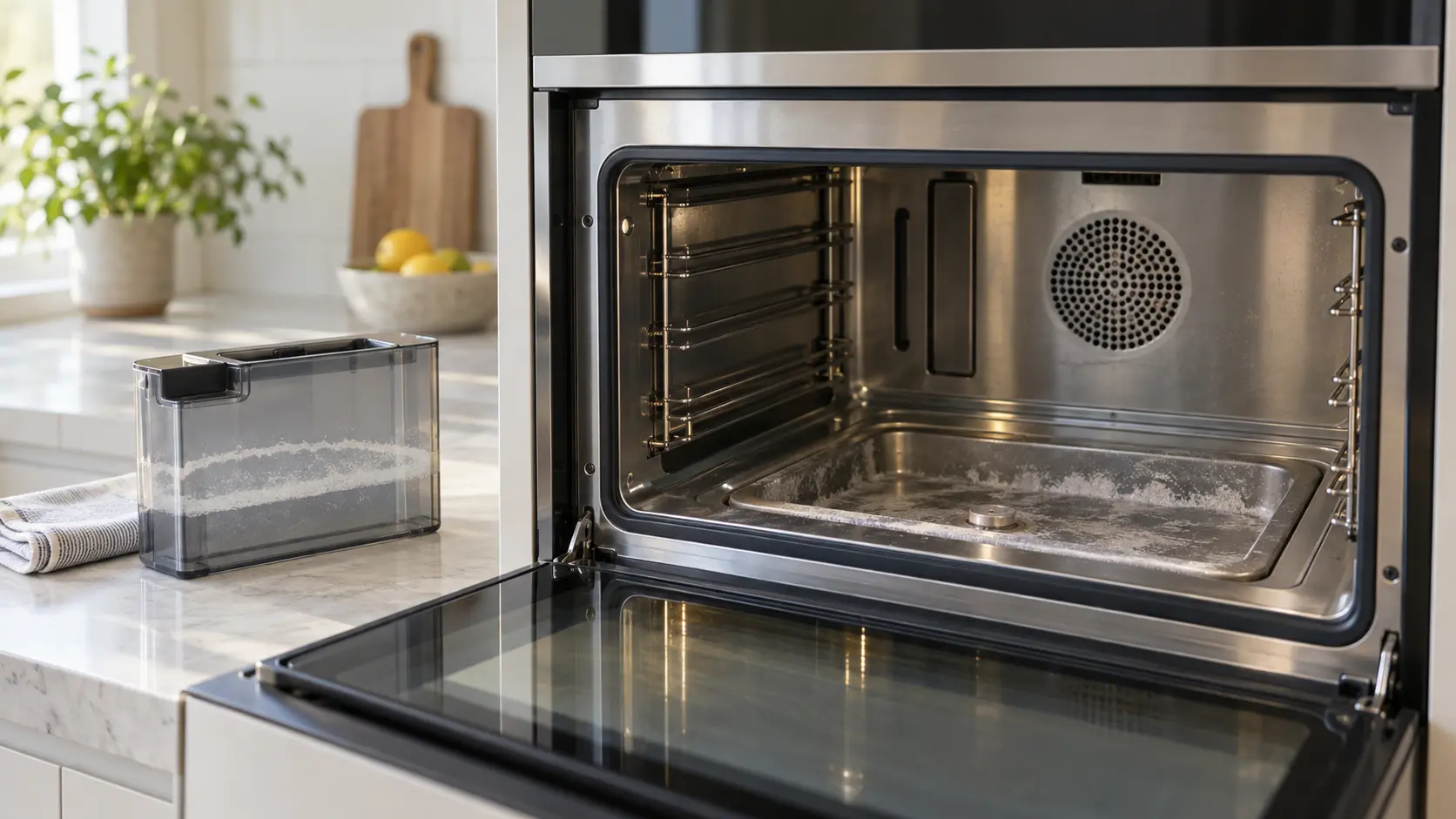
Hard-water scale can crust a valve until it weeps, and a blocked drain in a cold storage unit sends condensation to the floor. The relevant pages are hard water scale and what it wears and scale on water parts.
Across all fixtures, not only appliances, the EPA estimates that the average household's leaks can waste more than 9,300 gallons of water a year, which shows how much a small, steady drip adds up.
What kinds of sensor are there?
Three types cover most needs, and they differ in what they do after they sense water.
| Type | How it works | Best for | Limit |
|---|---|---|---|
| Spot sensor | Battery puck with two contacts, sounds an alarm | One suspect point such as a supply connection | Only senses water that reaches it |
| Cable or rope sensor | A sensing cable that reads wetness along its length | Long runs, behind machines and around pans | Needs routing, and costs more than a puck |
| Automatic shutoff valve | A valve on the supply that closes when a sensor trips | Machines that can flood a floor | Needs power or batteries and good installation |
| Connected sensor | Sends an alert to a phone | Vacations, second homes | Depends on Wi-Fi and a charged battery |
An alarm alone does not stop a leak, it only tells you, and a sensor that chirps in an empty house helps nobody. For a home that is empty for long stretches, a connected sensor or an automatic shutoff is worth more than a loud puck.

How do you place them?
Put the sensor on the lowest spot where water would first collect, not on a shelf. Water runs downhill, and a sensor on the wall misses a puddle.
- Place a spot sensor flat on the floor beside the supply connection, with the contacts facing down.
- Put another under the drain hose or in the drain pan.
- Run a cable sensor in a loop around the base of a machine, or along the back wall where lines enter.
- Use one sensor per machine rather than one per room, and add one under a sink with a filter.
- Keep sensors out of spots that are always damp, such as a basement drain, so they do not alarm daily.
Mark each location with its date and note which machine it covers. Placement is the main part of the job, since a good sensor in the wrong place sits quietly dry while the floor floods nearby. Before travel, walk through the checklist in ten-minute checks between visits, including a look at the shutoff valves described in shutoff valves every appliance needs.
How do you test them, and keep them working?
A sensor you have never tested is a guess. Once a month, touch the contacts to a damp paper towel or a few drops of water, and confirm that the alarm sounds or the phone alerts you. Dry it and put it back.
Change the batteries on a schedule, such as when the clocks change or at the start of the holidays, instead of waiting for the low-battery chirp, which tends to start at night. Wipe dust off the contacts with a dry cloth, because film can slow detection. Replace the sensor itself every few years, or when it fails the test. If a sensor runs on a connected hub, check that the app shows it as online.
If you use an automatic shutoff valve, also operate it once a year with the test button. A valve that has not moved for years can stick. Keep the area around it clear so you can reach the handle quickly, and know where the main shutoff for the house is.
What do sensors not replace?
A sensor reports water. It does not repair the cause or protect against everything. It cannot see a leak inside a wall, a drip behind a panel that never reaches the floor, or a hose that has not yet failed.
Hoses and valves still need checking: look for bulges, rust, kinks and stains at connections, and replace old rubber lines before they split. The EPA suggests reading your water meter before and after a two-hour period when no water is used, and if the reading changes you probably have a leak somewhere. That is a quick whole-house test that complements sensors.
If you are leaving for the holidays, think about closing the supply valve to machines you will not use. A water filter and descaling service can check lines and fittings in one visit, and an annual maintenance plan keeps connections on a regular schedule. See also supply hose leaking if you already have a drip, and the cold storage maintenance type page for machines that make ice.