
Which filter does your hood hold?
Your hood holds either a metal grease filter, a charcoal filter, or both, and the two are maintained in opposite ways. Metal filters are washable and reusable; charcoal filters are a consumable that you replace.
Metal mesh and baffle filters
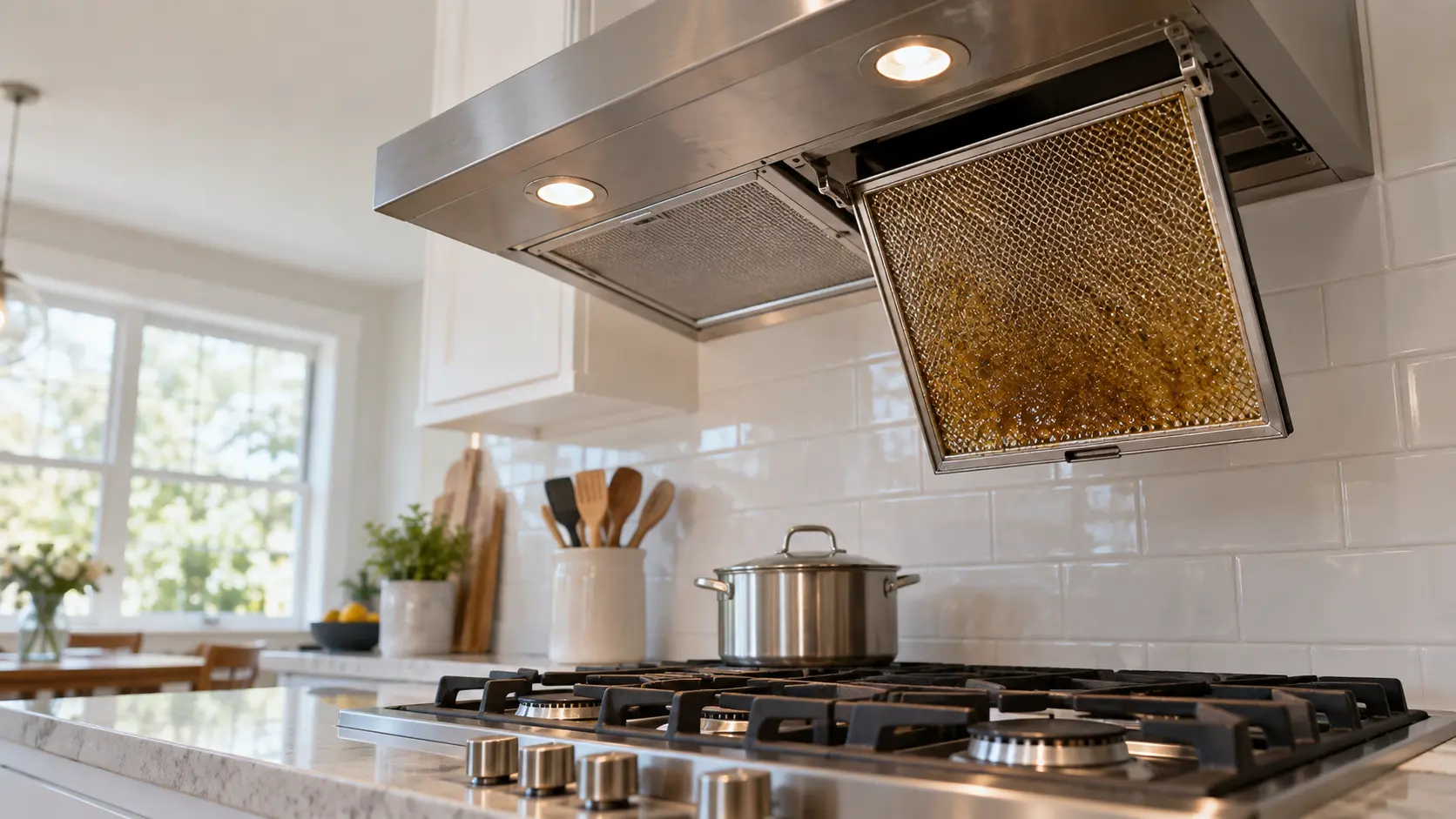
A mesh filter is a flat panel of layered aluminum screen, usually a rectangle that slides or clips up into the underside of the hood. A baffle filter is a stainless or aluminum panel of overlapping slots, common on professional-style and island hoods. Both catch grease droplets before they coat the fan and the duct. They sit in ducted hoods that vent outdoors and in recirculating hoods alike.
Charcoal (carbon) filters
A charcoal filter is a thicker pad or cartridge, often black or gray, that absorbs odors. It appears only in recirculating, or ductless, hoods that blow air back into the kitchen, usually behind or above the metal filter. If your hood vents through a duct to the outside, it normally has no charcoal filter at all. Over-the-range microwaves use the same arrangement: a washable grease screen and, when recirculating, a charcoal pad.
How often do the filters need attention?
Hood filter replacement is a six-month job for charcoal filters only; metal filters need washing about monthly instead. Those are the figures the manuals for many hoods give, depending on use. Your own manual decides the number for your hood.
Cooking style moves the schedule. A household that sears, stir-fries or deep-fries over high heat collects grease faster than one that mostly simmers and boils, so the monthly wash becomes every two or three weeks. A hood used only a few times a week can stretch it, but a filter that has turned sticky or dark has waited too long.
| Filter | Wash or replace | Typical interval | Goes in the dishwasher? |
|---|---|---|---|
| Aluminum mesh | Wash | About monthly, sooner after frying | Yes, normal cycle, no high-heat sanitize |
| Stainless baffle | Wash | When grease shows or surfaces look dirty | Yes, if the manual allows it |
| Charcoal (recirculating hoods) | Replace | About every 6 months, sooner if odors linger | Never wet |
Some hoods count the hours for you and light a filter icon after a set time of fan operation, a reminder rather than a diagnosis, and the filter still has to be looked at. If a clean-filter light stays on after you have washed the filter, look for the reset step in the manual; the same logic is covered under reminder lights on the reminder lights and clean codes page.

How do you wash a metal grease filter?
Turn off the blower and the lights, let the hood and the bulbs cool, then lift the filter out and wash it by hand or in the dishwasher.
- Hand wash: fill the sink with very hot water, add one to two tablespoons of degreasing dish detergent (a cup of baking soda helps with heavy oil), and soak for 15 to 30 minutes.
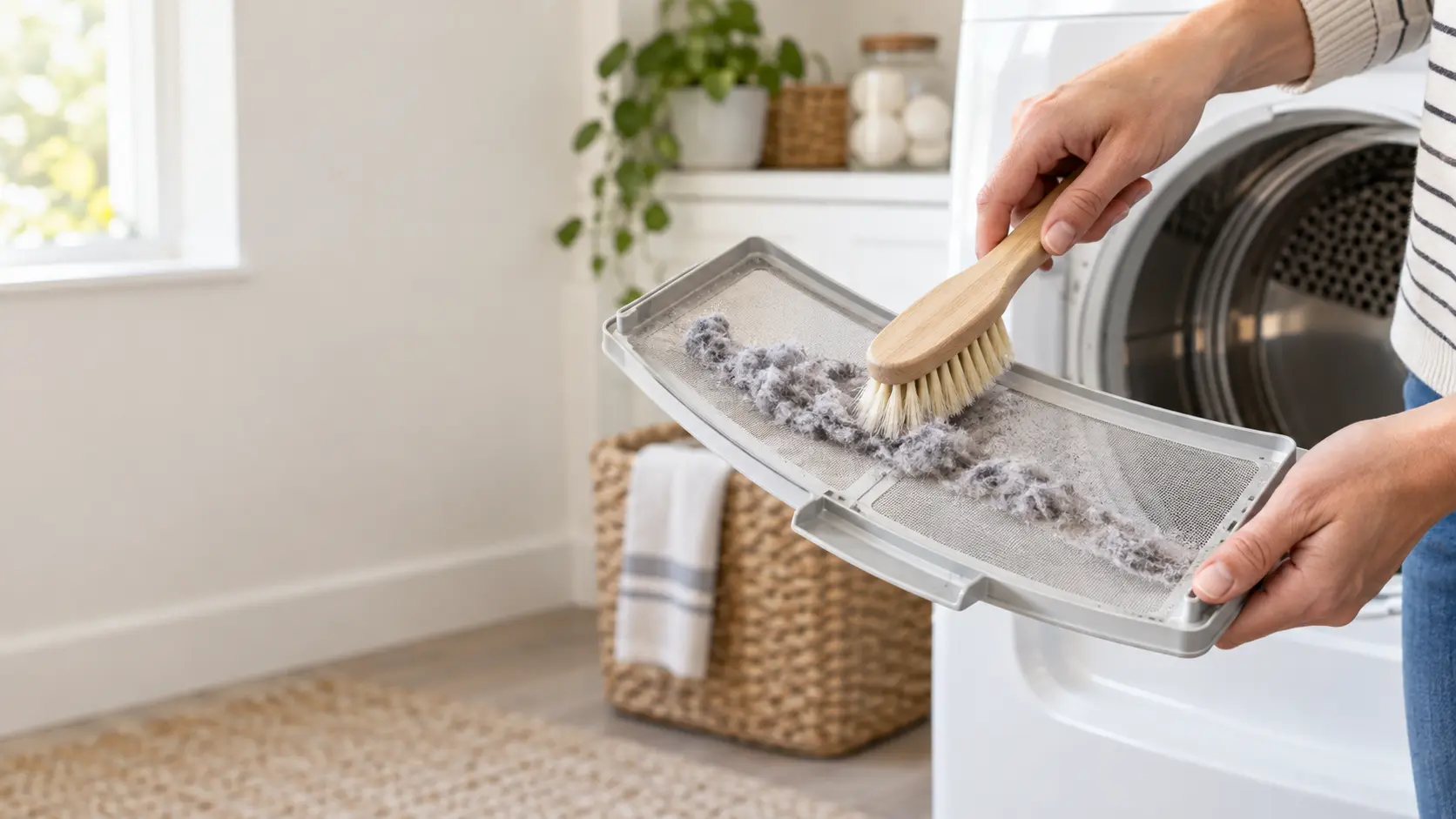
- Scrub gently with a soft nylon brush or sponge. Manuals warn against stiff wire brushes, which scratch the finish.
- Rinse until the water runs clear and let the filter dry completely before it goes back in.
- Dishwasher: place the filter so it cannot block a spray arm, run a normal cycle, and skip the high-heat sanitize option on bare aluminum, which can discolor it. Many manuals recommend non-phosphate detergent and say discoloration does not change how the filter performs.
Keep the filter loose in the rack, never wedged: a bent frame will not seat flush in the hood afterward.
What a good result looks like
A washed mesh filter shows clear, bright screen with no amber film, and water flows straight through it. A baffle filter has open slots along its full length. If grease has baked into the metal and a soak does not shift it, a second soak with baking soda is the next step; replacing the filter is the answer when the frame is bent or the metal is corroded.
When is a charcoal filter due?
A charcoal filter is due about every six months in a recirculating hood, or sooner when odors from cooking linger with the blower running. The manual for many hoods says plainly that these filters cannot be washed and must be replaced.
Never rinse or soak one. Moisture degrades the carbon, and a wet charcoal filter is spent. Practical signs, as the manuals for over-the-range microwaves describe: the filter is full of grease, the smell no longer matches what you are cooking, or the whole surface looks shiny. Buy the replacement by the hood's model number, because the size and shape differ from one hood to the next; the number is on the label inside the hood. The model and serial number guide shows where each appliance keeps it.
What happens if the filters are skipped?
Clogged filters choke the airflow first and then become a grease fire hazard, because grease that is not caught on the filter coats the fan and the duct above it. Manuals say to clean ventilation products frequently to reduce the risk of a grease fire.
You will usually notice the airflow before anything else. Steam lingers over a pot, smoke drifts into the room, and the fan sounds louder while moving less air. That is the pattern described on the weak or noisy hood fan page, and a creeping power bill can be a sign too, see energy use creeping up. If clean filters do not bring the airflow back, the cause is further up the line: a blocked duct, a damper stuck closed, a tired motor or a dirty fan wheel. A grease filter and hood fan service covers that part of the system, and the filters and when each one is due guide places the hood filter among the others in the home.
A simple routine
A ten-minute check between visits fits the filter wash in, and a yearly maintenance plan can cover it for a cooking appliance setup.
- Put a monthly reminder on the calendar and wash the metal filters then.
- Swap the second set in when the first comes out, if you bought a spare pair, so the hood is never run without filters.
- Replace charcoal filters in spring and fall, which keeps the six-month rhythm.
- Never run the hood with the filters out: grease then goes straight to the fan.