
What is actually burning when the oven smokes?
Almost always it is food residue, not the oven itself: fat and sugar that landed on a hot surface and carbonized. An oven at 325 to 450°F will turn a thin film of drippings into smoke within minutes, and the film does not have to be fresh. A spill from last month's casserole sits invisible on the floor panel until the next long roast heats it again.
The source tends to sit in one of four places, and each leaves a different clue.
The floor and the lower walls
Drips from pies and roasting pans land here. Smoke that starts early, within the first 15 minutes of preheating, and fades as the oven stays hot points to this zone.
The broil element and the roof
Fat spatter flies upward when a bird or a tray of vegetables is roasted uncovered. If the smoke gets worse each time the element cycles on, look at the top of the cavity with a flashlight for dark crusted spots on or above the element.
Cleaner left behind
A spray cleaner that was not wiped away with a damp cloth smokes sharply and smells chemical. This version appears right after a cleaning session and usually clears after one rinse and a short empty burn.
A new oven or a new part
A replacement element or a brand-new cavity can give off a light oily odor for the first couple of uses. That is a curing smell and it should end quickly; it should not return.
How do spill smoke and a failing part differ?
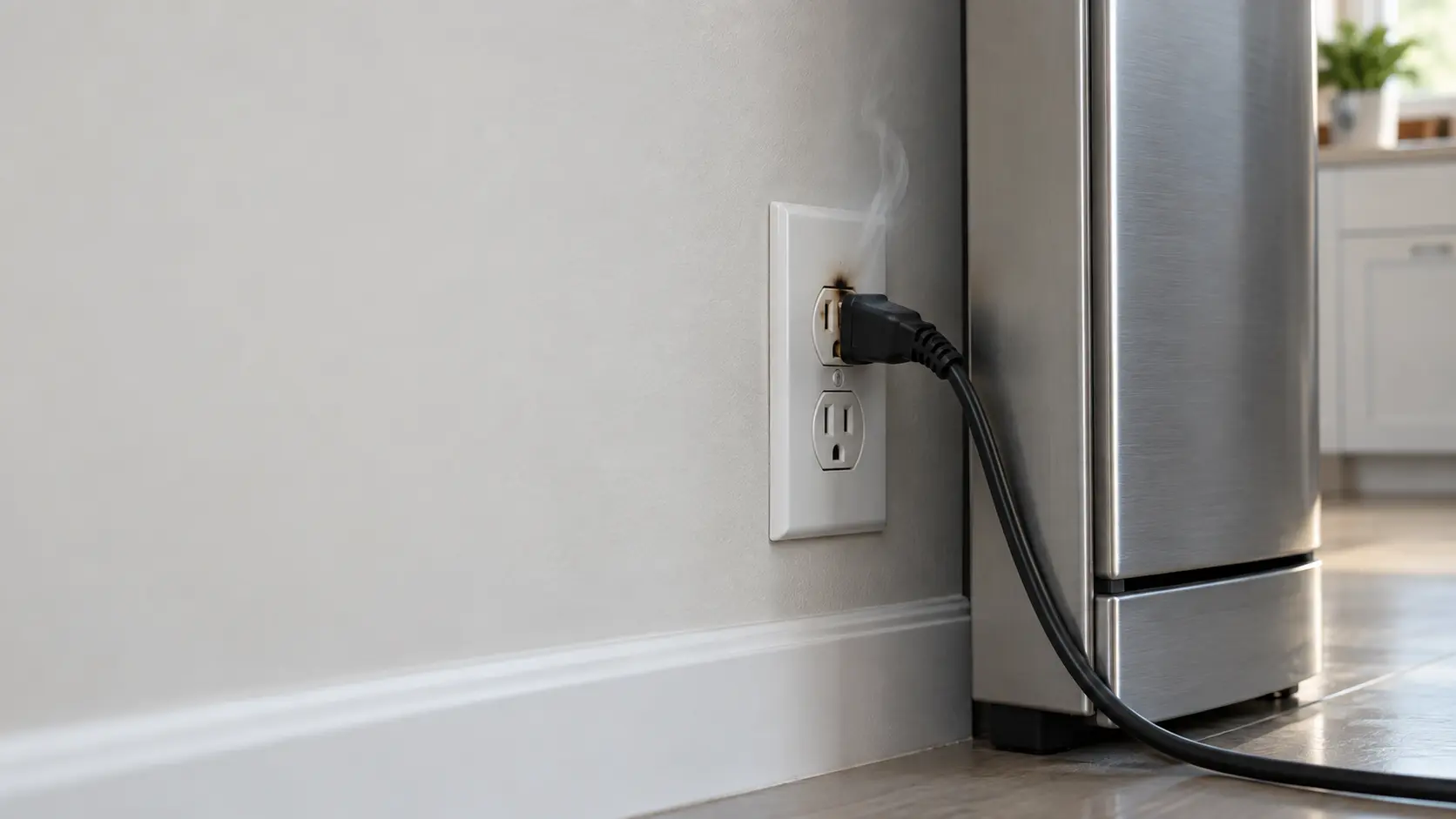
Smoke from spills smells like burnt food, shows up mostly at the start of a hot cycle and thins out. Smoke from a part problem tends to be persistent, to appear with the oven empty, and to carry a sharp electrical, plastic or rubber odor.
| What you notice | Likely cause | What to do |
|---|---|---|
| Burnt-food smell, haze during the first 15 minutes | Old drips on the floor or walls | Cool, then wipe the cavity |
| Smoke when roasting uncovered fat | Spatter on the broil area | Use a roasting pan with higher sides and a rack |
| Chemical smell right after cleaning | Cleaner residue | Rinse with a damp cloth, run the empty oven for a short heat-up |
| Smoke with an empty, clean oven | Insulation, wiring or element issue | Switch off and stop using |
| Raw gas smell | Leak or ignition problem | Leave the home, do not use switches, call the gas utility or 911 from outside |

What should you wipe before the holiday meal?
A quick wipe fits into the habits in ten-minute checks between visits. Plan the cleaning two or three days ahead, not the morning of the meal, so any cleaner has time to be rinsed and the cavity can be checked once more with a short empty heat-up. Let the oven cool completely first; a warm surface bakes a cleaning film on.
- Remove the racks and soak them in the sink; scrape rather than scrub the floor panel where a thick crust has formed.
- Wipe the door glass edge and the gasket-free rim where grease collects, because that rim is part of what smokes first.
- Use a damp cloth with a mild dish soap solution, then a second cloth with plain water to finish.
- Skip the heavy high-heat cleaning cycle this week; it stresses locks and boards at the worst possible time.
- Line the lowest rack position with a sheet pan, not foil on the oven floor, which can trap heat and block airflow.
If the oven has a bake element hidden under the floor, do not lift or pry it; wipe the surface only. Items kept inside the oven such as pizza stones, trays or leftover foil should come out before preheating.
How can you roast without the extra smoke?
Most roast smoke is a pan problem. A shallow sheet pan lets fat splash; a deeper roasting pan with a rack keeps drippings below the splash line. Add a half inch of water or stock to the bottom when roasting something fatty, and top it up if it evaporates, because dry drippings burn first.
Before the oven goes on, run through this short list:
- Racks set so the pan sits in the middle, not touching the walls.
- Pan sides at least two inches tall for anything fatty.
- A thin layer of liquid under the rack.
- Nothing stored inside the oven, including foil and baking stones you forgot about.
Check the temperature you are using
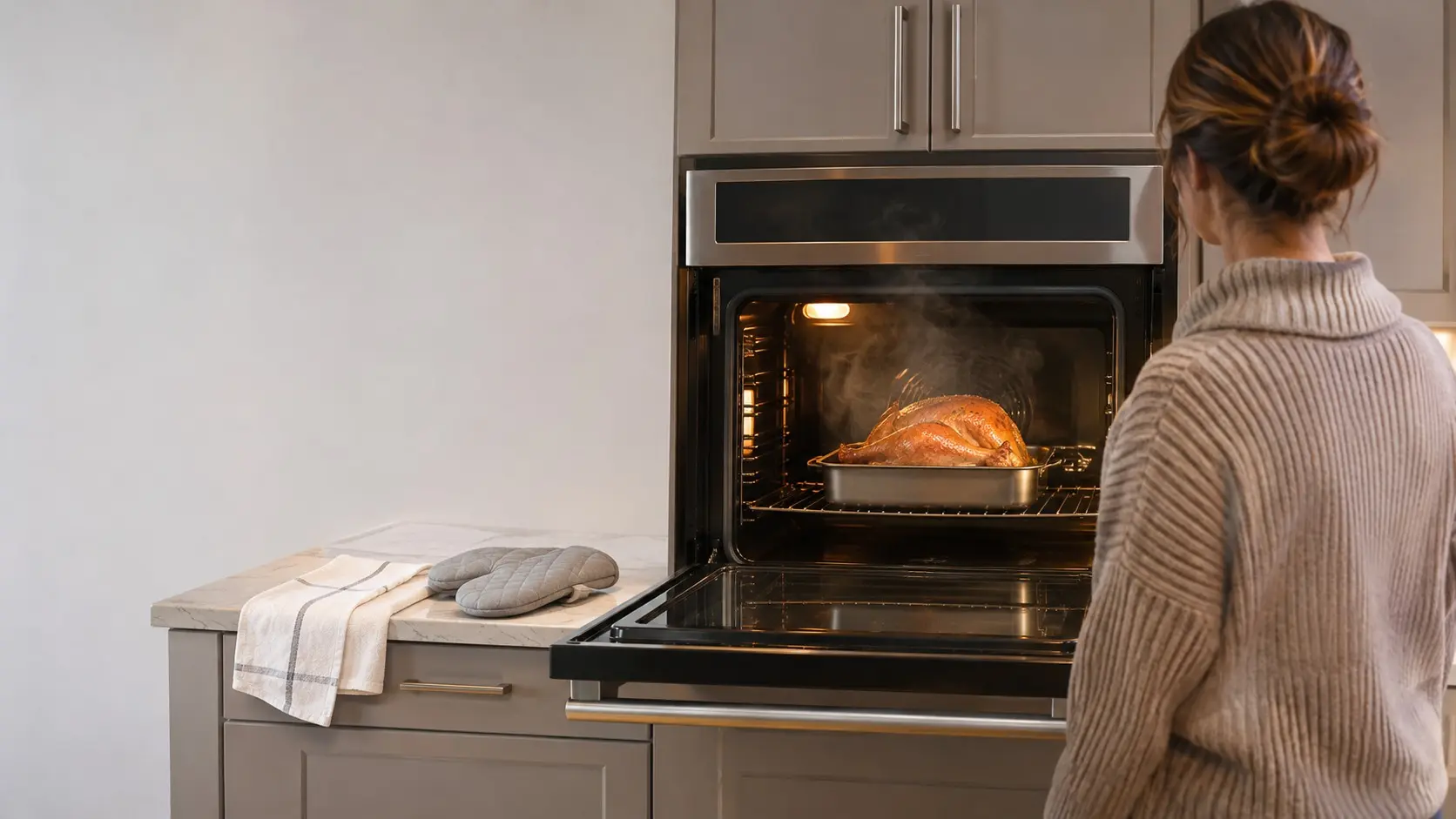
Roasting a turkey at 450°F for the whole time makes more smoke than a 325 to 350°F cook. Start high only briefly, then lower the setting. Convection settings blow fat farther, so a fan roast needs a deeper pan.
Mind the broil element
Keep food at least a few inches from the element and do not leave the door ajar on a broil cycle unless your manual says so. A forgotten tray of sugary vegetables under the broiler produces a lot of smoke very fast.
Ventilate while it cooks
Turn on the hood and open a window slightly; a clean filter pulls haze out quickly. If the fan sounds weak, see hood filter replacement and the grease filter and hood fan service.
When does smoke mean the oven needs service?
Smoke is a symptom of the oven only when the cause is not food. Run the oven empty at 350°F for 30 minutes after cleaning. If the cavity is clean and there is still smoke, a persistent chemical or fishy smell, or a visible spark at an element, you are looking at a failing part, damaged insulation or a wiring issue.
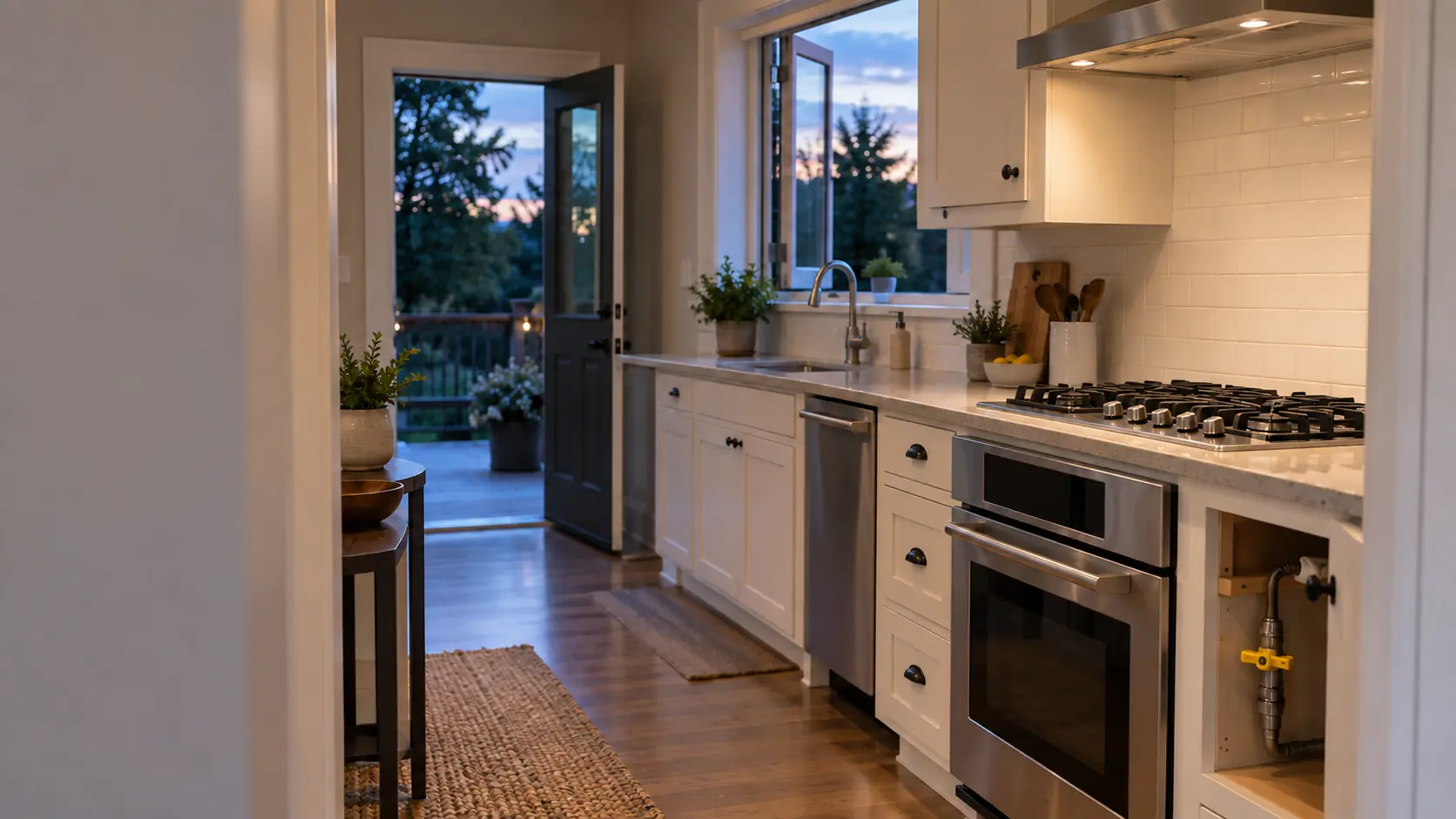
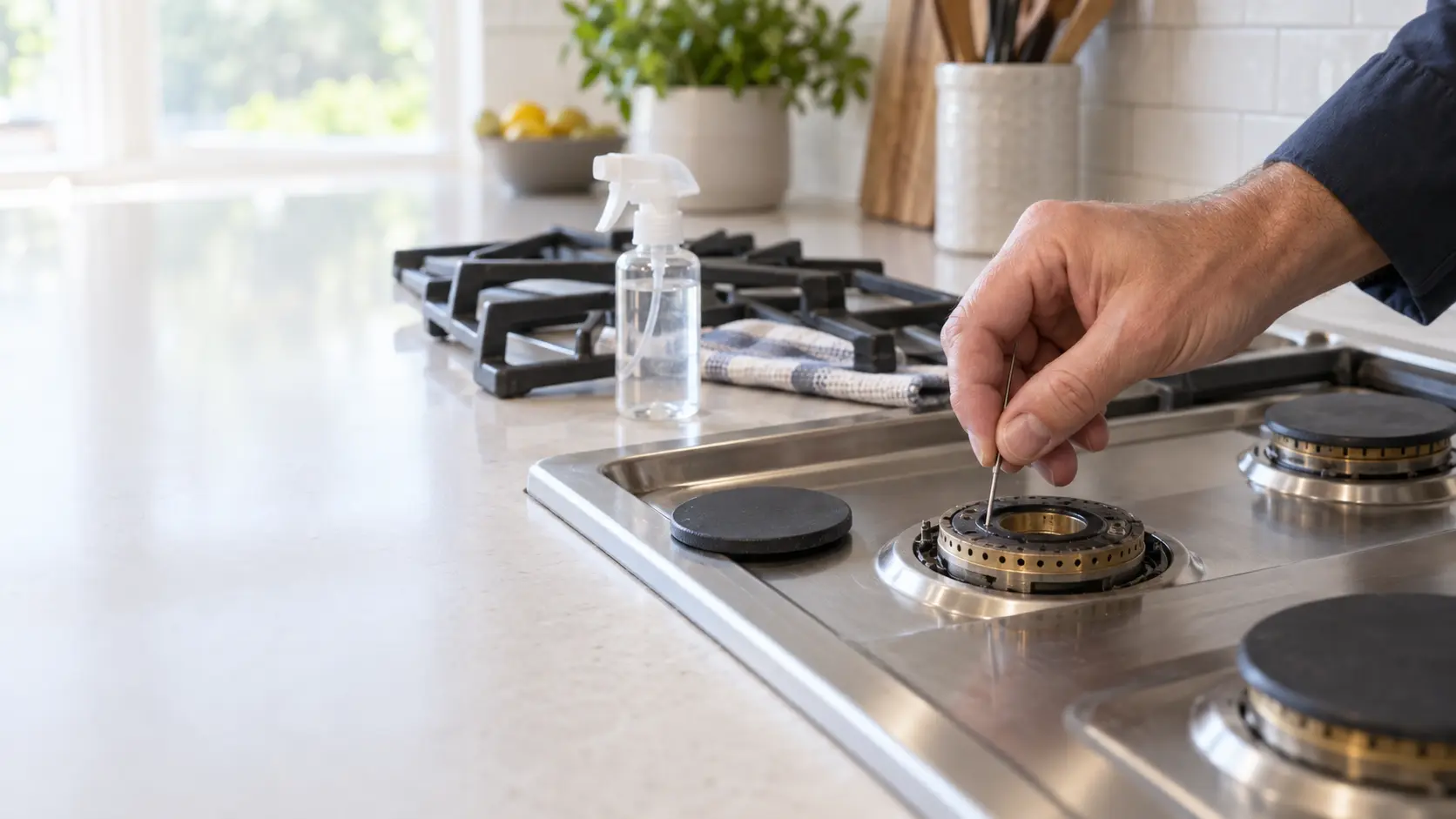
For a gas oven, an odor of gas, a yellow or flickering flame, or sooty marks around the burner opening are separate matters. If you smell gas, leave the home without using switches and call the gas utility or 911 from outside. Read gas burners and carbon monoxide and arrange a burner, igniter and gas connection check rather than adjusting anything yourself. Any burning-plastic or electrical smell is worth a look at the burning electrical smell page.
If a roast does catch fire, keep the door shut, switch the oven off and let the lack of air smother the flames. If the fire does not go out quickly, get everyone out and call 911 from outside.